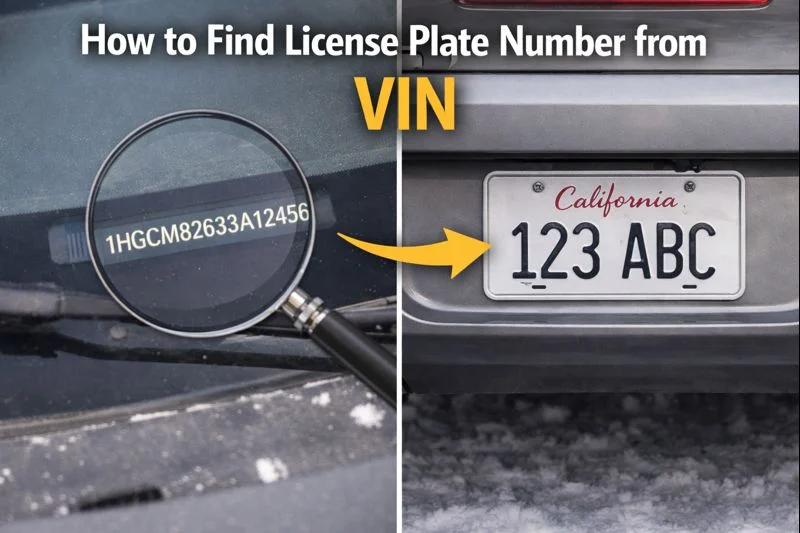
Every vehicle carries two identities that matter most on paper: the Vehicle Identification Number and the license plate number. One is permanent, assigned at the factory, and tied to the car for life.
The other can change over time as ownership, registration status, or even state laws change. Because of this difference, people often assume there must be a simple public tool that converts a VIN directly into a plate number. In reality, the relationship between these two identifiers is controlled, regulated, and protected for privacy reasons.
Still, there are legitimate situations where connecting a VIN to a license plate becomes important. Buyers researching a used car, owners tracking paperwork, insurance companies verifying coverage, and law enforcement resolving disputes all rely on this connection.
The challenge lies in knowing what is possible, what is restricted, and where reliable information can be accessed legally. This topic requires clarity, not shortcuts.
A clear breakdown of how VINs and plates are linked, who controls that information, and what options exist helps avoid wasted time, misinformation, and legal trouble.
The Relationship Between A VIN And A License Plate
What A VIN Represents
A VIN is a 17-character code assigned by the manufacturer. It contains details about the vehicle’s origin, body type, engine, model year, and production sequence. Once assigned, it never changes, regardless of how many times the vehicle is sold or registered.
Government agencies, manufacturers, insurers, and service providers use the VIN as the primary reference for a vehicle’s identity.
What A License Plate Represents
A license plate is a registration identifier issued by a state or regional authority. It links a vehicle to an owner for road use and tax purposes. Plates can change when a vehicle is sold, moved to another state, or re-registered.
Because plates change while VINs do not, records always flow from VIN to plate, not the other way around.
Why This Link Is Restricted
The connection between VIN and license plate leads directly to ownership records. For privacy and safety reasons, access to that link is controlled by law in most countries.
This prevents misuse, stalking, fraud, and unauthorized tracking of vehicle owners.
Situations Where Finding A Plate From A VIN Is Legitimate
Vehicle Ownership Verification
Owners may need to confirm plate information tied to an older VIN for paperwork, title transfers, or registration issues.
This often arises when documents are lost or incomplete.
Insurance And Accident Claims
Insurance providers routinely link VINs to plate numbers during claims, especially when plates were changed after an accident.
Policyholders may need confirmation during disputes.
Used Car History And Records
Buyers researching a used vehicle may encounter service records, inspection reports, or recall notices listed under a VIN but referencing an old plate number.
Connecting those records helps confirm a vehicle’s past.
Legal And Law Enforcement Purposes
Police, courts, and authorized investigators use VIN-to-plate links to resolve theft cases, abandoned vehicles, and legal disputes.
These uses follow strict procedural rules.
Legal Ways To Find A License Plate Number From A VIN
Department Of Motor Vehicles Or Transport Authority
The DMV or equivalent authority maintains the official link between VIN and license plate. Access to this information is restricted but not impossible.
Owners can request records related to their own vehicles by providing proof of ownership and identification. In some states, historical registration records may also be available.
Requests are usually processed in person or through official forms rather than instant online tools.
Insurance Companies
Insurance providers have access to VIN and plate data for vehicles they insure. If a vehicle was previously insured under your name, the insurer may be able to confirm the plate number tied to a VIN.
This applies mainly to current or former policyholders and requires verification.
Law Enforcement Assistance
In cases involving theft, accidents, or legal disputes, law enforcement can access VIN-to-plate records directly.
Private individuals cannot request this access casually, but reporting a legitimate concern may lead to official assistance.
Court Records And Legal Documents
Some legal filings include both VIN and plate numbers, especially in civil cases involving vehicles. If the vehicle was part of a lawsuit, lien, or court order, records may be accessible through public court databases.
Availability depends on jurisdiction and case type.
Fleet And Commercial Records
Businesses that manage fleets often maintain internal records linking VINs to plate numbers. Former fleet vehicles may still carry documentation from previous owners or auctions.
Buyers can sometimes obtain this information through auction houses or fleet sellers.
Why Online VIN Lookup Tools Do Not Show Plate Numbers
Privacy Laws And Data Protection
Most VIN lookup websites provide vehicle specifications, recall data, and accident history, but not license plate numbers. This is due to privacy laws that protect owner information.
Publishing plate numbers alongside VINs would allow easy identification of current or former owners.
What These Tools Can Still Offer
While plate numbers are hidden, VIN reports can reveal registration history, state changes, mileage records, and title events. These details often indirectly confirm whether records belong to the same vehicle.
This information is still valuable for buyers and owners.
Common Myths About Free Conversions
Claims that a free website can instantly reveal a plate number from a VIN are misleading. Any service offering this publicly is likely inaccurate or operating outside legal boundaries.
Relying on such sources risks misinformation or scams.
Documents That May Already Contain Both Identifiers
Title And Registration Papers
Vehicle titles and registration certificates often list both the VIN and license plate number. Owners who still have old paperwork may find the answer without contacting any agency.
This applies especially to older vehicles or past registrations.
Service And Maintenance Records
Dealerships and repair shops frequently record both identifiers for internal tracking. Service invoices, warranty paperwork, or recall notices may include plate numbers.
Checking past service folders can save time.
Insurance Policy Declarations
Insurance documents often list both VIN and plate number, especially on older policies or renewal notices.
Archived digital statements may contain this information.
Auction And Sale Listings
Vehicles sold through auctions sometimes include detailed listings with both identifiers, especially in fleet or government sales.
Access depends on the auction platform and listing age.
Limits And Legal Boundaries You Should Know
Ownership And Consent Matter
Access to VIN-to-plate information usually requires proof of ownership or a legitimate legal interest. Curiosity alone is not considered valid justification.
Providing false information to obtain records can lead to penalties.
Data Use Restrictions
Even when information is obtained legally, its use may be limited. Sharing or publishing plate data can violate privacy laws in some regions.
Responsible handling of records is essential.
Differences By Country And State
Rules vary widely by jurisdiction. Some regions allow limited access through formal requests, while others restrict it almost entirely to law enforcement.
Checking local regulations avoids frustration.
Practical Steps When You Need This Information
Start With Your Own Records
Before contacting agencies, review any documents related to the vehicle. Many answers are already in personal files.
This is the fastest and simplest approach.
Contact The Appropriate Authority
If records are missing, reach out to the DMV or transport authority with proper documentation. Ask about historical registration records tied to your VIN.
Be prepared for processing times and fees.
Use Professional Help When Necessary
In complex cases involving disputes, theft, or legal claims, consulting an attorney or licensed investigator may be appropriate. These professionals operate within legal boundaries.
This option applies to serious matters, not casual searches.
Why This Process Is Intentionally Controlled
The controlled nature of VIN-to-plate access protects vehicle owners from misuse. Without these limits, anyone could trace vehicles, locate owners, or exploit personal data.
While the restrictions can feel inconvenient, they serve a broader public safety purpose.
Common Misunderstandings To Avoid
Many people believe the VIN itself contains plate information. It does not. The VIN identifies the vehicle, not its registration.
Another misunderstanding is that plate numbers are permanent. They change more often than people expect, which is why historical records matter.
Clearing up these points prevents wasted effort.
Final Thoughts
Finding a license plate number from a VIN is not a quick online search, and it is not meant to be. The link between these identifiers is protected because it leads directly to ownership information. When there is a legitimate reason, access is possible through proper channels such as motor vehicle authorities, insurers, and official records.
The most effective approach starts with existing documents and moves toward formal requests when necessary. Avoiding shortcuts and respecting legal boundaries ensures accurate information without risking privacy violations or legal consequences. When handled correctly, VIN and plate records provide clarity, protect owners, and support fair vehicle transactions.