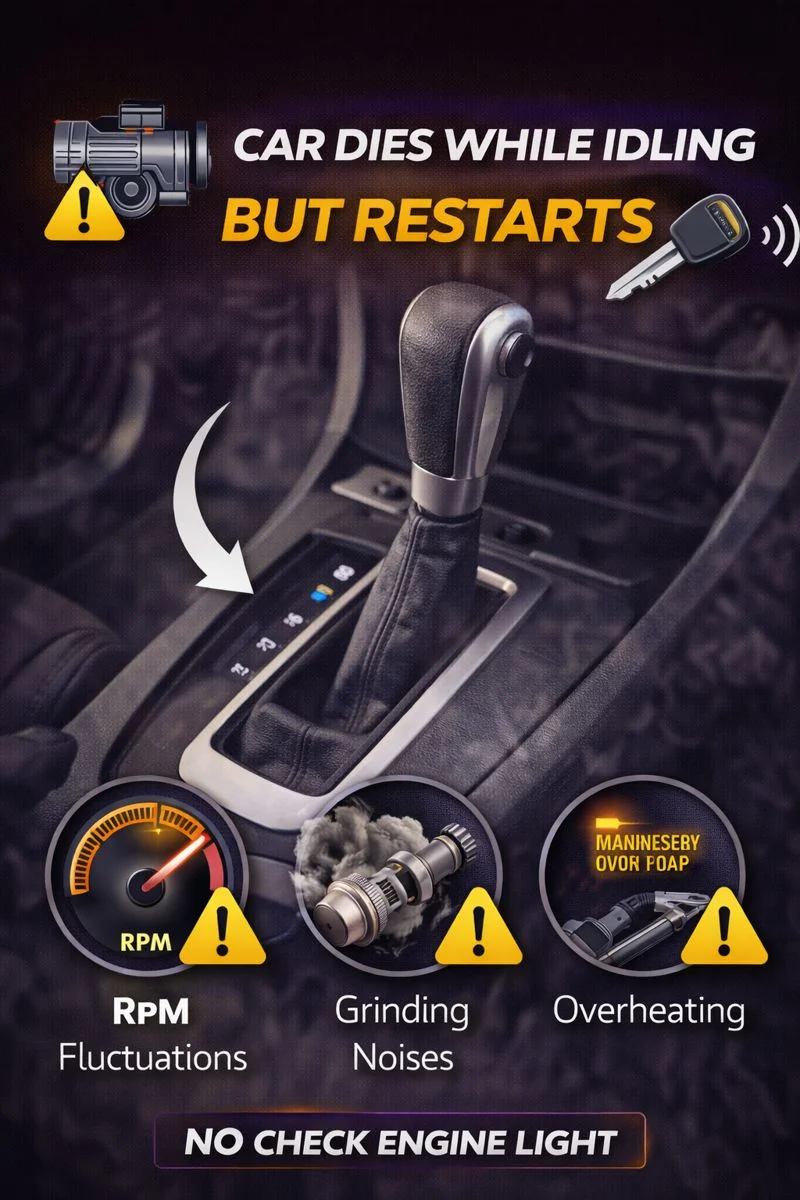
A vehicle that suddenly shuts off while idling can become frustrating and sometimes dangerous, especially when the engine restarts normally afterward and no check engine light appears on the dashboard. Many drivers expect warning lights to appear whenever an engine problem develops, but some stalling issues happen too quickly or intermittently for the engine computer to store a fault code immediately. This often creates confusion because the car may seem perfectly normal again after restarting, making the problem harder to diagnose.
Idle conditions place unique demands on the engine compared to highway driving or acceleration. While idling, the engine runs at very low RPM and depends heavily on precise airflow, stable fuel delivery, proper ignition timing, and accurate sensor readings. Even a small disruption in one of these systems may cause the engine to stall unexpectedly. Weak batteries, dirty throttle bodies, vacuum leaks, fuel delivery problems, crankshaft sensor failures, and idle air control issues are among the most common causes.
Intermittent stalling should never be ignored simply because the vehicle restarts afterward. Some problems begin as occasional shutdowns before eventually causing complete no-start conditions or unsafe driving situations. Careful diagnosis helps identify the root cause early and prevents larger mechanical or electrical failures from developing later.
Why Cars Stall More Easily At Idle
Idle speed operation is one of the most sensitive conditions for any engine because the engine produces very little power while still trying to keep multiple systems running smoothly.
Low RPM Makes The Engine More Sensitive
When the engine idles, RPM remains very low compared to normal driving speeds. At these lower speeds, the engine has less momentum to compensate for fuel delivery problems, airflow interruptions, or ignition inconsistencies.
During acceleration, higher RPM and increased fuel flow often help mask small issues temporarily. At idle, however, even minor problems can cause the engine speed to drop below the minimum threshold required to keep the engine running.
Modern engines constantly adjust idle speed through sensors and electronic throttle control systems. The engine computer monitors:
- Airflow
- Fuel mixture
- Engine temperature
- Electrical load
- Idle RPM
If one system responds incorrectly or too slowly, the engine may stall suddenly.
Air conditioning systems, power steering loads, cooling fans, and alternator demand also place extra stress on the engine during idle conditions. Weak components that function adequately while driving may struggle once RPM drops.
This sensitivity explains why some vehicles stall only while stopped at traffic lights or parked but run normally at highway speeds.
| Engine Condition | Idle Sensitivity |
|---|---|
| Low RPM | Higher Stall Risk |
| Heavy Electrical Load | Idle Instability |
| Poor Airflow Control | Rough Idle |
| Fuel Delivery Issues | Sudden Shutdown |
Some Problems Do Not Trigger Warning Lights Immediately
Many drivers assume the check engine light should appear every time the engine stalls, but this is not always true.
The engine control module stores trouble codes only when sensor readings or operating conditions exceed specific limits long enough for the computer to recognize a fault consistently.
Intermittent problems may:
- Happen too quickly
- Occur too rarely
- Fall outside stored fault thresholds
As a result, the engine may stall repeatedly without illuminating the check engine light immediately.
Battery voltage fluctuations, temporary sensor failures, or momentary fuel interruptions sometimes reset quickly before the computer registers a permanent issue.
In other situations, pending fault codes may exist even though the warning light remains off. Professional scan tools often detect hidden pending codes that basic dashboard indicators do not display.
Restarting Does Not Mean The Problem Is Minor
A vehicle restarting normally after stalling can create the false impression that the issue is harmless. However, intermittent stalling often indicates an underlying problem that may worsen gradually over time.
Fuel pumps, crankshaft sensors, ignition components, and electrical connections commonly fail intermittently during early stages before eventually failing completely.
Heat-related failures are especially common. Some sensors or electrical components stop functioning temporarily when hot but work again once cooled slightly.
Ignoring these symptoms can eventually lead to:
- Unexpected highway stalling
- Complete no-start conditions
- Increased repair costs
- Unsafe traffic situations
Early diagnosis remains important even when the vehicle restarts easily afterward.
Common Causes Of Idle Stalling Without Warning Lights
Several engine and electrical systems can cause stalling at idle without triggering immediate dashboard warnings.
Dirty Throttle Body Or Idle Air Control Valve
The throttle body controls airflow entering the engine. During idle conditions, the engine depends on extremely precise airflow control to maintain stable RPM.
Over time, carbon deposits build up inside the throttle body and around the idle air passages. These deposits restrict airflow and disrupt idle stability.
Older vehicles often use an idle air control valve to regulate idle speed directly. If the valve sticks or becomes dirty, the engine may struggle to maintain proper idle RPM and stall unexpectedly.
Common symptoms include:
- Rough idle
- Stalling while stopped
- RPM fluctuations
- Hard starting
- Sudden engine shutdown
Throttle body contamination is especially common in high-mileage vehicles or engines experiencing oil vapor buildup from crankcase ventilation systems.
Cleaning the throttle body and idle control passages often restores stable idle performance if caught early.
Vacuum Leaks
Engines rely on carefully balanced air-fuel mixtures. Vacuum leaks allow unmetered air to enter the engine, disrupting this balance.
At higher RPM, the engine sometimes compensates for small leaks more easily. At idle, however, vacuum leaks often create severe instability because airflow is already minimal.
Common vacuum leak sources include:
- Cracked vacuum hoses
- Intake manifold gasket leaks
- PCV valve problems
- Brake booster leaks
- Loose intake tubing
Symptoms may include:
- Rough idle
- Hissing noises
- Stalling at stops
- High idle RPM
- Lean fuel mixtures
Vacuum-related stalling sometimes occurs intermittently depending on engine temperature and hose expansion.
| Vacuum Leak Area | Possible Symptom |
|---|---|
| Intake Manifold | Rough Idle |
| Vacuum Hose | Engine Stalling |
| PCV System | Idle Fluctuation |
| Brake Booster | Hissing Sound |
Weak Fuel Delivery
Fuel system problems commonly cause idle stalling because the engine depends on stable fuel pressure at all times.
Weak fuel pumps, clogged fuel filters, or dirty injectors may interrupt fuel delivery briefly during low-RPM operation.
At higher engine speeds, fuel demand changes and pressure fluctuations sometimes stabilize temporarily. During idle, however, inconsistent fuel flow may cause the engine to die unexpectedly.
Fuel-related symptoms often include:
- Long crank times
- Hesitation
- Sudden shutdowns
- Power loss during acceleration
- Rough idle
Fuel pumps frequently fail gradually rather than suddenly. Heat buildup inside aging pumps may also create intermittent stalling after extended driving.
Low fuel pressure sometimes exists without triggering immediate warning lights if the pressure drop remains inconsistent.
Sensor And Electrical Problems That Cause Idle Stalling
Electronic components play a major role in modern idle control systems. Small sensor failures may shut the engine off without obvious warning.
Crankshaft Position Sensor Failure
The crankshaft position sensor monitors crankshaft speed and timing. The engine computer relies heavily on this information to control ignition timing and fuel injection.
If the sensor signal disappears even briefly, the engine may stall immediately because the computer loses synchronization with engine rotation.
Crankshaft sensors commonly fail intermittently during early stages. Heat often worsens the issue because internal electrical resistance changes as temperatures rise.
Drivers may notice:
- Random stalling
- Tachometer drop
- Restart after cooling down
- No warning lights initially
As failure progresses, the vehicle may eventually stop restarting altogether.
Because the signal interruption may happen too quickly, fault codes sometimes fail to store consistently during early failure stages.
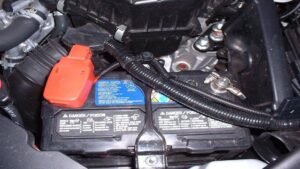
Weak Battery Or Charging System Problems
Low voltage can disrupt idle stability significantly in modern vehicles.
Alternators produce less charging output at idle compared to higher RPM. Weak batteries or failing alternators may struggle to support:
- Fuel injectors
- Ignition systems
- Engine computers
- Cooling fans
- Air conditioning loads
Voltage drops at idle sometimes cause the engine control module to malfunction temporarily, leading to stalling without warning lights.
Electrical symptoms may include:
- Flickering lights
- Slow cranking
- Radio resets
- Dashboard glitches
Battery terminals and ground connections should also be inspected because loose or corroded connections may interrupt voltage flow intermittently.
| Electrical Problem | Common Result |
|---|---|
| Bad Crankshaft Sensor | Sudden Stalling |
| Weak Alternator | Voltage Drop |
| Loose Ground Wire | Random Shutdown |
| Weak Battery | Idle Instability |
Faulty Mass Airflow Sensor
The mass airflow sensor measures incoming air entering the engine. Incorrect airflow readings may disrupt fuel calculations and idle stability.
Dirty or failing airflow sensors often create:
- Rough idle
- Hesitation
- Stalling
- Poor throttle response
At idle, airflow measurements become especially critical because the engine operates within very narrow fuel mixture ranges.
Some airflow sensor problems remain subtle enough initially that the engine computer does not trigger a warning light immediately.
Cleaning or replacing the sensor often restores smoother operation.
Diagnosing And Preventing Idle Stalling Problems
Intermittent idle stalling requires careful observation because symptoms may disappear temporarily after restarting.
Observe Exactly When The Stall Happens
Drivers should pay attention to:
- Engine temperature
- Air conditioner use
- Fuel level
- Electrical loads
- Weather conditions
Patterns often help identify whether the problem involves heat-related sensors, voltage instability, or airflow control.
For example:
- Hot engine stalls may suggest crankshaft sensor issues
- Stalls during AC operation may indicate idle control problems
- Fuel-level-related stalls may point toward weak fuel pumps
Detailed observations help narrow diagnosis significantly.
Scan For Pending Trouble Codes
Even without a check engine light, pending fault codes may exist inside the engine computer.
Professional diagnostic scanners often reveal:
- Intermittent sensor faults
- Lean fuel conditions
- Idle control errors
- Voltage irregularities
Reading pending codes helps identify hidden problems before complete component failure occurs.
Maintain Airflow And Fuel Systems
Routine maintenance greatly reduces idle-related stalling risks.
Helpful maintenance includes:
- Throttle body cleaning
- Fuel filter replacement
- Air filter service
- Battery inspection
- Fuel injector cleaning
Engines operating with clean airflow and stable voltage usually maintain smoother idle performance long term.
Conclusion
A car that dies while idling but restarts without a check engine light often suffers from intermittent airflow, fuel delivery, sensor, or electrical problems that may not trigger immediate fault codes. Idle conditions place unique stress on the engine because low RPM leaves little room for the engine to compensate for small disruptions.
Dirty throttle bodies, vacuum leaks, weak fuel pumps, crankshaft sensor failures, low voltage conditions, and airflow sensor problems are among the most common causes of sudden idle stalling. Although the engine may restart normally afterward, intermittent shutdowns should never be ignored because many components fail gradually before complete breakdown occurs.
Careful diagnosis, routine maintenance, and early inspection help prevent larger failures and improve overall engine reliability. Paying attention to stalling patterns, electrical symptoms, and idle behavior often provides valuable clues that make troubleshooting easier before the problem becomes more severe.