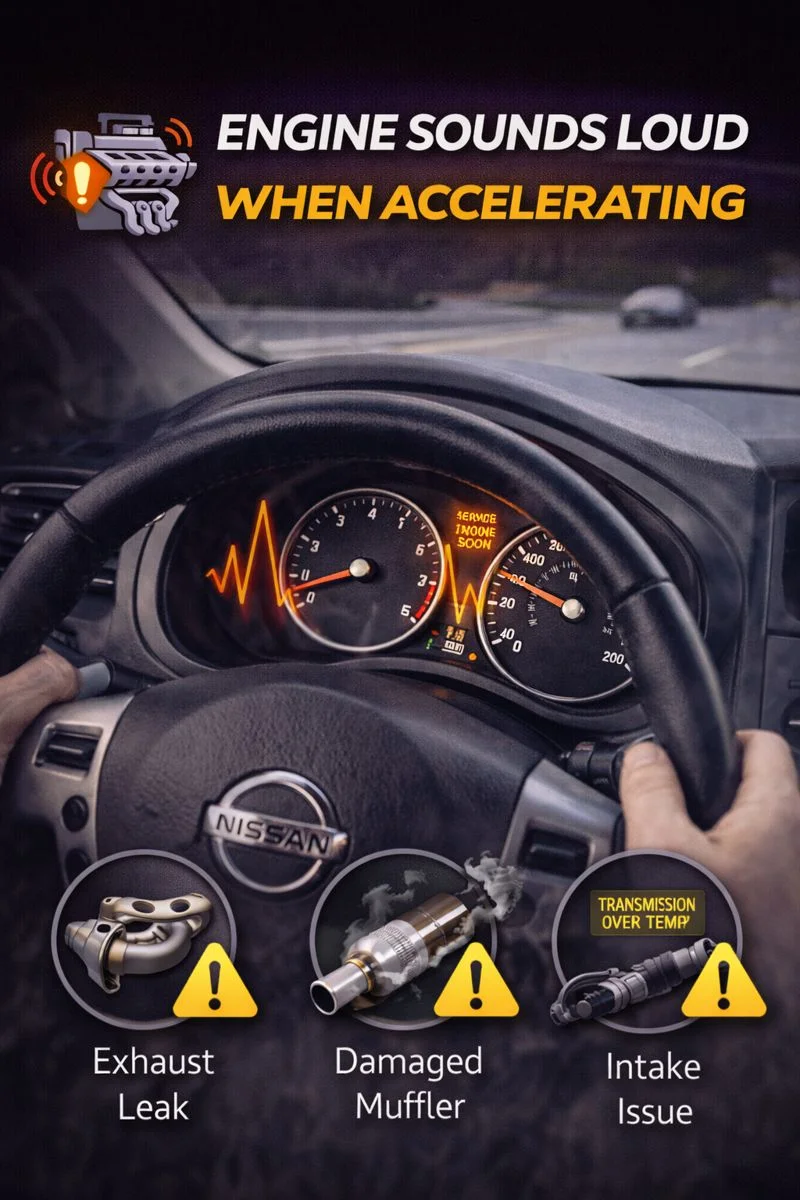
Every car makes more noise when the accelerator is pressed, but there is a clear difference between normal engine sound and noise that feels wrong. When the engine suddenly becomes much louder during acceleration, it often catches the driver’s attention immediately.
The sound may feel harsh, strained, or unusually aggressive compared to how the car behaved before. Some people describe it as roaring, droning, growling, or even rattling when speed increases. Because the noise fades when cruising or idling, it is easy to ignore or assume it is harmless.
In reality, a loud engine during acceleration is rarely random. Acceleration puts the engine, exhaust, intake, and drivetrain under the greatest load. If any part of that system is damaged, restricted, loose, or worn, the noise becomes most noticeable at that moment.
Sometimes the cause is simple and inexpensive. Other times, the sound is an early warning of a developing mechanical problem. Here you will know why engines sound loud during acceleration, how to recognize different noise patterns, and which issues are most often responsible.
Why Acceleration Makes Engine Noise Stand Out
Acceleration is when the engine works hardest. Fuel flow increases, airflow rises, exhaust volume grows, and internal components experience higher pressure. Any weakness in sealing, insulation, or component condition becomes more noticeable under this load.
At steady cruising speed, the engine runs efficiently with minimal stress. At idle, sound is limited because combustion energy is low. During acceleration, the engine is asked to deliver power quickly, which magnifies existing problems.
That is why many engine noise complaints only appear when pressing the gas pedal. The noise is not created by acceleration itself, but by components that cannot handle the increased demand smoothly.
How To Tell Normal Engine Sound From A Problem
Every engine has its own sound profile. Some engines naturally sound louder or more aggressive, especially performance-oriented models. The key is change.
If the engine has always sounded the same under acceleration, the noise is likely normal. Concern begins when the sound changes suddenly, grows louder over time, or is accompanied by vibration, loss of power, or warning lights.
Another important clue is tone. A smooth increase in sound is normal. Sharp, metallic, hollow, or raspy noises are not. The type of sound often points directly to the source.
Intake System Issues That Increase Engine Noise
One of the most common reasons an engine sounds loud during acceleration is a problem on the intake side.
The intake system channels air from outside the car into the engine. When everything is sealed properly, the sound is muffled. If a hose is cracked, disconnected, or loose, the engine pulls air through an opening that amplifies noise.
A damaged air intake hose often creates a loud rushing or sucking sound during acceleration. Because airflow increases with throttle input, the noise becomes louder as speed increases.
Air filter housings that are not sealed correctly can also cause excessive intake noise. If the air filter lid is loose or clips are broken, the intake sound escapes instead of being dampened.
Aftermarket intakes are another factor. Some are designed to increase engine sound intentionally. If the noise started after an intake modification, it may not indicate a fault, but it is still important to confirm that everything is installed correctly.
Exhaust Leaks And Their Distinctive Sounds
Exhaust problems are among the most common causes of loud noise during acceleration.
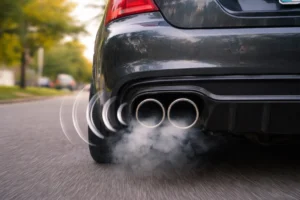
When exhaust gases escape before reaching the muffler, sound control is lost. Small leaks can produce a ticking or tapping sound that grows louder with acceleration. Larger leaks often cause a deep, booming, or roaring noise.
Exhaust manifold leaks usually produce a sharp ticking noise when accelerating, especially when the engine is cold. As metal expands with heat, the noise may lessen, which can mislead drivers into thinking the problem has gone away.
Leaks further downstream, such as damaged pipes or failed gaskets, tend to create louder, more aggressive sounds under throttle. Rusted sections are especially common in older vehicles.
A failing muffler or resonator also changes sound dramatically. The engine may suddenly sound much louder without a change in performance, especially during acceleration.
Heat Shields And Loose Components That Rattle
Heat shields are thin metal covers designed to protect components from exhaust heat. Over time, they rust, loosen, or break.
A loose heat shield often causes a rattling or buzzing sound during acceleration. The vibration increases with engine speed, making the noise appear only when pressing the gas pedal.
Because heat shields are thin and light, the noise can sound worse than the actual problem. However, ignoring it can allow the shield to fall off or damage nearby components.
Loose brackets, clamps, or mounts in the engine bay can also vibrate under load. These noises often disappear at idle and reappear during acceleration.
Engine Mount Wear And Noise Transfer
Engine mounts hold the engine in place while absorbing vibration. When mounts wear or break, the engine moves more than it should.
Excessive movement allows vibration and noise to transfer directly into the car’s body. During acceleration, torque causes the engine to twist slightly. Worn mounts cannot control this movement, making the engine sound louder inside the cabin.
This type of noise is often accompanied by a thump or clunk when accelerating or shifting gears. The engine itself may not be louder, but the sound feels harsher because isolation is lost.
Internal Engine Sounds That Appear Under Load
Some noises come from inside the engine and only appear during acceleration.
Detonation or knocking sounds like metallic pinging or rattling under load. This often occurs when fuel quality is poor, ignition timing is off, or carbon buildup increases compression. The sound usually fades when the throttle is released.
Valve train noise can also become louder during acceleration. Ticking or tapping that increases with engine speed may indicate worn lifters, low oil pressure, or improper lubrication.
Piston slap or bearing noise is more serious and often sounds like a dull knocking that worsens under load. These noises should never be ignored, as they indicate internal wear.
Transmission And Drivetrain Sounds Mistaken For Engine Noise
Not all acceleration noise comes from the engine itself.
Automatic and CVT transmissions can produce whining or droning sounds under acceleration, especially if fluid is low or worn. Manual transmissions may produce gear noise when accelerating in certain gears.
Driveshafts, CV joints, and differentials also produce noise under load. A growling or humming sound that increases with speed may be mistaken for engine noise but actually originates from the drivetrain.
Listening carefully to whether the noise changes with engine RPM or vehicle speed helps separate engine issues from drivetrain issues.
Exhaust Backpressure And Restricted Flow
A restricted exhaust system changes how sound exits the engine.
Clogged catalytic converters or collapsed exhaust pipes increase backpressure. The engine works harder to push exhaust gases out, which increases noise during acceleration.
This type of problem is often accompanied by reduced power and poor throttle response. The engine sounds strained, almost like it is working against resistance.
Why The Noise Often Stops When Cruising
Many drivers notice that the engine sounds loud only while accelerating, then quiets down once speed is steady.
This happens because load decreases once the car reaches cruising speed. The engine no longer needs to produce rapid power, so airflow, fuel delivery, and exhaust volume stabilize.
Problems that appear under high load may remain hidden when the engine is no longer stressed.
How The Problem Usually Progresses Over Time
Engine noise rarely stays the same. What begins as a mild increase in sound often grows louder.
Intake leaks worsen as hoses crack further. Exhaust leaks expand with heat and vibration. Internal wear progresses with use.
Ignoring the noise allows damage to spread, sometimes turning a simple repair into a major one.
Practical Ways To Narrow Down The Source
Listening carefully is the first step. Note whether the sound is high-pitched, deep, metallic, or hollow.
Pay attention to location. Does the noise seem to come from the front, underneath, or behind the car?
Check whether the noise changes with RPM while stationary. Revving the engine gently in Park can help identify engine-related sounds.
Visual inspection also helps. Look for loose heat shields, broken exhaust components, or disconnected hoses.
Repairs That Commonly Solve Loud Acceleration Noise
Fixing intake leaks often restores quiet operation immediately.
Exhaust repairs, such as replacing gaskets, pipes, or mufflers, dramatically reduce noise.
Securing heat shields or replacing broken mounts eliminates rattles and vibration transfer.
Internal engine issues require more careful evaluation, but addressing them early prevents severe damage.
Why Ignoring Engine Noise Is Risky
Noise is one of the engine’s earliest warning signs. While not every sound indicates imminent failure, ignoring it removes the chance to fix problems cheaply.
A small exhaust leak can damage nearby components. Prolonged detonation damages pistons. Worn mounts stress hoses and wiring.
Noise that appears during acceleration is especially important because it reflects how the engine behaves under stress.
Preventing Loud Engine Noise In The Future
Regular inspections catch loose components early.
Maintaining proper oil level and quality reduces internal noise.
Addressing warning lights promptly prevents problems that increase engine strain.
Avoiding prolonged hard acceleration when problems are present helps limit damage.
Final Thoughts
An engine that sounds loud when accelerating is not just being “a little noisy.” It is responding to load in a way that exposes weaknesses in the intake, exhaust, mounting, or internal systems. While some causes are simple and inexpensive, others are warnings that should not be ignored.
The most important step is paying attention to change. When sound changes, something has changed mechanically. Identifying the type of noise, when it occurs, and how it behaves makes diagnosis far more accurate. Addressed early, most causes of loud acceleration noise can be resolved before they affect performance, reliability, or long-term engine health.