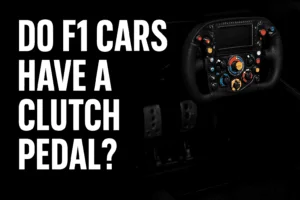
Formula 1 cars represent the peak of circuit racing technology. Every component is engineered for maximum performance, minimal weight, and razor-sharp precision. To the outside observer, the cockpit of an F1 car looks complex, with a rectangular steering wheel covered in buttons, dials, and paddles. Yet one thing appears noticeably absent: a traditional clutch pedal.
Most road cars use three pedals in manual transmission models — brake, accelerator, and clutch. Drivers press the clutch to shift gears and to move the vehicle from a standstill. In Formula 1, however, technology has evolved beyond that familiar layout. The way F1 cars manage gear changes and race starts differs significantly from conventional manual vehicles.
The question of whether F1 cars have a clutch pedal leads to a deeper look at how these machines operate. Their transmission systems, launch procedures, and steering-wheel controls are designed to deliver maximum performance under intense racing conditions.
Transmission Technology In Modern Formula 1
Semi Automatic Gearbox Without A Traditional Pedal
Modern Formula 1 cars use an eight-speed semi-automatic sequential gearbox. Unlike road cars with manual transmissions, F1 cars do not have a clutch pedal on the floor. Instead, gear changes are made using paddle shifters mounted behind the steering wheel.
These paddle shifters allow drivers to change gears in milliseconds without lifting off the throttle significantly. When the driver pulls a paddle, electronic and hydraulic systems execute the shift almost instantly. The process is faster and more precise than a human operating a clutch pedal and gear lever.
This system eliminates the need for a conventional clutch pedal during normal driving on track. Drivers keep both feet focused on brake and accelerator while using their hands to control gear changes.
Hydraulic And Electronic Control Systems
The gearbox in an F1 car relies on advanced hydraulic actuators and electronic control units. These systems manage clutch engagement, gear synchronization, and power delivery.
When a driver selects a gear using the paddle, the onboard computer coordinates throttle adjustments and clutch actuation seamlessly. This reduces mechanical stress and ensures smooth shifts at extremely high engine speeds.
These technologies allow F1 drivers to maintain control during high-speed cornering without the distraction of manual clutch operation.
How The Clutch Works In An F1 Car
Clutch Paddle Instead Of Pedal
Although F1 cars do not have a clutch pedal, they do have a clutch system. The clutch is controlled by paddles located on the back of the steering wheel.
Typically, there are two clutch paddles positioned behind the wheel. Drivers use these paddles primarily during race starts. Once the car is moving at speed, the clutch is rarely needed.
This setup reduces weight and simplifies cockpit layout. It also ensures the driver’s feet remain dedicated to braking and accelerating without managing a third pedal.
Use Of The Clutch During Race Starts
The clutch paddles play a crucial role at the start of a race. Drivers hold both paddles before the start lights go out. Once the signal is given, they gradually release one paddle to control launch power while keeping the other as a backup reference.
The process requires extreme precision. Too much throttle or too quick a release can cause wheel spin. Too little release can stall the engine.
The launch procedure is practiced extensively because gaining positions at the start can determine race outcome.
Why Formula 1 Does Not Use A Clutch Pedal
Focus On Performance And Efficiency
Removing a traditional clutch pedal reduces weight and simplifies mechanical linkages. Every kilogram matters in Formula 1, and eliminating unnecessary components improves performance.
A pedal would also require foot movement that could interfere with braking precision. With only two pedals, drivers maintain consistent foot positioning during intense cornering sequences.
Electronic systems can manage clutch engagement far more accurately than manual pedal input at high speeds.
Faster Gear Changes Compared To Manual Systems
Manual clutch operation requires coordination between foot and hand. In racing, even a fraction of a second matters.
Semi-automatic gearboxes allow seamless shifts without interrupting acceleration. The system maintains engine momentum and stability.
This efficiency provides competitive advantage over traditional manual systems.
Comparison With Road Cars And Other Racing Series
Road Car Manual Versus F1 System
In road cars, the clutch pedal allows drivers to control power transfer when changing gears or starting from rest. It is mechanical and controlled directly by foot input.
In contrast, F1 cars automate clutch engagement once moving. Drivers only interact with the clutch during initial launch or pit lane departures.
The systems share the same fundamental principle — disconnecting engine from transmission — but differ in control method and complexity.
Other Racing Categories
Some racing series still use manual transmissions with clutch pedals. Lower-tier formula series may include more conventional layouts to reduce costs.
Endurance racing cars and touring cars often use paddle-shift systems similar to F1.
The direction of high-level motorsport consistently favors paddle-operated gearboxes for speed and reliability.
The Role Of Driver Skill
Precision During Launch
Even with advanced electronics, the driver’s timing during launch remains critical. Managing throttle and clutch paddle release determines whether the car accelerates cleanly or loses traction.
Teams analyze data from practice starts to refine settings.
Clutch bite point calibration is adjusted to match track conditions.
Driver control and coordination remain central despite automation.
Adapting To Technology
F1 drivers train extensively to master steering wheel controls. The clutch paddles, gear paddles, brake balance adjustments, and multiple engine modes require constant attention.
Operating these controls at speeds exceeding 200 mph demands intense focus.
The absence of a clutch pedal does not simplify the task; it shifts responsibility to hand coordination and electronic awareness.
Evolution Of The Clutch System In Formula 1
Earlier Formula 1 cars did use traditional clutch pedals decades ago. As technology advanced in the 1990s, paddle-shift gearboxes became standard.
Electronic launch control systems were once allowed but later restricted to preserve driver skill.
Modern F1 cars rely on hybrid power units and highly integrated control systems, making manual clutch pedals obsolete.
The evolution reflects the sport’s ongoing pursuit of speed and efficiency.
Bottom Line
Formula 1 cars do not have a clutch pedal in the traditional sense. Instead, they use clutch paddles mounted behind the steering wheel, primarily for race starts and pit lane departures.
Once underway, gear shifts are handled through semi-automatic paddle systems supported by advanced hydraulics and electronic controls. This design improves performance, reduces weight, and enables lightning-fast gear changes.
The absence of a pedal does not reduce driver involvement. Instead, it highlights how modern racing technology reshapes familiar automotive concepts to maximize efficiency and competitive advantage on the track.