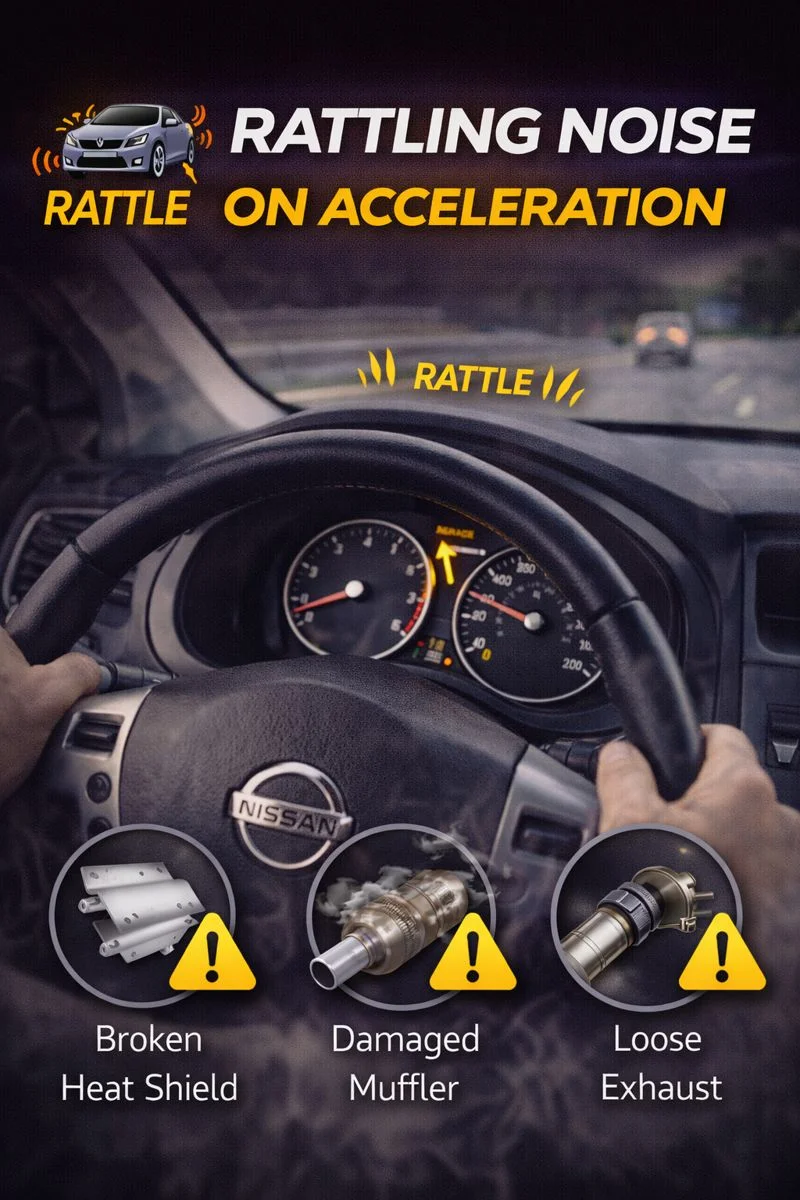
A rattling noise during acceleration is one of the most common sounds drivers notice when something inside the vehicle starts wearing out or coming loose. The noise may appear as a light metallic vibration, a deep shaking sound underneath the car, or a rapid ticking that becomes louder when pressing the accelerator. Some rattles happen only during hard acceleration, while others appear at specific speeds or engine RPM ranges. Although the vehicle may still seem drivable initially, rattling noises often point toward mechanical problems that should not be ignored for too long.
Acceleration places extra stress on the engine, exhaust system, drivetrain, suspension, and heat shields. As engine speed and torque increase, loose or damaged components move more aggressively and create sounds that may not be noticeable while idling. In many cases, the problem begins with a small vibration or loose part but gradually becomes louder as wear increases. Ignoring the noise may eventually lead to broken exhaust components, engine damage, transmission issues, or unsafe driving conditions.
The exact cause depends heavily on where the sound comes from and when it appears. Exhaust heat shields, catalytic converters, engine knock, loose suspension parts, worn motor mounts, and timing-related problems are among the most common reasons vehicles develop rattling noises under acceleration. Careful diagnosis helps identify the source before the damage spreads to other components.
Why Acceleration Makes Rattling Noises More Noticeable
Many mechanical problems remain quiet while the vehicle idles but become obvious once engine load and movement increase.
Engine Load Increases Component Movement
When the accelerator pedal is pressed, the engine produces more torque and vibration. This added force causes engine mounts, exhaust pipes, drivetrain components, and rotating assemblies to move more aggressively compared to idle conditions.
Loose or worn parts often begin rattling because acceleration transfers vibration throughout the chassis and engine bay. Heat shields, brackets, and exhaust components may shake against nearby metal surfaces once engine RPM rises.
Higher engine load also increases exhaust pressure and internal combustion forces. Small problems inside the engine or exhaust system become amplified during acceleration because the affected components experience greater stress.
Some rattling noises appear only within certain RPM ranges because vibration frequency changes as engine speed increases. Once the RPM passes that range, the sound may temporarily disappear again.
This relationship between engine load and vibration is why many rattles are difficult to detect while parked.
| Driving Condition | Noise Behavior |
|---|---|
| Idle | Noise May Be Minimal |
| Light Acceleration | Mild Rattle Appears |
| Heavy Acceleration | Loud Rattling |
| Highway Cruising | Sound May Fade |
Heat Expands Metal Components
Engine and exhaust components heat up rapidly during operation. As metal expands, loose brackets, shields, or internal parts may begin vibrating differently than when the vehicle is cold.
Some drivers notice rattling only after the engine reaches operating temperature because thermal expansion changes clearances between components.
Heat-related rattles commonly involve:
- Exhaust heat shields
- Catalytic converters
- Muffler internals
- Engine timing components
Expansion and contraction cycles also weaken fasteners gradually over time, especially on older high-mileage vehicles.
Road salt, corrosion, and repeated heating cycles accelerate metal fatigue and increase the likelihood of loose exhaust-related rattles.
Vibrations Travel Through The Entire Vehicle
Acceleration vibrations do not stay isolated to one component. Engine movement transfers force through:
- Motor mounts
- Transmission mounts
- Exhaust hangers
- Suspension parts
- Drivetrain components
A rattling sound originating underneath the car may sometimes seem like it comes from the dashboard or engine bay because vibrations travel through the chassis.
This can make diagnosing acceleration rattles difficult without careful inspection or road testing.
Exhaust System Problems That Cause Rattling
Exhaust-related issues are among the most common causes of rattling noises during acceleration.
Loose Heat Shields
Heat shields protect nearby components from extreme exhaust temperatures. Thin metal shields surround parts such as:
- Catalytic converters
- Mufflers
- Exhaust pipes
Over time, mounting hardware corrodes or breaks, allowing the shields to vibrate loosely.
Acceleration increases exhaust vibration and engine movement, causing loose shields to rattle loudly against nearby metal surfaces.
Heat shield rattles often sound:
- Metallic
- Rapid
- Tin-like
- Vibration-related
The noise usually becomes more noticeable during acceleration or when revving the engine in park.
Fortunately, loose heat shields are often inexpensive to repair if addressed early. However, completely removing damaged shields is usually not recommended because nearby components still require heat protection.
Catalytic Converter Internal Failure
Catalytic converters contain a honeycomb substrate coated with precious metals that reduce harmful emissions. Over time, overheating or impact damage may crack the internal substrate.
Once broken, loose pieces inside the converter rattle during acceleration as exhaust pressure and vibration increase.
Common signs include:
- Metallic rattling underneath the vehicle
- Reduced acceleration
- Sulfur smell
- Check engine light
- Poor fuel economy
Severe internal converter damage may eventually clog exhaust flow and create major performance problems.
Catalytic converter failure often results from other engine problems such as:
- Misfires
- Rich fuel mixtures
- Oil burning
- Overheating
Replacing the converter without fixing the original engine issue may lead to repeated failures later.
| Exhaust Problem | Common Sound |
|---|---|
| Loose Heat Shield | Metallic Vibration |
| Broken Catalytic Converter | Internal Rattle |
| Loose Exhaust Hanger | Clunking Noise |
| Damaged Muffler | Deep Metallic Shake |
Muffler And Exhaust Pipe Damage
Rust, road debris, and vibration gradually weaken exhaust pipes and mufflers. Internal muffler baffles sometimes break loose and create rattling sounds while accelerating.
Loose exhaust hangers may also allow pipes to strike the underbody during engine movement.
Drivers may notice:
- Rattling underneath the car
- Louder exhaust tone
- Vibration during acceleration
- Metallic knocking
Exhaust leaks sometimes accompany these problems because damaged pipes develop cracks or separated joints.
Ignoring exhaust rattles may eventually lead to dragging exhaust components or complete exhaust separation.
Engine Problems That Create Rattling Sounds
Not all acceleration rattles come from the exhaust system. Some noises originate directly inside the engine itself.
Engine Knock And Detonation
Engine knock occurs when the air-fuel mixture ignites unevenly inside the cylinders. Instead of controlled combustion, pressure spikes create sharp metallic rattling or pinging sounds during acceleration.
Detonation often becomes most noticeable:
- During uphill driving
- Under heavy throttle
- In hot weather
- With low-octane fuel
Several conditions may contribute to engine knock including:
- Carbon buildup
- Incorrect ignition timing
- Lean fuel mixtures
- Faulty knock sensors
- Poor fuel quality
Modern engines usually adjust ignition timing automatically to reduce knock, but persistent detonation should never be ignored because it may damage pistons and internal engine components.
Turbocharged engines are especially sensitive to low-octane fuel and combustion irregularities.
Timing Chain Problems
Timing chains synchronize crankshaft and camshaft movement inside the engine. Over time, chains stretch and tensioners weaken.
Loose timing chains may create rattling noises during startup and acceleration because chain slack increases under changing engine load.
Symptoms may include:
- Rattling at certain RPM
- Rough idle
- Check engine light
- Delayed acceleration
- Engine misfires
Timing chain problems should be diagnosed quickly because severe chain failure can destroy internal engine components if valve timing slips dramatically.
Some engines are more prone to timing chain wear than others, especially when oil changes are neglected.
| Engine Problem | Common Symptom |
|---|---|
| Engine Knock | Metallic Pinging |
| Timing Chain Wear | RPM-Related Rattle |
| Low Oil Pressure | Valve Train Noise |
| Loose Pulley | Front Engine Rattle |
Low Oil Pressure And Valve Train Noise
Engines depend on proper oil pressure to lubricate moving components such as lifters, camshafts, and timing assemblies.
Low oil pressure may create rattling or ticking noises because metal parts lose their protective lubrication film.
Common causes include:
- Low oil level
- Worn oil pump
- Dirty oil passages
- Engine wear
Acceleration sometimes makes valve train noise louder because RPM and oil demand increase simultaneously.
Ignoring lubrication-related rattles may lead to severe internal engine wear over time.
Suspension And Drivetrain Rattles During Acceleration
Some acceleration rattles originate from components transferring power to the wheels rather than the engine itself.
Worn Motor Mounts And Transmission Mounts
Motor mounts secure the engine and transmission while absorbing vibration. As mounts wear or crack, the drivetrain moves excessively during acceleration.
Excessive movement may cause:
- Metal contact
- Exhaust rattling
- Clunking noises
- Cabin vibration
Drivers often notice stronger rattling during hard acceleration because engine torque shifts the drivetrain aggressively.
Broken mounts sometimes allow exhaust pipes or brackets to strike nearby chassis components repeatedly.
CV Joints And Axle Problems
Front-wheel-drive and all-wheel-drive vehicles rely on constant velocity joints to transfer power smoothly while allowing steering movement.
Worn CV joints commonly create clicking sounds during turns, but severe wear may also create rattling or vibration during acceleration.
Damaged axle shafts or loose suspension hardware may produce similar noises under load.
Grease leakage from torn CV boots accelerates joint wear quickly because contamination enters the moving components.
Loose Suspension Components
Loose sway bar links, control arm bushings, or suspension hardware may rattle when the vehicle accelerates over uneven surfaces.
Acceleration shifts vehicle weight rearward, changing suspension loading and allowing loose components to move differently than during steady cruising.
Suspension-related rattles often become more noticeable:
- Over bumps
- During quick throttle changes
- On rough roads
Early suspension repairs help prevent uneven tire wear and poor vehicle stability later.
| Drivetrain Problem | Noise Type |
|---|---|
| Bad Motor Mount | Heavy Vibration |
| Worn CV Joint | Clicking Or Rattle |
| Loose Suspension Part | Metallic Shake |
| Broken Exhaust Hanger | Underbody Rattle |
Diagnosing And Preventing Acceleration Rattles
Careful observation helps narrow down the source of rattling noises more accurately.
Notice When The Noise Happens
Drivers should pay attention to:
- Engine RPM
- Vehicle speed
- Road conditions
- Temperature
- Turning movement
For example:
- Exhaust rattles often change with RPM
- Suspension rattles worsen over bumps
- Engine knock appears during heavy throttle
These patterns help identify which system requires inspection.
Inspect The Exhaust System Regularly
Routine exhaust inspections help catch:
- Loose heat shields
- Rusted hangers
- Cracked pipes
- Catalytic converter damage
Small exhaust problems are usually much cheaper to repair before major parts fail completely.
Maintain Proper Engine Service
Regular oil changes, ignition maintenance, and fuel system care help reduce internal engine rattles.
Using correct fuel octane and maintaining proper oil levels are especially important for preventing detonation and timing-related wear.
Conclusion
A rattling noise during acceleration can come from several different systems including the exhaust, engine, drivetrain, suspension, or transmission. Loose heat shields, damaged catalytic converters, engine knock, timing chain wear, bad motor mounts, and suspension problems are among the most common causes.
Acceleration increases engine load, vibration, exhaust pressure, and drivetrain movement, making weak or loose components much more noticeable than during idle conditions. The exact sound behavior often provides valuable clues about where the problem originates and how serious it may be.
Ignoring rattling noises for too long may lead to more expensive repairs, reduced engine performance, unsafe driving conditions, or severe mechanical damage. Early diagnosis and routine maintenance help keep the vehicle quieter, safer, and more reliable over time.