The Honda CR-V has built a strong reputation for reliability, practicality, and everyday usability. It’s frequently recommended by owners, praised in online communities, and often viewed as a safe choice in the compact SUV segment. On the surface, it appears to be a dependable option across the board.
However, even well-regarded models can have weaker years. No vehicle line is flawless across every generation. Certain model years may experience design shortcomings, early production issues, transmission concerns, or long-term reliability patterns that only become clear after higher mileage.
Instead of asking whether the Honda CR-V is reliable in general, the more useful question is which specific years require closer attention. Understanding generational changes, common complaints, recall history, and long-term owner feedback makes a significant difference when shopping used.
This guide outlines the Honda CR-V years that have raised concerns, explains the problems associated with those model years, and separates verified issues from exaggerated online claims—so buying decisions can be made with clarity and confidence.
Why “Avoid” Doesn’t Always Mean “Never Buy”
When people say a certain year should be avoided, it doesn’t mean every single vehicle from that year is bad. What it usually means is:
- That year had higher-than-average complaints
- Certain problems showed up repeatedly
- Repairs were more common or more expensive
A well-maintained example can still be fine. But knowing which years had issues helps you decide whether the risk is worth it.
A Quick Look at Honda CR-V Generations
Understanding generations makes everything clearer.
- Early 2000s models focused on simplicity
- Mid-2000s models added comfort and complexity
- Late-2000s models introduced design changes
- 2010s models brought new engines and transmissions
- Late-2010s models added turbocharging and advanced electronics
Most issues tend to appear when Honda introduces new technology or redesigns major components.
Early 2000s CR-V: Reliable, But Not Problem-Free
2002–2006 Models: What Made Me Pause
These years are often praised for durability, but they weren’t perfect.
One recurring issue involved air conditioning systems. Many owners reported compressor failures that were expensive to repair. While the engine and transmission were generally solid, cooling comfort became a weak point.
Why I’d be cautious:
- Costly air conditioning repairs
- Age-related wear by now
- Fewer modern safety features
Inspect them carefully and factor in repair history.
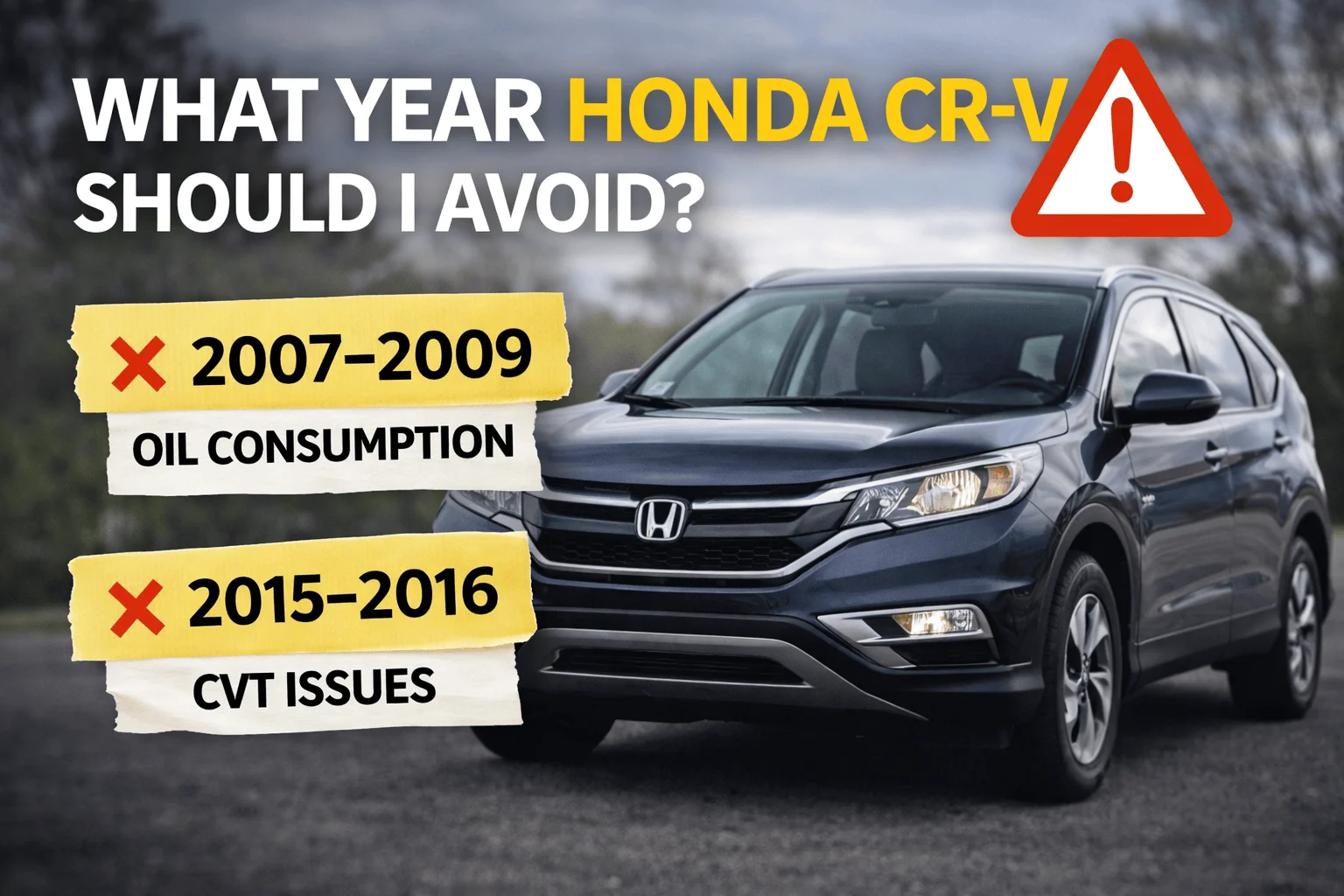
2007–2009: One of the Most Commonly Avoided Periods
Why These Years Raised Red Flags for Me
These model years came up again and again when we researched owner complaints.
The most talked-about issue involved excessive oil consumption. Some owners reported needing to add oil far more often than expected, even with regular maintenance.
This problem:
- Often appeared gradually
- Wasn’t always obvious during test drives
- Could lead to engine wear if ignored
Not every vehicle was affected, but the pattern was strong enough that I’d be cautious.
Why I’d think twice:
- Oil usage complaints
- Potential long-term engine stress
- Harder to spot without ownership history
2010–2011: Improvement, But Still Transitional
These years improved on earlier problems, but they still felt like part of a transition period.
Some owners reported:
- Interior wear issues
- Suspension noises
- Early signs of vibration under certain conditions
Nothing catastrophic, but enough small issues that I’d want a clean service record before buying.
2012: A Year That Divided Opinions
This year surprised me.
On paper, it looked solid. In practice, many owners mentioned noticeable vibrations, especially at idle or low speeds. Honda addressed some concerns, but not everyone felt satisfied.
Why this matters:
- Vibration affects comfort
- Hard to diagnose
- Can be frustrating to live with long-term
2013–2014: Some of the Safer Used Options
Honda had worked through earlier issues, and these models benefited from:
- Mature design
- Fewer major complaints
- Solid long-term reliability reports
2015–2016: New Transmission, New Concerns
This is where things got interesting.
Honda introduced a continuously variable transmission in some CR-V models around this time. While many owners had no issues, others reported:
- Hesitation
- Shuddering
- Unusual behavior at low speeds
Why I’d be cautious:
- Mixed owner feedback
- Early-generation transmission tuning
- Behavior that may worsen over time
2017–2019: The Fuel Dilution Conversation
These years are among the most discussed in recent CR-V history.
Honda introduced a smaller turbocharged engine, and some owners reported concerns about fuel mixing with engine oil, especially in cold climates or short-trip driving.
Important context:
- Not all vehicles were affected
- Many owners never experienced issues
- Honda addressed concerns through updates and guidance
Still, it’s something I’d want to understand before buying.
Why I’d research carefully:
- Long-term engine health questions
- Driving habits matter
- Climate can play a role
2020 and Newer: Improvements and Refinements
Later models benefit from:
- Software updates
- Design refinements
- Lessons learned from earlier years
While no car is flawless, complaints appear less concentrated compared to earlier periods.
Why Owner Experience Matters More Than Headlines
Online discussions can exaggerate problems. People are more likely to post when something goes wrong.
That’s why you focus on:
- Patterns, not single stories
- Long-term ownership reports
- Consistent complaints across many owners
A handful of loud complaints doesn’t define a whole year — but repeated issues across thousands of owners do.
How Maintenance Can Change Everything
I’ve seen “problem years” with zero issues because:
- Oil was checked regularly
- Recalls were handled
- Software updates were applied
- Driving habits matched the vehicle’s design
And I’ve seen “good years” ruined by neglect.
History matters more than reputation alone.
What Always Check Before Buying a Used CR-V
Before committing, look at:
- Service records
- Oil change frequency
- Any recalls or updates completed
- Test drive behavior at idle and low speeds
- Cold start performance
These checks often matter more than the model year itself.
Avoiding a Year vs Avoiding a Bad Example
This distinction matters.
Sometimes it’s smarter to:
- Avoid a poorly maintained “good year”
- Buy a well-maintained “questionable year”
Condition beats reputation more often than people think.
Why Some Issues Don’t Show Up Right Away
Many CR-V issues:
- Develop slowly
- Depend on driving habits
- Appear after years, not months
That’s why research matters before buying, not after.
Should You Completely Avoid Certain Years?
Based on everything I’ve learned:
- I’d be most cautious with late-2000s oil-related years
- I’d research carefully before buying early turbo models
- I’d feel more confident with mid-2010s naturally aspirated versions
Final Thoughts
The Honda CR-V earns its reputation overall, but that doesn’t mean every year is equally safe. From my experience, the smartest approach isn’t fear — it’s awareness. Knowing which years had known concerns helps you ask better questions, inspect more carefully, and avoid surprises later.
If you’re shopping for a CR-V, don’t just ask what year it is. Ask how it was driven, how it was maintained, and how it behaves now. That information matters far more than a label alone.