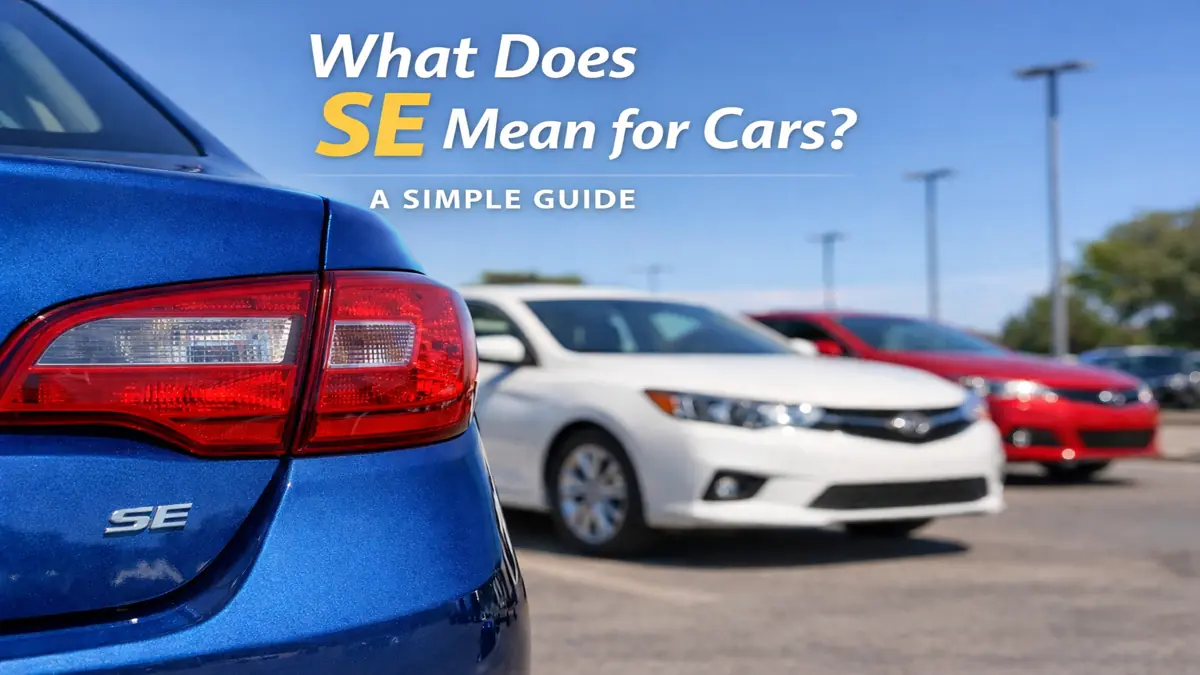
Vehicle badges often look simple, yet they carry more meaning than most buyers realize. Letters placed on a trunk lid or tailgate can indicate trim level, equipment package, or performance tier. Among the most common of these designations is “SE.” It appears across brands including Toyota, Ford, Hyundai, Nissan, and Volkswagen. Despite its widespread use, its exact meaning can vary slightly depending on the manufacturer.
For many buyers shopping new or used vehicles, trim badges influence pricing, equipment, resale value, and overall satisfaction. A model labeled SE often sits above the base version but below higher premium trims. It may offer upgraded features, cosmetic enhancements, or modest performance differences.
Knowing what SE represents can help narrow choices when comparing trims. Rather than focusing only on engine size or exterior color, trim levels shape comfort, technology, and ownership value over time.
What SE Stands For In Most Cars
Sport Edition Or Special Edition Explained
In most cases, SE stands for “Sport Edition.” Some manufacturers use it to mean “Special Edition,” though this is less common in mainstream production vehicles. When labeled as Sport Edition, the trim usually includes design upgrades and mild performance-oriented enhancements compared to base models.
These enhancements often include larger wheels, sport-tuned suspension components, upgraded interior trim, and cosmetic styling changes. However, the term does not always imply a major horsepower increase. In many vehicles, the engine remains identical to lower trims.
Manufacturers use SE branding to create a balance between affordability and added appeal. It positions the vehicle as more engaging than the entry-level model without reaching premium price territory.
How Different Brands Use The SE Badge
Toyota frequently uses SE to denote a sportier trim level with distinct exterior accents and interior upgrades. Ford has applied SE across models like the Fusion and Escape to represent mid-level trims with enhanced features.
Hyundai and Nissan also use SE to signal additional equipment such as alloy wheels, upgraded infotainment systems, and improved interior materials.
Because the meaning varies slightly by brand, buyers should always review specific equipment lists rather than relying solely on badge interpretation.
Where SE Fits In The Trim Hierarchy
Between Base And Premium Models
Most vehicle lineups follow a structured trim hierarchy. The base trim offers essential features at the lowest price. Above it sits the SE trim, typically adding convenience and appearance upgrades. Higher trims may include luxury features, stronger engines, or advanced driver assistance technologies.
The SE trim often represents a value sweet spot. It avoids the stripped-down nature of base models while remaining less expensive than top-tier variants.
For example, a compact sedan lineup might include Base, SE, SEL, and Limited trims. In that structure, SE adds meaningful upgrades without entering the luxury category.
Price Differences Compared To Other Trims
The price increase from base to SE often ranges from $1,000 to $3,000 depending on vehicle type. Used models may show smaller differences due to depreciation.
The added cost generally reflects improved comfort, upgraded wheels, enhanced interior materials, and sometimes improved suspension tuning.
Buyers should compare feature lists carefully to determine whether the additional cost aligns with personal priorities.
Features Commonly Found In SE Trims
Exterior And Interior Enhancements
SE trims frequently include alloy wheels instead of steel wheels, body-colored trim accents, and sport-style grilles. Fog lights may be added compared to base models.
Inside the cabin, SE versions often feature upgraded upholstery, leather-wrapped steering wheels, larger infotainment screens, and improved audio systems.
These changes elevate overall appearance and comfort without dramatically increasing price.
Technology And Safety Additions
Many manufacturers include additional technology features in SE trims. These can include touchscreen upgrades, smartphone integration, keyless entry, push-button start, and advanced climate control systems.
Some SE trims also include expanded safety features such as blind-spot monitoring or rear cross-traffic alerts, depending on brand and model year.
The equipment level often makes SE trims attractive to buyers seeking modern features without paying for luxury-level upgrades.
Performance Expectations From An SE Model
Engine Options And Handling Characteristics
Despite the “Sport Edition” label, many SE models retain the same engine found in base trims. Performance gains, if present, usually come from suspension tuning or tire upgrades rather than horsepower increases.
In some vehicles, SE trims may offer optional larger engines not available on base versions. However, this varies widely.
Sport-tuned suspension adjustments may provide slightly firmer handling and reduced body roll, improving cornering stability without sacrificing daily comfort.
Fuel Economy And Practical Considerations
Because engine options often remain unchanged, fuel economy differences between base and SE trims are usually minimal.
Larger wheels may slightly affect efficiency, but the impact is generally small.
Insurance rates typically remain similar unless the vehicle includes significantly higher performance equipment.
Is An SE Trim Worth Choosing
Value Compared To Entry Level
SE trims often represent one of the most popular configurations in a model lineup. They strike a balance between cost and equipment.
Buyers who want alloy wheels, upgraded interiors, and modern tech features often find SE trims appealing.
For used vehicle shoppers, SE trims may offer better resale value than base versions because of broader feature appeal.
Comparing SE To Higher Trims
Higher trims such as SEL, Limited, or Touring usually include leather seating, premium audio systems, advanced safety packages, and larger engines.
The price jump to these trims can be substantial.
SE often serves as a middle ground for drivers who want more than basic transportation but do not require top-tier luxury appointments.
Long Term Ownership And Resale Impact
Vehicles with SE trim levels often maintain strong resale value because they offer desirable features without excessive complexity.
Maintenance costs generally align with standard models unless additional performance components are included.
Buyers researching used vehicles frequently search for SE trims due to their balanced equipment levels.
Choosing an SE trim can provide enhanced comfort and style while maintaining reasonable long-term costs.
The Practical Perspective
SE in cars most commonly stands for Sport Edition and typically represents a mid-level trim that blends affordability with added features. It often includes cosmetic upgrades, improved interior materials, and modest handling enhancements.
While performance increases are usually limited, the added equipment often makes daily use more comfortable and visually appealing.
Understanding trim hierarchy and reviewing detailed feature lists ensures buyers make informed decisions rather than relying solely on badge interpretation.
For many shoppers, SE trims offer a strong combination of value, practicality, and modern styling — making them one of the most commonly selected configurations across multiple automotive brands.