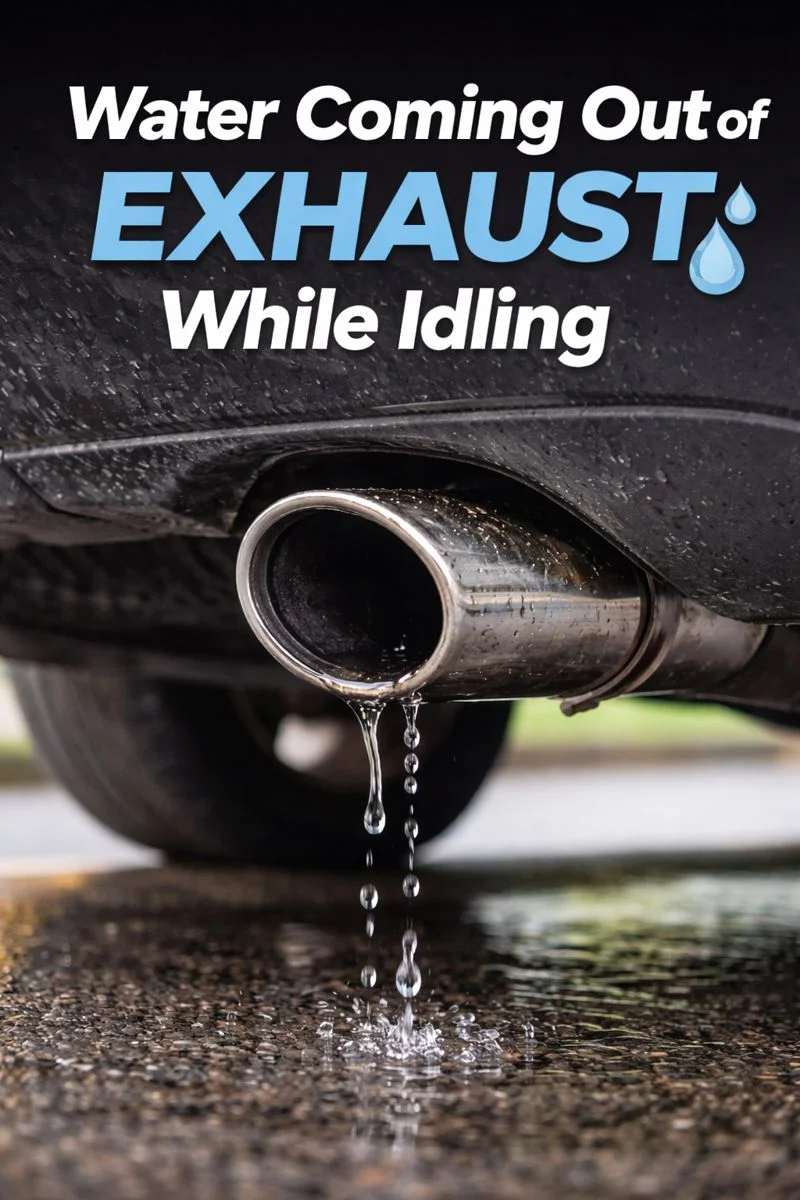
Seeing water or thin white steam coming from your car’s tailpipe while it idles can be surprising — even worrying — the first time you notice it.
The good news is that in most cases the moisture is harmless: it’s simply water vapor produced by normal combustion or condensation that has built up in the exhaust and is now running out. But not all water is benign.
Sometimes moisture or white smoke can signal a coolant leak, a failing head gasket, or other faults that deserve prompt attention. This article explains, in straightforward language, the physics behind why water appears at the tailpipe, how to tell harmless condensation from trouble, which tests to run, what immediate steps to take, and when to see a mechanic.
I’ll also include trustworthy, source-backed facts and a checklist you can use the next time you see steam or drops at the exhaust.
The Simple Science: Combustion Makes Water
When gasoline or diesel burns it reacts with oxygen. One of the chemical products of that combustion is water (H₂O), produced as vapor at high temperature.
Modern engines and catalytic converters also turn unburned hydrocarbons and carbon monoxide into carbon dioxide and water as part of emissions control. That means engines inherently generate water vapor every time they run — it’s a normal by-product of burning fuel.
Why Water Appears More Noticeable When The Engine Is Cold Or Idling
Two reasons make water come out of the exhaust more obviously during idle or cold starts:
- Condensation In The Exhaust: When the engine is off or cold, moisture from previous runs and ambient humidity condenses inside the muffler and exhaust pipes.
On the next startup that pooled water warms and drains out or turns to steam, which you see as white mist or drops at the tailpipe. This is most common in cool or humid weather and on short trips where the exhaust never reaches full operating temperature.
- Cold Combustion Products: At low temperatures the hot water vapor produced by combustion can cool quickly as it leaves the system and appear as visible steam.
As the engine and catalytic converter warm up, exhaust gases are hotter and the vapor disperses invisibly. The catalytic converter itself helps form water as it oxidizes pollutants, and while it’s cold the reactions and condensation behavior can produce more visible moisture.
Both are normal in many vehicles; a few drops of clear water or a quick puff of white steam that disappears as the car warms up is usually nothing to worry about.
When Water Or White Smoke Is A Symptom Of Trouble
Not all white exhaust is harmless. A persistent, thick, sweet-smelling white smoke or continuous stream of white vapor that doesn’t clear as the car reaches operating temperature can mean coolant (antifreeze) is entering the combustion chamber.
That’s commonly caused by a failed head gasket, cracked cylinder head, or a cracked engine block. When coolant burns in the cylinders it creates white smoke that lingers and may carry a sweet smell (from ethylene glycol-based antifreeze).
Other accompanying signs often include unexplained coolant loss, engine overheating, and milky oil on the dipstick (coolant mixed with oil).
Key Red Flags To Watch For
- Thick, persistent white smoke at idle and while driving (not short-lived steam).
- Sweet smell from the exhaust.
- Falling coolant level with no visible external leaks.
- Overheating or bubbling in the coolant reservoir or radiator.
- Milky or foamy oil on the dipstick or under the oil cap.
If you see these, have the car checked promptly — internal coolant burning can quickly damage catalytic converters and bearings.
Other Less-Obvious Causes Of White Exhaust Or Water Drips
- Turbocharger Oil Seal Failure (on turbocharged engines): A leaking turbo oil seal can let engine oil enter the exhaust and burn, producing bluish-white smoke or oily residue. This is different from coolant but can look similar. Check for oil residue around the turbine housing and on the intake side.
- Excessive Condensation From Short Trips: Repeated short runs prevent the exhaust from reaching the temperatures needed to evaporate condensation, letting water pool and drip more. Over time this can accelerate corrosion in exhaust components.
- Blocked Drain Holes Or Rust: If drainage paths inside mufflers or resonators become blocked, water can collect and then pour out when the engine idles or revs. Rusted components may also let in water from road spray that later drains at idle.
How To Tell Harmless Condensation From Coolant Burning (Quick Tests You Can Do)
1. Visual And Smell Check
- Condensation: Short-lived, thin steam that disappears as the engine warms; water is clear and odorless.
- Coolant Burn: Thick white smoke, lingering, possibly sweet-smelling; oil or coolant residue may be visible on tailpipe edges.
A simple sniff (careful not to breathe directly into exhaust) is often revealing — antifreeze has a distinct sweet smell.
2. Coolant Level Monitoring
- Check the coolant reservoir and radiator level when the engine is cold and again after some use. If the coolant level drops over a few days with no external leak, that suggests internal loss into the engine. Keep a log — steady decline is a bad sign.
3. Oil Inspection
- Pull the dipstick and inspect the oil. Milky or frothy oil indicates coolant mixing with oil — a classic sign of head gasket failure or a cracked head/block. Normal oil is amber to brown and free of milky streaks.
4. Pressure Test The Cooling System
- A cooling-system pressure test (using a hand pump on the radiator cap or reservoir) pressurizes the system and shows leaks. If pressure falls with the engine off, coolant is escaping somewhere — externally or internally. This test is one of the first shop checks for suspected head gasket issues.
5. Combustion Gas In The Coolant Test
- A chemical test (block tester) detects combustion gases (CO₂) in the cooling system. If combustion gases are present in the coolant, that strongly suggests a head gasket breach or cracked head allowing combustion gases into the cooling passages. This is a standard diagnostic step.
6. Leak-Down Or Compression Test
- A compression test on each cylinder or a leak-down test can reveal if cylinders are losing compression to the cooling system (another sign of gasket failure or crack). A professional shop can perform these quickly.
Immediate Steps If You See Water Coming From The Exhaust
- If The Moisture Is Light And Disappears Quickly: Cool — probably just condensation. Note the temperature and weather, then drive the car a bit longer to ensure it reaches full operating temperature so any condensate evaporates.
- If The Smoke Is Thick, Constant, Or Smells Sweet: Stop driving if the engine is overheating. Continuing to run with coolant entering the combustion chamber risks further damage. Tow to a shop or have it checked promptly.
- Keep An Eye On Coolant And Oil Levels: Log any changes over a week. Rapid coolant loss or milky oil means time to get a professional diagnosis.
- Don’t Ignore Intermittent Cases: Some intermittent coolant leaks (hairline cracks or failing head gaskets) show up only at certain temperatures or loads. If the white smoke returns sporadically, document when it happens and seek testing that can reproduce the condition.
When To See A Mechanic — And What They’ll Do
If your checks indicate coolant loss or persistent white smoke, a mechanic will typically:
- Perform a Cooling-System Pressure Test to find external leaks and check for holding pressure.
- Use A Block Tester to detect combustion gases in the coolant.
- Inspect Oil For Contamination and may perform a compression or leak-down test to evaluate cylinder sealing.
- Inspect The Turbocharger (If Equipped) for oil leaks into the exhaust (turbo failures can mimic other issues).
- Remove The Head Or Perform A Cooling-Component Check if tests point to a gasket or head crack; sometimes the problem can be localized to a manifold gasket or hose rather than the head.
A correct diagnosis avoids needless head removal; shops follow the test sequence above so the repair matches the actual fault.
Common Repairs And Their Typical Severity
- Minor External Leak (hose, clamp, radiator): Relatively inexpensive fix and straightforward.
- Turbo Oil Seal Repair: Moderate cost — turbo removal/repair; varies by vehicle.
- Head Gasket Replacement: Major job; labor-heavy and costly. Costs depend on engine layout (inline vs V-type), but expect a more substantial bill because the head(s) must be removed, inspected, machined if necessary, and reassembled with new gaskets and timing adjustments. turn0search15
- Cracked Cylinder Head or Block: Serious and often expensive; replacement or machining is required, which may change repair economics depending on vehicle value.
Preventing Condensation-Related Problems
- Avoid Repeated Short Trips: Give the engine time to reach full operating temperature on at least some runs so the exhaust and catalytic converter dry out. Regularly allowing the vehicle to achieve full temperature prevents water pooling and reduces corrosion risk.
- Keep The Exhaust And Drain Holes Clear: Periodically inspect the muffler and resonator for rust and ensure drainage ports aren’t blocked. Replace heavily corroded components before they fail.
- Address Coolant System Maintenance: Repair leaking hoses, replace aging clamps, and maintain the correct mix and level of coolant so you can spot leaks early. Proactive maintenance reduces the chance that a cooling-system failure will lead to white smoke and catastrophic engine damage.
Real, Trustworthy Facts
- Combustion of hydrocarbons (gasoline, diesel) produces carbon dioxide and water as fundamental chemical products; catalytic converters also form water during oxidation of pollutants. That explains why water vapor at the tailpipe is common.
- Persistent white smoke combined with falling coolant and milky oil strongly indicates coolant entering the combustion chamber — a mechanical failure that needs diagnostic testing such as a block tester, cooling-system pressure test, and compression or leak-down testing. Industry sources agree on this diagnostic path.
Practical Troubleshooting Checklist You Can Use Now
- Note Weather And Trip Type (cold morning, short drive, long highway).
- Observe The Exhaust: thin steam vs thick smoke; smell (sweet = coolant).
- Check Coolant Reservoir And Radiator Levels (cold). Log levels for several days.
- Inspect Oil For Milky Appearance On Dipstick.
- If Concerned, Have A Shop Do: cooling-system pressure test, block-gas test, compression/test.
- If Tests Clear, Continue Monitoring; if any test is positive, follow shop recommendations promptly.
Frequently Asked Questions
Q: Is It OK If I See Water Dripping From My Tailpipe On A Cold Morning?
A: Usually yes — it’s condensation from normal combustion and exhaust cooling. If it stops once the car warms up, it’s almost certainly harmless.
Q: The White Smoke Smells Sweet — Is That Bad?
A: Yes. That scent is typically antifreeze; it means coolant may be entering the combustion chamber. Get a diagnosis quickly.
Q: Can A Small Head Gasket Leak Be Fixed Without Removing The Head?
A: Generally no — head gaskets usually require head removal for a reliable repair, though some temporary sealants exist. Temporary fixes are risky and often only mask the problem. Proper repair is the only long-term solution.
Q: Will Burning Coolant Damage The Catalytic Converter?
A: Yes — prolonged coolant burning can clog and damage the catalytic converter and lead to expensive replacement. Avoid driving a car that is burning coolant for long distances.
Final Thoughts
Water or thin white vapor at the tailpipe while idling is usually normal — the natural result of combustion and condensation — especially on cold mornings and after short trips. But don’t ignore persistent, thick white smoke, sweet smells, falling coolant levels, or milky oil.
Those are the real warning signs that a head gasket, cracked head, or other serious fault may be present. Use the simple checks and diagnostic steps in this article to separate the harmless cases from the ones that need professional attention.
When in doubt, a cooling-system pressure test and a combustion-gas-in-coolant test are reliable, low-risk ways for a shop to confirm or rule out internal coolant loss.