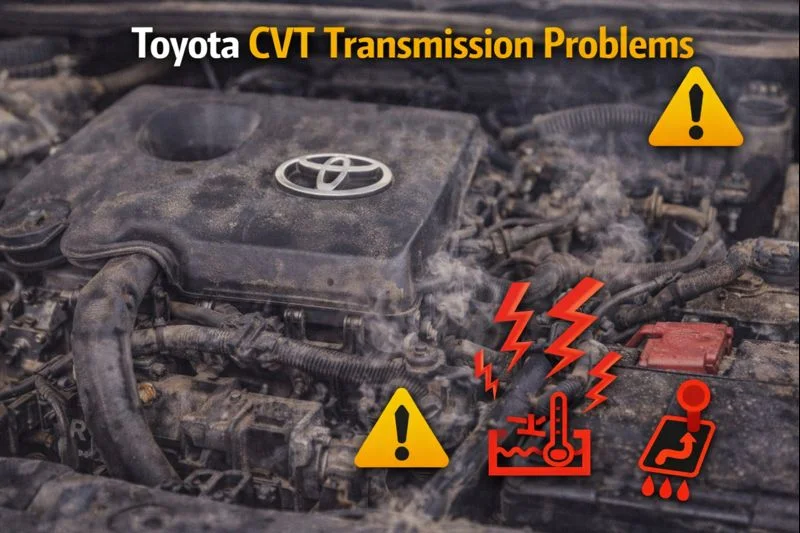
Toyota has built a reputation around reliability, smooth operation, and long vehicle life. For decades, traditional automatic transmissions played a major role in that reputation.
As fuel efficiency standards tightened, Toyota introduced continuously variable transmissions, commonly known as CVTs, into many of its smaller and mid-size vehicles.
These gearboxes were designed to improve efficiency, reduce emissions, and provide seamless acceleration without traditional gear shifts.
While many Toyota CVT-equipped vehicles perform well for years, some owners report issues that feel unfamiliar compared to older automatic designs. Complaints range from hesitation and noise to overheating and premature wear.
In most cases, these problems develop gradually rather than appearing suddenly. Because CVTs behave differently from conventional transmissions, early symptoms are often misunderstood or ignored.
A closer look at how Toyota CVTs work, what commonly goes wrong, and how these issues affect long-term ownership helps drivers make informed decisions about maintenance, repair, and future vehicle purchases.
How Toyota CVT Transmissions Work
Basic Operating Principle
A CVT does not use fixed gears. Instead, it relies on a belt or chain running between two variable pulleys. These pulleys change size continuously, allowing the transmission to maintain the most efficient engine speed for any driving situation.
This design eliminates traditional shift points and creates smooth acceleration.
Toyota’s Approach To CVT Design
Toyota CVTs often include physical first gears or launch gears in some models. This design reduces strain on the belt during takeoff and improves durability.
Not all Toyota CVTs use the same internal layout, which affects reliability.
Difference From Traditional Automatics
Traditional automatics use gears, clutches, and planetary sets. CVTs rely heavily on friction, fluid pressure, and precise electronic control.
This difference changes how wear occurs and how problems present themselves.
Common Toyota CVT Transmission Problems
Hesitation During Acceleration
One of the most reported concerns is hesitation when pressing the accelerator. The engine may rev briefly before power reaches the wheels.
This behavior can feel like slipping even when the transmission is functioning as designed.
Jerking Or Shuddering Sensation
Some drivers notice shuddering at low speeds, especially during light acceleration. This often happens as the CVT adjusts pulley ratios.
Shuddering may worsen if fluid condition deteriorates.
Overheating Issues
CVTs generate heat due to constant friction. In hot climates or heavy traffic, overheating can occur.
Overheating may trigger warning lights or reduced power modes.
Unusual Noises
Whining, buzzing, or humming sounds are commonly reported. These noises often change with speed or throttle input.
While some noise is normal, loud or persistent sounds indicate internal wear.
Premature Belt Or Chain Wear
The belt or chain inside a CVT experiences constant stress. In some cases, wear occurs earlier than expected.
Excessive wear leads to slipping, noise, and reduced efficiency.
Models Most Commonly Affected
Compact Sedans And Hatchbacks
Toyota Corolla and Yaris models equipped with CVTs receive the majority of complaints. These vehicles often operate in stop-and-go traffic, increasing stress.
Urban use accelerates wear.
Small Crossovers
Models like the Toyota C-HR also use CVTs. Added weight places more load on the transmission.
Load and driving conditions influence longevity.
Hybrid Variants
Toyota hybrids use different transmission designs that resemble CVTs but operate differently. These systems are generally more reliable and not affected in the same way.
Hybrid complaints are less common.
Warning Signs That Should Not Be Ignored
Delayed Response
If the vehicle hesitates noticeably when accelerating, especially from a stop, inspection is recommended.
Delay often worsens over time.
Sudden RPM Fluctuations
Engine speed rising without corresponding vehicle speed suggests internal slipping.
This is a serious warning sign.
Burning Smell
Overheated transmission fluid produces a burnt odor. This indicates excessive friction and heat.
Immediate service is necessary.
Dashboard Warning Lights
Transmission or temperature warning lights signal system stress.
Ignoring warnings risks severe damage.
Causes Behind Toyota CVT Problems
Fluid Degradation
CVT fluid breaks down over time due to heat and friction. Degraded fluid loses its protective properties.
Many failures trace back to neglected fluid service.
Driving Conditions
Frequent stop-and-go driving, aggressive acceleration, and heavy loads increase internal stress.
City driving is harder on CVTs than highway cruising.
Manufacturing Tolerances
Small variations in component quality can affect longevity. Some units last far longer than others under similar use.
Not every CVT fails prematurely.
Software Calibration
CVTs rely heavily on software control. Updates may be required to address hesitation or shifting behavior.
Software issues can mimic mechanical problems.
Repair And Replacement Costs
Minor Repairs
Software updates or fluid changes may resolve early symptoms. These repairs are relatively affordable.
Early intervention saves money.
Major Repairs
Internal component failure requires transmission rebuild or replacement. CVTs are complex and often replaced rather than rebuilt.
Costs commonly range from $3,000 to $6,000.
Warranty Coverage
Some Toyota CVT repairs are covered under powertrain warranties, depending on age and mileage.
Warranty status greatly affects repair decisions.
Maintenance Practices That Improve CVT Life
Regular Fluid Changes
Despite some claims of lifetime fluid, periodic CVT fluid changes reduce wear.
Clean fluid extends component life.
Gentle Acceleration Habits
Smooth throttle input reduces belt stress.
Driving style has a major impact on longevity.
Avoiding Excessive Load
Towing or overloading increases heat and wear.
CVTs are not designed for heavy-duty use.
Monitoring Temperature
Allowing the transmission to cool during extreme conditions prevents overheating damage.
Heat management matters.
How Toyota CVTs Compare To Competitors
Toyota CVTs generally perform better than some competitors in long-term reliability, especially models with launch gears. However, they still do not match the durability of older traditional automatics.
Proper care narrows this gap significantly.
Toyota’s conservative tuning reduces extreme stress compared to more aggressive designs.
Misconceptions About Toyota CVT Reliability
Some believe all Toyota CVTs are unreliable. In reality, many operate trouble-free for over 150,000 miles with proper maintenance.
Another misconception is that CVT behavior always indicates failure. Some characteristics are normal by design.
Understanding normal versus abnormal behavior helps avoid unnecessary worry.
When A CVT Problem Becomes Serious
Persistent slipping, overheating, or warning lights indicate advanced wear.
Driving further risks complete failure.
Prompt diagnosis protects remaining components.
Ownership Decision Considerations
Keeping A CVT Toyota Long-Term
If maintained properly, many owners experience acceptable longevity.
Regular service is key.
Buying Used Toyota CVT Vehicles
Service history matters more than mileage alone.
Vehicles with documented fluid changes are safer purchases.
Switching To Non-CVT Models
Drivers seeking long-term durability often prefer traditional automatic or hybrid transmissions.
Choice depends on usage and priorities.
Final Thoughts
Toyota CVT transmission problems are not universal, but they are real enough to deserve attention. Hesitation, shuddering, noise, and overheating are the most common concerns, often linked to fluid degradation and driving conditions rather than sudden mechanical failure. Unlike traditional automatics, CVTs demand more attentive maintenance and smoother driving habits.
For owners who follow proper service schedules and drive conservatively, Toyota CVTs can deliver years of reliable performance. Ignoring early warning signs or skipping fluid service significantly increases repair risk and cost. Understanding how these transmissions behave, what stresses them most, and how to care for them allows drivers to make confident decisions and avoid unpleasant surprises over the life of the vehicle.