Winter roads demand respect, preparation, and the right equipment. Even with modern safety systems, electronic traction control, and advanced tires, snow and ice can still overwhelm a vehicle in seconds.
For drivers who travel through mountains, rural highways, or regions with strict winter regulations, external traction devices remain essential. Among these, snow chains and snow cables are the two most common choices, yet many drivers struggle to understand how different they truly are.
At a glance, both serve the same purpose: improving grip when tires alone cannot cope. In practice, they behave very differently. Their construction, performance limits, vehicle compatibility, and legal acceptance vary more than most people expect.
Choosing incorrectly can lead to poor traction, damaged suspension parts, or fines in areas with chain-control laws. The right choice depends on how often snow is encountered, how severe conditions become, and what the vehicle can safely accommodate.
A clear, balanced comparison helps remove guesswork and allows drivers to prepare confidently before winter weather turns travel into a challenge.
How Snow Chains And Snow Cables Work
The Basic Purpose Of Traction Devices
Snow chains and cables are designed to increase friction between a tire and slippery surfaces such as packed snow or ice. They wrap around the tire tread and create additional biting edges that dig into the surface beneath the vehicle.
These devices are intended for temporary use. They are installed only when conditions require them and removed once roads improve.
Construction And Material Differences
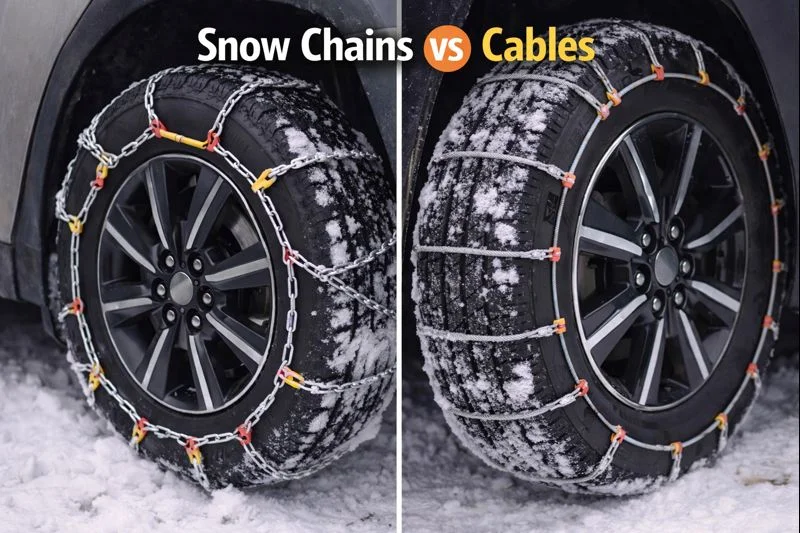
Snow chains use metal links, typically made from hardened steel, arranged in ladder or diamond patterns across the tire. The thickness and shape of these links allow them to dig deeply into snow and ice.
Snow cables use steel cables with smaller cross-sectional contact points. The cables are wrapped with metal rollers or coils that provide grip but with less aggressive penetration.
This difference in construction defines how each performs in real conditions.
Snow Chains: Strengths And Trade-Offs
Traction In Severe Conditions
Snow chains provide the highest level of traction available for consumer vehicles. The heavy metal links bite into deep snow and hard-packed ice, making them ideal for steep grades and unplowed roads.
When road conditions deteriorate rapidly, chains deliver consistent control where other options struggle.
Durability And Longevity
Chains are built for demanding use. High-quality sets can last for many seasons if used properly. They resist stretching and breakage better than lighter alternatives.
This durability makes them suitable for drivers who face harsh winters regularly.
Ride Quality And Noise
The aggressive design of chains creates noticeable vibration and noise. Steering feels heavier, and the ride becomes rougher, especially at low speeds.
While this is expected, it can be uncomfortable during extended use.
Installation Difficulty
Chains are heavier and less flexible than cables. Installing them in freezing temperatures or on the roadside requires effort and practice.
Drivers unfamiliar with installation often find chains challenging during emergencies.
Vehicle Clearance Concerns
Many modern vehicles have limited space between the tire and suspension components. Chains can contact struts, brake lines, or body panels if clearance is insufficient.
Manufacturers often specify whether chains are allowed and on which axle they should be installed.
Snow Cables: Strengths And Limitations
Ease Of Installation
Snow cables are lighter and more flexible, making them easier to install quickly. This is a major advantage when conditions worsen unexpectedly.
Many drivers can install cables without moving the vehicle, which simplifies roadside use.
Compatibility With Modern Vehicles
Cables are often recommended for vehicles with low wheel-well clearance. Sedans, compact SUVs, and performance-oriented vehicles frequently allow cables where chains are restricted.
This makes cables a practical option for newer vehicle designs.
Performance In Light To Moderate Snow
On light snow, slush, and packed surfaces, cables significantly improve traction compared to bare tires. They help reduce wheel spin and improve braking stability.
However, in deep snow or on steep icy slopes, their grip is more limited than chains.
Durability Considerations
Cables wear faster, especially if driven on exposed pavement. Their thinner construction makes them more vulnerable to damage during prolonged use.
They are best suited for occasional winter travel rather than continuous exposure.
Real-World Driving Differences
Acceleration And Control
Chains provide stronger forward traction, allowing vehicles to move confidently from a stop on slippery inclines. They reduce wheel spin more effectively than cables in extreme conditions.
Cables improve acceleration on mild snow but may struggle when conditions worsen significantly.
Braking Performance
Braking traction is where chains excel. The metal links dig into ice and snow, shortening winter stopping distances.
Cables improve braking compared to bare tires but cannot match the stopping capability of chains on ice.
Steering And Handling Feel
Chains create a more rigid connection between tire and surface, which can make steering feel heavy but predictable.
Cables offer smoother steering response with less vibration, improving comfort during short-distance use.
Legal And Regional Factors
Chain Control Laws
Many mountain regions enforce chain-control laws during winter storms. These laws specify when traction devices are required.
Some regions accept both chains and cables. Others only recognize traditional chains as compliant equipment.
Drivers must verify local regulations before traveling.
Manufacturer Guidelines
Vehicle manufacturers publish recommendations for traction devices. Some allow only cables, others permit chains on specific axles.
Ignoring these guidelines risks vehicle damage and warranty issues.
Rental And Commercial Vehicle Policies
Rental companies often prohibit chains due to damage risk but allow cables.
Fleet operators may also restrict certain traction devices for maintenance reasons.
Installation, Storage, And Maintenance
Preparation Before Winter
Testing traction devices in dry conditions prevents frustration during emergencies. Practicing installation builds confidence and reduces installation time.
This also helps identify clearance issues early.
Storage Requirements
Chains require more storage space and weigh more. Cables are compact and easier to store in small trunks.
Both should be kept clean and dry after use.
Inspection And Care
Broken links, frayed cables, or damaged fasteners reduce safety and effectiveness. Regular inspection ensures reliability.
Prompt replacement of damaged components prevents roadside failures.
Cost And Value Comparison
Purchase Price
Cables usually cost less upfront, making them appealing for occasional winter drivers.
Chains cost more initially but deliver greater durability and performance.
Long-Term Cost
Drivers who face frequent snow may find chains more cost-effective over time due to longer lifespan.
Cables may require replacement sooner if used often.
Matching The Right Option To Driving Needs
Occasional Winter Driving
Drivers who encounter snow a few times each season benefit from cables. They are easy to install and compatible with many vehicles.
Urban drivers and mild winter climates align well with this option.
Severe Winter Conditions
Chains are better suited for mountain travel, rural roads, and unplowed routes. Their traction advantage becomes critical in these environments.
Frequent winter travelers often prefer chains for peace of mind.
Vehicle Design And Clearance
Vehicles with limited clearance should use cables if chains are not approved.
Always consult the owner’s manual before purchasing traction devices.
Common Misconceptions
Many drivers believe all-wheel drive eliminates the need for traction devices. In reality, AWD improves movement but does not guarantee braking or steering control on ice.
Another misconception is that cables and chains perform equally. Their design differences lead to distinct performance levels.
Recognizing these facts improves winter safety decisions.
Developments In Traction Devices
Improved Tensioning Systems
Modern designs include self-tightening mechanisms that reduce installation errors and improve fit.
These systems help maintain consistent traction.
Material Advancements
Stronger alloys and improved coatings extend lifespan and reduce corrosion.
These improvements benefit both chains and cables.
Choosing Before Conditions Worsen
Waiting until snow falls limits choices and increases stress. Selecting traction devices ahead of time ensures readiness.
Preparation remains the most effective winter safety measure.
Final Thoughts
Snow chains and snow cables both serve important roles in winter travel, but they are not interchangeable. Chains deliver superior traction, durability, and control in severe conditions, making them ideal for mountainous terrain and deep snow. Cables offer convenience, easier installation, and compatibility with modern vehicles that lack chain clearance, making them suitable for lighter winter use.
The right choice depends on driving environment, vehicle design, legal requirements, and personal comfort level. Neither option replaces good judgment or proper winter tires, but both, when chosen wisely, significantly improve safety. Winter roads remain unpredictable, yet careful preparation and informed decisions help ensure control, confidence, and compliance when traction truly matters.