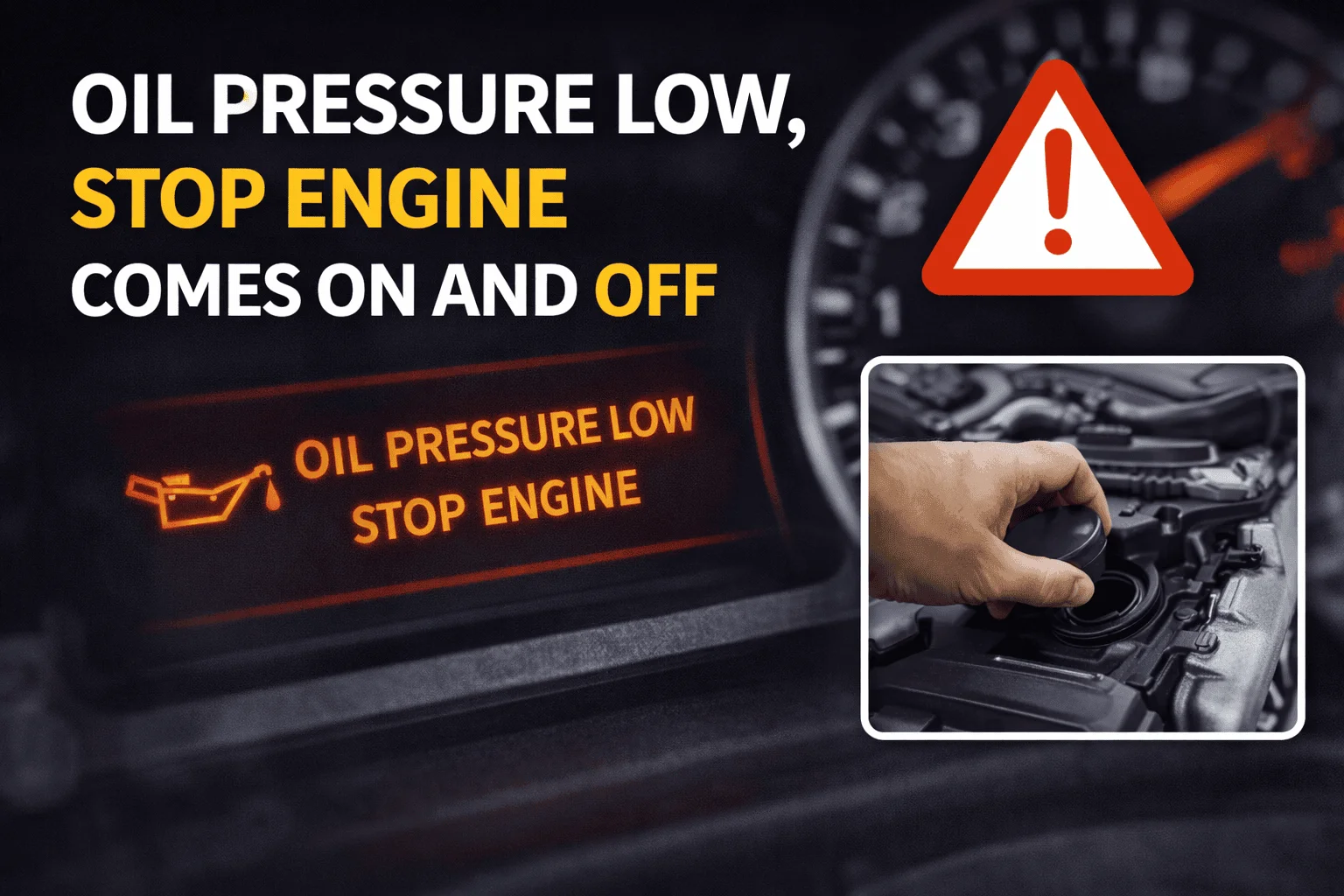
An “Oil Pressure Low – Stop Engine” warning is one of the most serious messages a vehicle can display. Even if it appears briefly and then disappears, it should never be ignored. Oil pressure is essential to engine survival, ensuring that internal components remain lubricated and protected under constant motion and heat.
When this warning turns on and off intermittently, it creates confusion. The engine may continue running smoothly. There may be no unusual noises, smoke, or immediate signs of failure. However, fluctuating oil pressure can indicate either a developing mechanical issue or a sensor-related fault—both of which deserve attention.
Proper oil pressure keeps engine parts separated by a thin film of lubricant. Without it, friction increases rapidly, and severe damage can occur in a short amount of time. Because the warning is tied directly to engine health, understanding why it appears—even temporarily—is critical.
This guide explains what the oil pressure warning truly means, why it may appear intermittently, the most common underlying causes, what should be checked first, and how to determine when shutting the engine off immediately is the safest choice.
What the Oil Pressure Warning Is Actually Telling You
Oil pressure is not the same thing as oil level.
Oil pressure refers to how effectively oil is being pushed through the engine to lubricate moving parts. Even if there’s oil in the engine, poor pressure means it’s not reaching where it needs to go.
When the message says “stop engine,” it’s because:
- The system detected pressure below a safe threshold
- Internal parts may not be protected
- Continued operation risks serious damage
That message exists for a reason. It’s not a suggestion.
Why the Warning Comes On and Then Goes Off
This is what confuses most people, including me at first.
Intermittent warnings usually mean the pressure is right on the edge. Sometimes it’s high enough. Sometimes it drops just low enough to trigger the alert.
Common situations where it appears:
- At idle
- When the engine is hot
- During slow traffic
- After coming to a stop
Then, as soon as engine speed increases, the pressure rises and the warning disappears.
That doesn’t mean the problem is gone — it means it’s hiding.
Low Oil Level Is the First Thing to Check
This is always step one.
Low oil level is the most common cause of fluctuating pressure. When oil is low:
- The pump may draw air instead of oil
- Pressure drops at idle
- Pressure rises when engine speed increases
That explains why the warning comes and goes.
Even being a quart low can be enough to cause this behavior in some engines.
Why Oil Level Can Drop Without Obvious Leaks
Many engines consume oil gradually. You won’t always see spots on the ground.
Oil can be lost through:
- Normal consumption
- Aging seals
- Internal burning
- Extended oil change intervals
That’s why checking the level manually matters more than trusting warning lights alone.
Oil That’s Too Thin or Too Old Can Cause Pressure Drops
This one caught me off guard.
As oil ages, it thins and breaks down. Thin oil doesn’t maintain pressure as well, especially when hot.
If the warning appears:
- After long drives
- When the engine is fully warm
- At idle
…old or degraded oil is a strong suspect.
Using the wrong oil viscosity can cause the same issue.
Why the Warning Often Appears at Idle
At idle, the oil pump spins slower. Pressure is naturally lower.
If the system is already struggling, idle is where it fails first.
That’s why the message often shows up:
- At stoplights
- In traffic
- When parking
And disappears when you press the gas.
Oil Pressure Sensors Can Fail or Lie
Not every oil pressure warning means the engine is starving for oil.
Sometimes the sensor itself is the problem.
A failing sensor can:
- Send incorrect signals
- Trigger false warnings
- Behave inconsistently
Intermittent warnings are common when a sensor starts to go bad.
However, never assume it’s just a sensor without checking the basics first.
Wiring Issues Can Create False Alerts
I’ve seen oil pressure warnings caused by:
- Damaged wiring
- Loose connectors
- Oil contamination in connectors
Electrical signals don’t have to fail completely to cause problems. Small disruptions can make warnings flicker on and off.
Worn Engine Bearings: A More Serious Cause
This is where things get serious.
As engines age, internal clearances increase. Worn bearings allow oil to escape too quickly, reducing pressure — especially at idle.
Signs this may be happening:
- Warning appears when hot
- Noise increases slightly over time
- Pressure improves with higher engine speed
This isn’t a quick fix, but catching it early can limit damage.
Oil Pump Wear or Failure
The oil pump is responsible for building pressure. If it wears or fails:
- Pressure becomes inconsistent
- Warnings may appear intermittently at first
- The situation can worsen quickly
Oil pump issues are rare compared to low oil or sensors, but they do happen.
Sludge Buildup Can Restrict Oil Flow
Engines that miss oil changes can develop sludge. Sludge restricts oil flow and affects pressure.
This can cause:
- Fluctuating pressure
- Delayed oil circulation
- Warnings that come and go
Sludge problems often start quietly and escalate over time.
Why You Shouldn’t Ignore an Intermittent Warning
Just because the message disappears doesn’t mean:
- The problem fixed itself
- It was harmless
- It won’t come back worse
Oil-related warnings are different from many others. They don’t offer much forgiveness.
Is It Safe to Keep Driving When the Warning Goes Off?
I’ll be honest: it depends — but don’t gamble with it.
If the warning:
- Appears briefly
- Goes away immediately
- Never returns
…still check oil before driving further.
If it:
- Appears repeatedly
- Stays on longer each time
- Shows up when warm
…stop driving and investigate. Engine damage happens fast when oil pressure drops.
What to Do Immediately When See the Warning
My personal routine:
- Safely pull over
- Shut the engine off
- Check oil level after a short wait
- Look for obvious leaks
- Restart only if the level is safe
This has saved me from expensive mistakes.
Why Restarting Sometimes Makes the Warning Disappear
When you restart:
- Oil drains back into the pan
- Pressure builds briefly
- The sensor resets
This can temporarily hide the issue. It’s not a fix.
Common Mistakes That See People Make
Mistakes I’ve made and learned from:
- Ignoring intermittent warnings
- Assuming it’s a sensor without checking oil
- Driving “just a little farther”
- Waiting for noise before acting
Oil pressure problems don’t always make noise before damage begins.
When Professional Diagnosis Is Necessary
Seek professional help when:
- Oil level is correct but warnings continue
- The warning appears frequently
- Pressure behavior changes suddenly
Proper testing can confirm whether pressure is truly low or just being reported incorrectly.
How to Prevent This Problem in the Future
What helps most:
- Checking oil regularly
- Using correct oil type
- Changing oil on time
- Addressing leaks early
Engines that are cared for rarely surprise you like this.
Why This Warning Deserves Respect
Of all dashboard messages, oil pressure warnings are among the most serious. They don’t exist for convenience — they exist to protect the engine from destruction.
Even when the message comes and goes, it’s telling you something important.
Final Thoughts
When the “oil pressure low, stop engine” warning comes on and off, it puts you in an uncomfortable gray area. The car seems fine, but the message isn’t something you can ignore. From my experience, this warning almost always has a real cause — even if it’s not immediately obvious.
The key is acting early. Checking oil, observing patterns, and not assuming the best can mean the difference between a manageable fix and a ruined engine.
If that message ever appears again, even briefly, take it seriously. Engines don’t get second chances when oil pressure fails.