By 2026, push-button start has become the default in much of the automotive market. Screens have grown larger, vehicles have become more software-driven, and convenience features now shape buying decisions more than ever.
Yet, even with these changes, traditional key ignition has not vanished. A surprising number of vehicles still rely on a physical key that turns in the ignition cylinder.
This is not an oversight or outdated thinking. It is a deliberate choice made by manufacturers responding to cost, reliability, security concerns, and buyer preference.
Key ignition systems continue to appeal to drivers who value simplicity over automation. They remain common in entry-level trims, work-focused vehicles, and markets where durability and repair ease take priority.
In 2026, the presence of key-start cars reflects a balance between modern expectations and practical ownership. For some buyers, avoiding keyless systems means fewer electronics, lower replacement costs, and reduced exposure to relay theft risks.
A closer look at which cars still use key ignition in 2026 reveals how automakers segment their lineups and why traditional solutions continue to serve a clear purpose.
Why Key Ignition Still Exists In 2026
Cost And Accessibility
Key ignition systems are cheaper to produce and install than push-button start setups. For manufacturers, this helps keep base models affordable. For buyers, it means a lower entry price and fewer components that can fail over time.
This is especially important in budget cars and fleet vehicles, where cost control influences purchasing decisions more than convenience features.
Reliability And Reduced Complexity
Mechanical ignition systems rely on fewer electronic modules and sensors. This reduces the chance of software-related issues, signal failures, or battery drain problems linked to keyless entry.
In regions with limited access to advanced diagnostics, simpler systems remain easier to maintain and repair.
Security Considerations
Keyless systems have faced criticism due to relay theft methods. A traditional key requires physical access, which reduces certain theft risks.
Some buyers intentionally choose key ignition vehicles for this reason alone.
List Of Cars With Key Ignition In 2026 By Brand
Toyota Cars With Key Ignition In 2026
Toyota continues offering key ignition in specific trims focused on affordability and durability.
- Toyota Corolla (Base Trims)
- Toyota Corolla Hatchback (Base Trims)
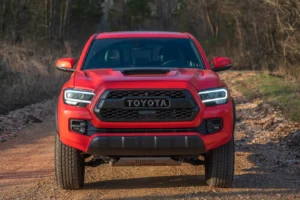
- Toyota Tacoma (Lower Trims)
- Toyota 4Runner (Select Trims In Some Markets)
These models prioritize long-term reliability and cost efficiency.
Honda Cars With Key Ignition In 2026
Honda maintains traditional key-start systems in entry-level trims of popular models.
- Honda Civic (Lower Trims)
- Honda HR-V (Base Trims)
Higher trims typically include push-button start, but key ignition remains available for value-focused buyers.
Nissan Cars With Key Ignition In 2026
Nissan continues offering key ignition in several core models.
- Nissan Versa
- Nissan Sentra (Base Trims)
- Nissan Frontier (Lower Trims)
These vehicles cater to buyers seeking straightforward transportation without premium features.
Hyundai And Kia Cars With Key Ignition In 2026
Hyundai and Kia preserve key ignition in budget-oriented trims.
- Hyundai Elantra (Base Trims)
- Hyundai Accent (Markets Where Available)
- Kia Forte (Lower Trims)
- Kia Rio
Push-button start is usually reserved for mid and upper trims.
Ford Cars And Trucks With Key Ignition In 2026
Ford retains key ignition mainly in work-focused and entry-level vehicles.
- Ford Maverick (Base Trim)
- Ford Ranger (Lower Trims)
- Ford Transit Connect
These models are designed for practicality and commercial use.
Chevrolet And GMC Cars With Key Ignition In 2026
General Motors continues using key ignition in several non-luxury offerings.
- Chevrolet Malibu (Base Trims)
- Chevrolet Colorado (Lower Trims)
- GMC Canyon (Entry Trims)
Fleet buyers often request these configurations.
Mazda Cars With Key Ignition In 2026
Mazda includes key ignition in limited entry trims.
- Mazda3 (Select Base Trims In Some Markets)
- Mazda CX-30 (Lower Trims)
Mazda balances simplicity with modern design cues.
Key Ignition Versus Push Button Start In 2026
Mechanical Engagement Versus Electronic Authorization
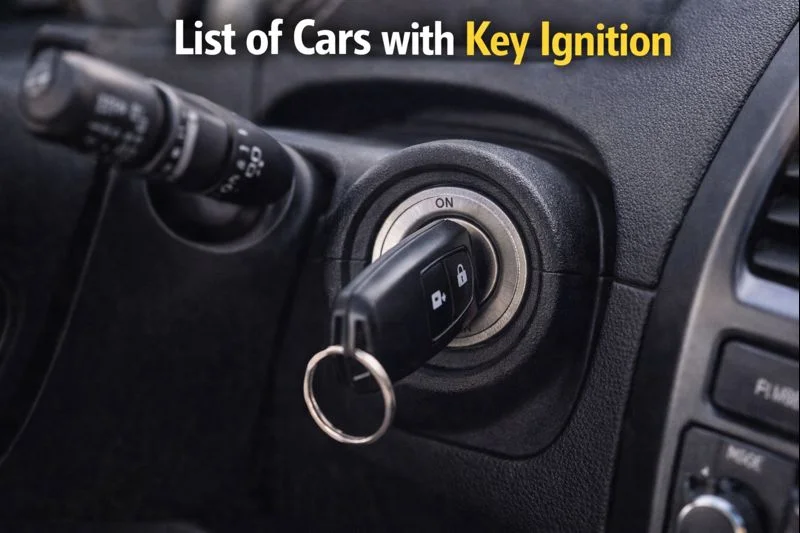
Key ignition requires physical rotation of the ignition cylinder, directly engaging the starter system.
Push-button start relies on electronic authorization, proximity sensors, and control modules, which adds complexity.
Ownership And Repair Costs
Replacing a lost mechanical key costs significantly less than replacing a smart key fob.
Ignition cylinders are also easier and cheaper to service compared to electronic start systems.
User Experience Differences
Some drivers prefer the tactile feedback of a key. Others enjoy the convenience of push-button start.
Neither system affects core safety or performance directly.
Who Should Consider A Key Ignition Car In 2026
Budget-Conscious Buyers
Entry-level vehicles with key ignition often provide the best value.
Lower upfront cost and reduced long-term expenses make them attractive to first-time buyers.
Fleet And Commercial Owners
Fleet managers value systems that are easy to maintain and replace.
Mechanical keys simplify key management and reduce downtime.
Long-Term Ownership Drivers
Drivers who keep vehicles for many years often prefer fewer electronic dependencies.
Key ignition aligns well with this ownership style.
Why Automakers Are Slowly Phasing Out Key Ignition
Production Simplification
Manufacturers aim to reduce variation across trims. Push-button start is becoming cheaper and easier to standardize.
This leads to fewer key-start options over time.
Consumer Perception
Many buyers associate push-button start with modern vehicles. Automakers respond to market expectations.
This influences design decisions even when demand for key ignition remains.
Integration With Digital Features
Remote start apps, phone-based keys, and digital access systems integrate more easily with keyless platforms.
These features drive future development.
Regional Differences In Key Ignition Availability
Emerging Markets
In many global markets, key ignition remains standard due to affordability and repair accessibility.
Manufacturers tailor offerings based on regional demand.
Work And Utility Segments
Pickup trucks and commercial vehicles often retain traditional systems longer than passenger cars.
Durability takes priority over convenience.
Maintenance And Ownership Considerations
Key Wear Over Time
Physical keys wear down gradually. Replacing worn keys early protects the ignition cylinder.
Ignoring worn keys can lead to starting issues.
Ignition Cylinder Care
Avoid forcing the key or turning it while the steering wheel is locked.
Gentle use extends component life.
Common Misconceptions About Key Ignition In 2026
Some believe key-start cars lack modern security. In reality, most include immobilizers and electronic theft protection.
Others assume these vehicles are outdated. Many still feature modern safety systems and infotainment technology.
Key ignition does not define the overall technology level of a car.
Choosing Between Key Ignition And Push Button Start
Personal Preference
The choice depends on comfort and habit. Some drivers prefer simplicity, others convenience.
Neither option is inherently superior.
Intended Use
Daily commuting, fleet use, and long-term ownership favor key ignition.
Luxury and tech-focused buyers may prefer keyless systems.
The Future Of Key Ignition Beyond 2026
Key ignition is likely to become less common but not extinct. Entry-level trims and work vehicles will continue offering it as long as demand exists.
Manufacturers respond to buyers, and many buyers still value simplicity.
Final Thoughts
In 2026, traditional key ignition remains a deliberate feature rather than a leftover from the past. Automakers continue offering it in specific vehicles where cost control, reliability, and ease of ownership matter most. While push-button start dominates higher trims, key-start cars still serve a clear and practical role.
A list of cars with key ignition in 2026 shows that simplicity continues to have value in a technology-driven market. For buyers who prioritize affordability, durability, and straightforward operation, these vehicles remain relevant and appealing. As long as real-world needs exist, traditional key ignition will continue to earn its place on the road.