The catalytic converter sits quietly under the car, doing an important job without much attention—until something goes wrong. When it does, the symptoms can feel overwhelming.
Warning lights appear, acceleration drops, fuel mileage suffers, and repair estimates quickly climb into uncomfortable territory. Because full replacement is expensive, many car owners immediately start looking for ways to fix the catalytic converter without replacing it.
That instinct is understandable, and in some cases, it is realistic. Not every catalytic converter problem means the unit is permanently damaged. Many issues come from buildup, contamination, misfires, or sensor-related problems that affect how the converter performs rather than destroying it outright.
In those situations, addressing the root cause and restoring proper exhaust flow can bring noticeable improvement. This guide explains what actually goes wrong inside a catalytic converter, which problems can be corrected without replacement, and which ones cannot.
The goal is clarity, not false hope, so you can make smart decisions based on how the converter is truly behaving.
What A Catalytic Converter Really Does Inside The Exhaust
A catalytic converter is not a filter in the traditional sense. Inside the metal shell is a ceramic or metallic honeycomb coated with precious metals. These coatings trigger chemical reactions that convert harmful exhaust gases into less harmful ones before they exit the tailpipe.
For the converter to work correctly, exhaust gases must flow freely through the honeycomb, and the internal surfaces must remain active and uncontaminated. When either airflow or chemical activity is disrupted, performance drops.
Problems arise when the converter becomes coated, overheated, partially clogged, or damaged by external engine issues.
Why Catalytic Converters Fail Before Their Time
Most converters do not fail on their own. They are usually damaged by something happening elsewhere in the engine.
Common causes include:
- Long-term engine misfires
- Excess fuel entering the exhaust
- Oil or coolant burning inside the engine
- Poor fuel quality
- Faulty sensors that disrupt air-fuel balance
When raw fuel or oil reaches the converter, it burns inside the unit. This creates extreme heat, which damages the internal honeycomb and reduces its effectiveness.
Fixing the converter without replacement is only possible if the internal structure is still mostly intact.
Signs That The Converter May Be Recoverable
Not every warning sign means the converter is ruined.
Symptoms that may respond to non-replacement fixes include:
- Check engine light related to efficiency, not total failure
- Sluggish acceleration that comes and goes
- Mild exhaust restriction
- Reduced fuel economy without severe power loss
If the converter is rattling loudly, physically broken, or completely blocked, repair without replacement is unlikely.
Early intervention matters more than most people realize.
Fixing The Root Cause Comes First
Before attempting any converter-specific fix, the underlying cause must be addressed.
If the engine is misfiring, running rich, or burning oil, the converter will continue to degrade no matter what cleaning method is used.
Common root-cause repairs include:
- Replacing worn spark plugs or coils
- Fixing vacuum leaks
- Repairing fuel injector problems
- Addressing oil consumption issues
- Replacing faulty oxygen sensors
Without fixing these issues first, any improvement to the converter will be temporary.
Using Fuel System And Converter Cleaners Carefully
Catalytic converter cleaners are widely available and often misunderstood.
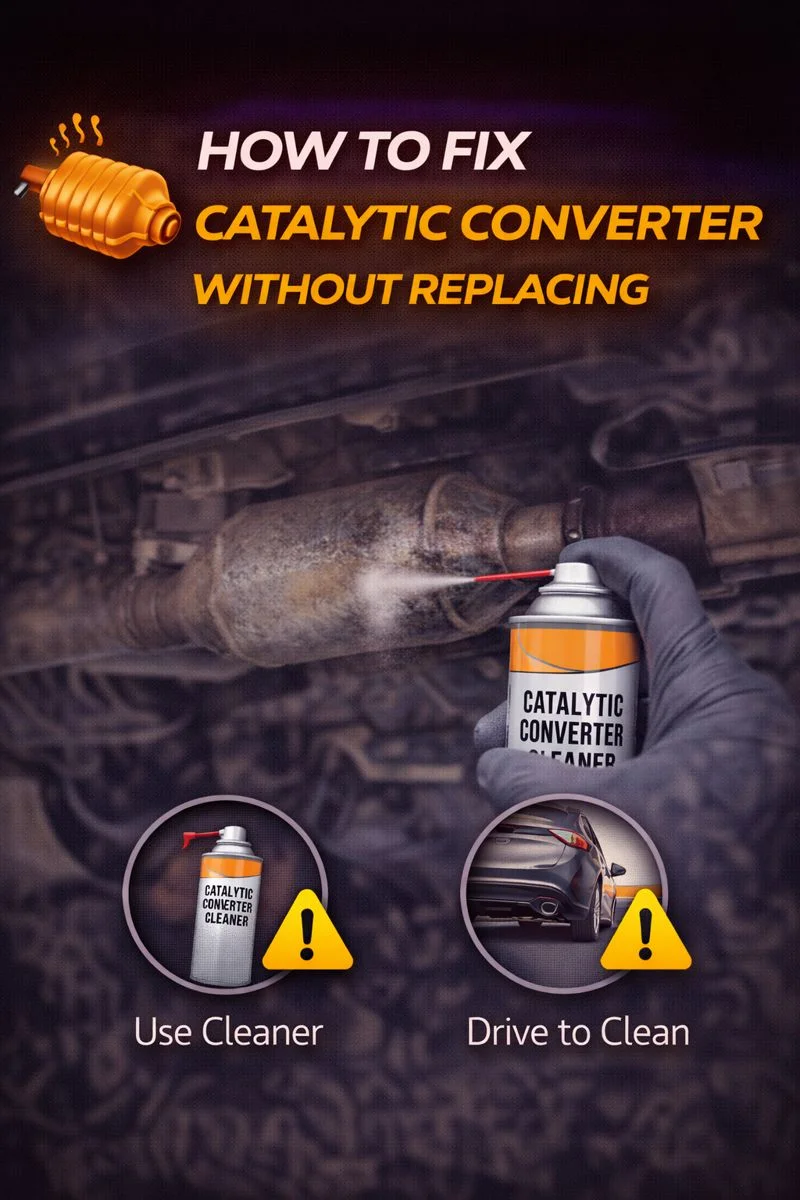
These additives are designed to help remove carbon buildup and light contamination from the exhaust system. They work best when the converter is partially restricted, not melted or broken.
To get the best result:
- Use a reputable cleaner designed for converters
- Add it to a nearly empty fuel tank
- Drive the car at highway speeds for extended periods
This sustained heat helps activate the cleaner and burn off deposits.
Results vary. Some vehicles see noticeable improvement, others see minimal change. Cleaners cannot repair physical damage.
Highway Driving As A Natural Cleaning Method
Short trips and city driving prevent the exhaust system from reaching optimal temperatures.
Extended highway driving allows the converter to heat up fully, which helps burn off carbon deposits and moisture.
This method works best when:
- The converter is lightly clogged
- The engine is running properly
- No internal damage exists
A single long drive will not fix severe problems, but repeated highway use can restore performance in mild cases.
Addressing Oxygen Sensor Issues
Oxygen sensors play a major role in converter performance.
Faulty sensors can send incorrect data to the engine computer, causing the engine to run too rich or too lean. This disrupts the chemical balance inside the converter.
Replacing failing sensors often restores proper exhaust composition, which allows the converter to function more efficiently.
In many cases, the converter itself is blamed when the real issue is sensor-related.
Fixing Exhaust Leaks Before The Converter
Exhaust leaks upstream of the converter introduce extra oxygen into the system.
This confuses sensor readings and reduces converter efficiency. It may also trigger warning lights that mimic converter failure.
Repairing exhaust leaks restores proper exhaust flow and pressure, often improving converter performance without touching the unit itself.
Small leaks can create big symptoms.
Cleaning The Converter Off The Vehicle
In some situations, removing and cleaning the converter is an option.
This involves:
- Removing the converter from the exhaust system
- Flushing it with specialized cleaning solutions
- Allowing it to dry completely before reinstallation
This method may help remove soot and surface buildup, but it is labor-intensive and not always successful.
It should only be attempted if the converter is not melted, cracked, or physically damaged.
The Role Of Engine Temperature And Fuel Quality
Low engine operating temperature prevents proper converter function.
Faulty thermostats that keep the engine too cool reduce exhaust heat, allowing deposits to form.
Poor fuel quality contributes to incomplete combustion and higher contamination.
Ensuring proper engine temperature and using quality fuel helps maintain converter health and prevents future problems.
Clearing Fault Codes After Repairs
Once repairs or cleaning steps are completed, fault codes should be cleared properly.
Driving the car through a full warm-up and drive cycle allows the system to reassess converter efficiency.
If codes return quickly, further diagnosis is needed. If they stay away, the fix was likely effective.
Ignoring stored codes can mask whether improvements actually worked.
When Heat Damage Makes Repair Impossible
Some converters are damaged beyond recovery.
Signs of unrecoverable damage include:
- Loud rattling inside the converter
- Severe exhaust restriction
- Strong sulfur or rotten egg smell
- Converter glowing red under load
These symptoms indicate melted or collapsed internal structures. Cleaning or additives will not fix this.
At that stage, replacement becomes the only reliable option.
Legal And Emissions Considerations
Catalytic converters are emissions-critical components.
Any repair or cleaning approach must keep the converter intact and functional. Gutting, hollowing, or bypassing the converter is illegal in many regions and causes emissions failure.
Non-replacement fixes should focus on restoring function, not removing it.
Always consider local emissions requirements before attempting repairs.
Cost Comparison: Repair Versus Replacement
Non-replacement fixes are significantly cheaper, but results vary.
Fuel additives and basic repairs cost little but offer limited guarantees.
Sensor replacement and engine tuning often cost less than replacement and deliver long-term benefits.
Replacement costs more but guarantees compliance and performance when the converter is truly failed.
Balancing cost against reliability is key.
How To Prevent Converter Problems In The Future
Prevention matters more than repair.
Key habits include:
- Addressing engine misfires immediately
- Keeping up with regular maintenance
- Avoiding prolonged driving with warning lights
- Using quality fuel
- Fixing oil consumption issues early
A healthy engine protects the converter naturally.
Why Shortcuts Often Backfire
Many online “fixes” promise instant results.
Methods involving harsh chemicals, pressure washing, or drilling into the converter often cause more harm than good.
These shortcuts may temporarily mask symptoms but lead to bigger problems later.
Long-term improvement comes from restoring proper engine operation, not forcing the converter to cope with bad conditions.
When Professional Diagnosis Is Worth It
If symptoms persist despite basic fixes, professional testing helps clarify the situation.
Exhaust backpressure tests, temperature comparisons, and sensor data analysis reveal whether the converter is truly failing.
Diagnosis prevents unnecessary replacement and confirms whether repair is still realistic.
Final Thoughts
Fixing a catalytic converter without replacing it is possible in certain situations, but it depends entirely on why the problem exists. Light contamination, sensor issues, exhaust leaks, and engine-related faults often make the converter look bad when it is still recoverable. Addressing those issues early can restore performance and avoid costly replacement.
The key is honesty about the condition of the converter. Cleaning and corrective repairs work only when internal damage is limited. When the structure is compromised, replacement becomes unavoidable. Knowing the difference saves time, money, and frustration—and helps ensure the exhaust system continues to do its job effectively for the long run.