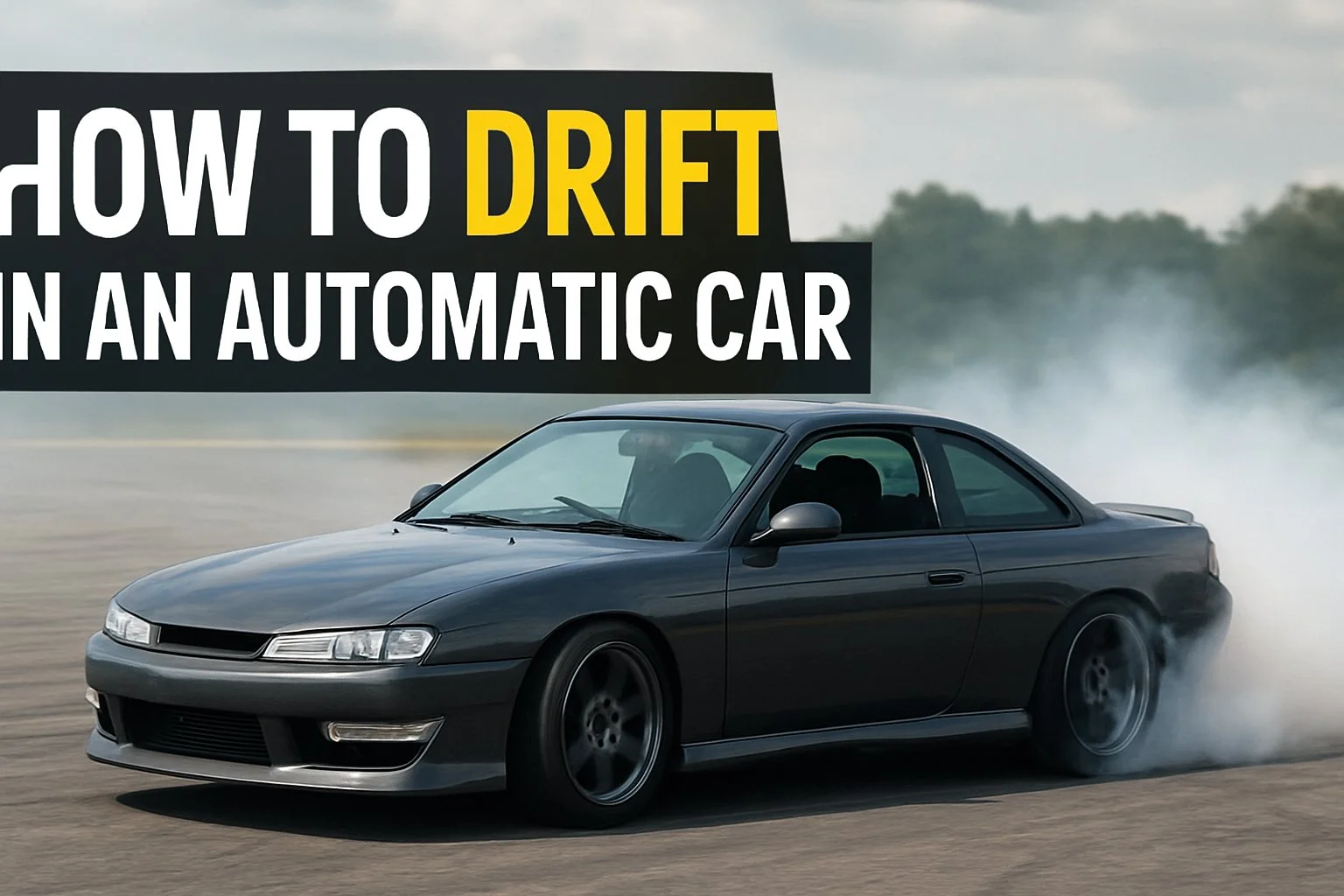
Drifting is often associated with manual transmissions, high-revving engines, and aggressive clutch control. For many drivers, the idea of sliding a car sideways seems inseparable from shifting gears by hand. As a result, automatic transmissions are frequently dismissed as unsuitable for real drifting.
In reality, drifting is less about the type of transmission and more about vehicle dynamics. Weight transfer, throttle control, steering input, traction management, and timing are the true foundations of a controlled slide. While manual transmissions offer certain advantages, automatic cars are fully capable of drifting under the right conditions.
Modern automatics, especially those with manual modes or performance tuning, can even simplify certain aspects of learning by removing the need to manage a clutch. However, drifting places significant stress on a vehicle and carries serious safety and legal considerations when attempted outside of controlled environments.
This guide explains how drifting works in automatic cars, what makes it possible, the mechanical factors involved, and why proper technique and safe settings matter far more than the transmission type alone.
First Things First: What Drifting Really Is
Before talking about how to do it, let’s clear up a common misunderstanding.
Drifting is not just spinning tires or losing control. Real drifting is about controlled oversteer, where the rear of the car slides outward while the front remains pointed where you want to go. You’re not fighting the car — you’re guiding it through a slide.
The goal isn’t speed. The goal is control.
That control comes from:
- Weight shifting inside the car
- Breaking traction at the rear
- Managing throttle and steering together
- Knowing when to let the car slide and when to catch it
Once you understand that, the transmission becomes less important than most people think.
Can You Actually Drift an Automatic Car?
Yes. You absolutely can.
We want to be clear here: drifting an automatic car is real drifting. The physics don’t change just because there’s no clutch pedal. The tires still lose grip. The rear still steps out. The steering still counteracts the slide.
What does change is how you initiate and control the drift.
In a manual car, drivers often rely on clutch kicks. In an automatic, you rely more on:
- Throttle timing
- Steering input
- Weight transfer
- Traction loss through momentum or braking
Once you adapt to those differences, drifting becomes completely achievable.
The Best Type of Automatic Car for Drifting
Not every automatic car is suitable, and this part matters more than people realize.
Rear-Wheel Drive Is Ideal
Rear-wheel drive makes drifting far easier. When power goes to the rear wheels, breaking traction becomes natural.
Common rear-drive automatic platforms include:
- Older performance sedans
- Sports coupes
- Muscle cars
- Some luxury vehicles
Front-Wheel Drive Is Extremely Limited
Front-wheel drive cars can slide, but sustained drifting is very difficult. You can induce short slides using momentum, but holding a controlled sideways angle is tough.
All-Wheel Drive Requires Experience
All-wheel drive automatics can drift, but they behave very differently. They often snap back to grip quickly, which can surprise beginners.
If you’re just starting, rear-wheel drive with an automatic transmission is the most forgiving setup.
What Else Matters Before You Try
Tires
Worn tires in the rear actually help when learning. They break traction more easily and reduce strain on the drivetrain.
Stability Systems
Modern cars often have traction control and stability control. These systems fight drifting aggressively.
For learning:
- Fully disable them if possible
- Or use a reduced intervention mode if full off isn’t available
If the system stays on, the car will cut power mid-slide and ruin control.
Where You Should Practice (This Is Important)
We never recommend learning drifting on public roads. It’s unsafe, unpredictable, and illegal in many places.
The best locations:
- Closed tracks
- Drift practice facilities
- Empty, private paved areas with permission
- Skid pads or large open lots designed for training
You need room to make mistakes. Drifting always includes mistakes early on.
How Automatic Transmissions Behave During Drifts
This is where many beginners get confused.
An automatic transmission:
- May shift mid-slide
- May hold a gear longer if in sport mode
- Responds differently depending on throttle input
To control this:
- Use manual shift mode if available
- Lock the transmission in a lower gear
- Avoid letting the car upshift during a slide
Keeping a consistent gear helps maintain predictable power delivery.
Basic Drift Techniques for Automatic Cars
Now let’s talk about actual methods.
1. Power Over (Throttle Initiation)
This is the simplest method and works best with strong rear-wheel drive cars.
How it works:
- Enter a corner at moderate speed
- Turn in smoothly
- Apply firm throttle mid-corner
- Rear tires lose traction
- Counter-steer to hold the slide
This method relies on engine power alone. It’s clean, simple, and very effective if your car has enough torque.
2. Weight Transfer (Scandinavian Flick Style)
This method works even when power alone isn’t enough.
How it works:
- Slightly steer away from the corner first
- Quickly steer back toward the corner
- The weight shifts rapidly
- Rear grip breaks
- Apply throttle to sustain the slide
You’re not forcing the car — you’re working with physics.
3. Brake-Induced Slide
This method is especially useful in automatics.
How it works:
- Approach a corner
- Tap the brake briefly before turning
- Weight shifts forward
- Rear becomes light
- Turn and apply throttle
You’re not slamming the brakes — just enough to shift balance.
4. Handbrake (Limited Use)
Some automatics respond well to handbrake input.
How it works:
- Pull the handbrake briefly mid-turn
- Rear wheels lock momentarily
- Release and apply throttle
- Counter-steer immediately
This method should be used carefully. Overuse can stress components.
Steering: The Most Important Skill
Drifting is 80% steering.
When the rear slides:
- Turn the wheel into the slide
- Don’t overcorrect
- Keep movements smooth, not jerky
Beginners often turn too much and spin. The key is letting the car tell you how much correction it needs.
Throttle Control: Less Is Often More
In an automatic, throttle control is critical.
Too much throttle:
- Causes uncontrolled spin
- Forces upshifts
- Overwhelms grip
Too little throttle:
- Ends the slide
- Causes snap grip
You’re constantly balancing the pedal — adding power to maintain the slide, easing off to reduce angle.
Common Mistakes Beginners Make
I’ve made every one of these myself.
Overcorrecting the steering
Small inputs are better than dramatic movements.
Panicking and lifting off suddenly
Sudden lift can cause the rear to snap back violently.
Letting the car shift gears
Unexpected shifts disrupt balance.
Trying to drift too fast
Speed isn’t the goal. Control is.
Is Drifting Harder in an Automatic?
In some ways, yes. In other ways, no.
Harder because:
- Less control over gear changes
- No clutch for quick corrections
Easier because:
- No clutch coordination
- Simpler learning curve
- Focus stays on steering and throttle
I’ve seen complete beginners learn faster in automatics because they weren’t overwhelmed.
How Long Does It Take to Learn?
This varies wildly.
Some people:
- Get basic slides in one session
Others: - Take weeks to feel comfortable
Progress usually looks like this:
- Short slides
- Accidental spins
- Controlled entry
- Holding angle briefly
- Linking corners
Patience matters more than talent.
Safety Gear and Preparation
Even in controlled environments, preparation matters.
Always recommend:
- Proper tires
- Fresh brake fluid
- Helmet if required
- Seat positioned correctly
- Clear mental focus
Drifting demands attention. Fatigue leads to mistakes.
Is Drifting Bad for Your Car?
Yes — if done recklessly.
It increases wear on:
- Tires
- Suspension
- Differential
- Transmission fluid
That’s why many people use dedicated practice cars.
If you drift responsibly and maintain the car properly, the damage is manageable.
Should You Modify an Automatic Car to Drift?
For beginners, modifications aren’t required.
Helpful upgrades later include:
- Better cooling
- Performance tires
- Suspension tuning
- Differential upgrades
But skill always comes before hardware.
Final Thoughts
If you’ve been told that drifting in an automatic car isn’t possible, we hope this guide proves otherwise. It absolutely is — and it can be incredibly rewarding. The key is respect: respect for the car, the environment, and the learning process.
Start slow. Practice safely. Focus on control, not speed. And don’t let anyone tell you that your setup disqualifies you from learning real car control.