A clutch is one of the most important components in a manual transmission vehicle, yet it is also one of the most misunderstood. It quietly handles the transfer of power from the engine to the wheels every time a driver shifts gears. Over time, this constant friction leads to wear. Unlike many other parts, a clutch does not usually fail suddenly. Instead, it wears down gradually, giving subtle signs long before it stops working properly.
When drivers first hear about clutch replacement costs, the numbers can feel intimidating. The expense is not just about the clutch disc itself but also the labor required to access it.
Because the clutch sits between the engine and transmission, replacing it involves significant disassembly. The final cost can vary widely depending on the vehicle, driving habits, location, and repair approach.
Knowing what goes into clutch replacement pricing helps remove uncertainty and allows better planning. A clear breakdown of costs, factors, and repair decisions makes this repair far less stressful and easier to understand.
Average Cost To Replace A Clutch
Typical Price Range
In most passenger vehicles with manual transmissions, clutch replacement costs typically fall between $800 and $2,500. This wide range exists because labor time, vehicle design, and parts quality vary significantly.
Smaller economy cars usually sit at the lower end, while performance cars, trucks, and luxury models often fall on the higher end.
Labor Versus Parts Cost
Labor makes up the largest portion of clutch replacement cost. In many cases, labor alone accounts for 60 to 70 percent of the total bill.
Parts, while important, are usually less expensive than the time required to remove and reinstall the transmission.
Why Prices Vary So Much
Two vehicles with similar clutch sizes can still have very different replacement costs. Engine layout, drivetrain configuration, and accessibility all affect labor time.
Front-wheel-drive vehicles often require more labor than rear-wheel-drive cars.
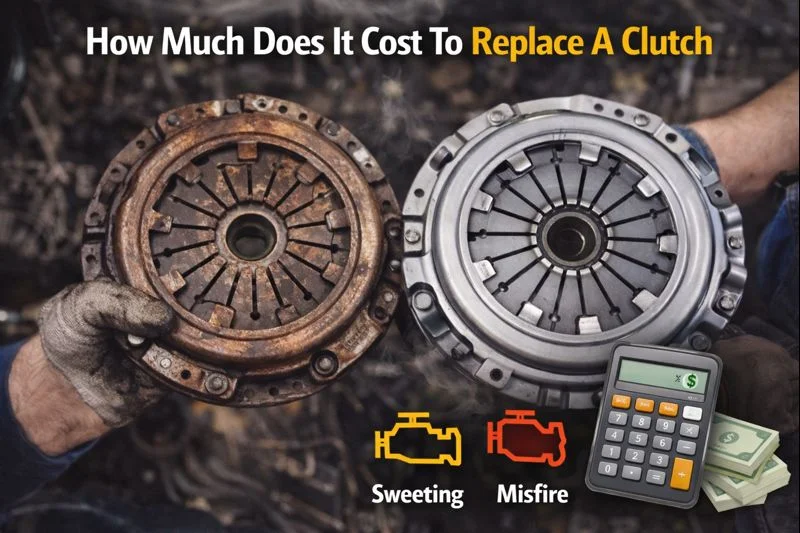
What Parts Are Replaced During A Clutch Job
Clutch Disc
The clutch disc is the primary wear item. It uses friction material to engage and disengage power from the engine.
As the disc wears thin, it begins to slip and lose grip.
Pressure Plate
The pressure plate applies force to hold the clutch disc against the flywheel. Over time, its springs weaken or wear unevenly.
Replacing the disc without the pressure plate is rarely recommended.
Release Bearing
The release bearing allows smooth engagement when the clutch pedal is pressed. A worn bearing often creates noise.
Replacing it prevents future labor costs.
Flywheel Considerations
Some flywheels can be resurfaced, while others must be replaced. Dual-mass flywheels are more expensive and often replaced rather than resurfaced.
Flywheel condition strongly affects total cost.
Clutch Kit Versus Individual Parts
Most repairs use a complete clutch kit that includes the disc, pressure plate, and bearing.
Using a kit ensures compatibility and long-term reliability.
Factors That Influence Clutch Replacement Cost
Vehicle Type And Design
Compact sedans and hatchbacks usually have simpler drivetrains. Sports cars, trucks, and all-wheel-drive vehicles require more labor.
Transverse engine layouts increase complexity.
Labor Rates By Location
Labor rates vary by region. Urban areas and dealership service centers usually charge more per hour than independent shops.
Hourly rates typically range from $80 to $150.
Transmission Accessibility
Some vehicles require removal of subframes, exhaust systems, or suspension components to access the transmission.
More disassembly means higher labor costs.
Flywheel Type
Dual-mass flywheels cost significantly more than single-mass versions. Replacing one can add several hundred dollars to the repair.
Flywheel replacement is often recommended with clutch work.
Driving Style And Wear Pattern
Aggressive driving accelerates clutch wear. Vehicles used for towing or heavy loads may need earlier replacement.
Driving habits influence how much damage surrounding components sustain.
Signs That A Clutch Needs Replacement
Clutch Slipping
Slipping occurs when engine speed increases without a matching increase in vehicle speed.
This is one of the clearest signs of wear.
Difficulty Shifting Gears
Hard or notchy gear changes often indicate clutch engagement problems.
Shifting issues may worsen as wear progresses.
Burning Smell
A burnt odor after driving suggests overheating friction material.
This often appears during hill starts or heavy traffic.
Clutch Pedal Changes
A soft, stiff, or unusually high engagement point can signal internal wear.
Pedal feel changes should not be ignored.
Unusual Noises
Grinding, squealing, or rattling sounds during clutch use often point to bearing or pressure plate issues.
Noise usually worsens over time.
How Long A Clutch Typically Lasts
Average Lifespan
Most clutches last between 60,000 and 120,000 miles under normal conditions.
Some last longer with gentle use, while others fail sooner.
Driving Habits That Shorten Lifespan
Riding the clutch pedal, frequent stop-and-go traffic, aggressive launches, and towing accelerate wear.
Proper technique significantly extends clutch life.
Vehicle Load And Use
Heavier vehicles and those used for commercial purposes place more stress on the clutch.
Usage matters as much as mileage.
Dealership Versus Independent Repair Shops
Dealership Service
Dealerships often charge higher labor rates but use manufacturer-approved parts.
This option may be preferred for newer vehicles under warranty.
Independent Repair Shops
Independent shops typically offer lower labor rates and more flexible parts options.
Quality depends on technician experience and shop reputation.
Choosing The Right Shop
Experience with manual transmissions is critical. Reviews, certifications, and transparency matter more than location.
A skilled technician saves money long-term.
Can You Drive With A Worn Clutch
Short-Term Driving Risks
A slipping clutch reduces power transfer and can make driving unpredictable.
Short-term driving may be possible, but risk increases daily.
Long-Term Consequences
Continued use damages the flywheel and pressure plate.
Delaying repair often increases total cost.
Safety Concerns
Loss of power during merging or hill climbs creates safety risks.
Reliable power delivery is essential.
Ways To Reduce Clutch Replacement Cost
Replacing Related Parts Together
Replacing the clutch kit, bearing, and flywheel together prevents repeat labor charges.
Doing everything at once is usually cheaper.
Choosing Quality Aftermarket Parts
High-quality aftermarket clutch kits often cost less than factory parts while offering similar durability.
Avoid cheap, low-quality components.
Addressing Problems Early
Early replacement prevents flywheel damage and reduces labor complexity.
Waiting rarely saves money.
Comparing Repair Quotes
Obtaining multiple quotes helps identify fair pricing.
Extremely low quotes may indicate shortcuts.
Manual Transmission Maintenance Tips
Proper Clutch Use
Avoid resting your foot on the clutch pedal. Fully engage or disengage during shifts.
Good habits protect internal components.
Smooth Gear Changes
Smooth shifting reduces shock and friction.
Aggressive shifting increases wear.
Regular Inspections
Early inspection identifies leaks, hydraulic issues, or pedal problems.
Small fixes prevent major repairs.
Common Myths About Clutch Replacement
Some believe clutches always fail suddenly. In reality, wear develops gradually.
Another myth is that replacing only the disc saves money. This often leads to repeat labor costs.
Comprehensive repairs are more cost-effective.
Is Clutch Replacement Worth It On Older Cars
Vehicle Value Considerations
If repair cost exceeds vehicle value, replacement may not make sense.
Overall condition matters more than age alone.
Reliability After Replacement
A properly replaced clutch restores drivability and reliability.
Many vehicles continue for years after replacement.
Emotional And Practical Factors
Sentimental value, known maintenance history, and daily reliability influence decisions.
Cost is only one part of the equation.
Final Thoughts
Replacing a clutch is one of the more expensive maintenance tasks for a manual transmission vehicle, largely due to labor complexity rather than parts cost. While prices typically range from $800 to $2,500, the final amount depends on vehicle design, labor rates, flywheel condition, and repair approach. Understanding what goes into the cost helps drivers make informed decisions and avoid unnecessary expenses.
A worn clutch rarely improves on its own. Ignoring early symptoms often leads to higher repair bills and reduced safety. Addressing clutch issues early, choosing the right repair shop, and using quality parts ensures smooth operation and extends vehicle life. With proper care and informed planning, clutch replacement becomes a manageable investment rather than an unexpected burden.