Changing the color of a car is one of the biggest visual upgrades an owner can make. It completely alters how the vehicle looks, how it feels to own, and even how people react to it on the road.
Some drivers want a fresh look after years with the same paint. Others are repairing faded, damaged, or mismatched panels. There are also owners who simply want their car to stand out from every other similar model on the street.
Unlike small cosmetic changes, repainting or wrapping a car is not a minor expense. The cost varies widely, often surprising people who expect a simple color change to be quick and inexpensive.
Prices depend on the method used, the quality level, the vehicle’s size, and how much detail work is involved. This article breaks down the real costs of changing a car’s color, explains what goes into those prices, compares paint and wrap options, and helps you decide which approach makes sense for your budget and expectations.
The Two Main Ways To Change A Car’s Color
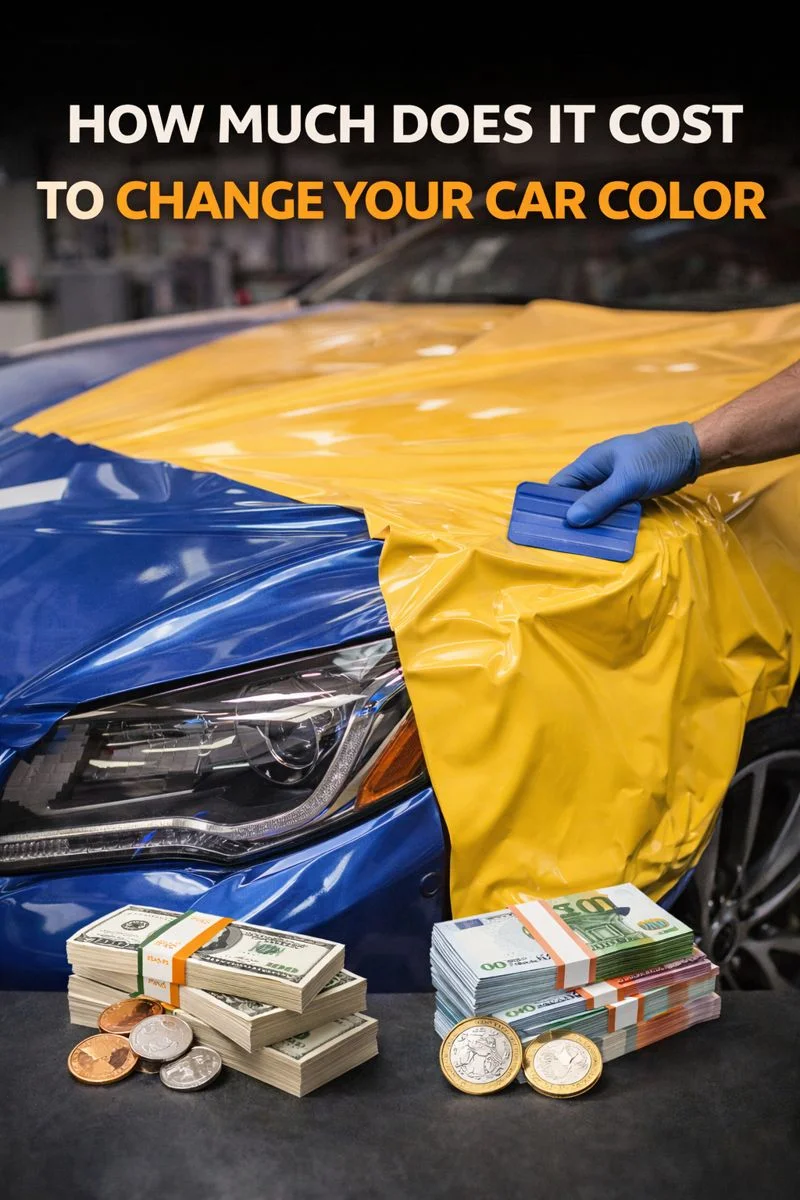
There are two primary ways to change a car’s exterior color. One is repainting the vehicle, and the other is applying a vinyl wrap.
Repainting replaces the original paint with a new color using automotive paint sprayed in a controlled environment. A wrap covers the existing paint with a colored vinyl film that can later be removed.
Both methods can dramatically change appearance, but they differ in cost, durability, and long-term value.
Average Cost To Repaint A Car
A full repaint is usually the most expensive option. Costs vary based on quality, preparation, and finish.
Basic paint jobs often range from $1,000 to $3,000. These usually involve minimal surface preparation and are intended mainly to refresh appearance rather than create a show-quality finish.
Mid-range paint jobs typically cost between $3,000 and $6,000. These include better paint materials, more prep work, and improved durability.
High-end or custom paint jobs can range from $7,000 to $15,000 or more. These involve extensive sanding, panel removal, premium paint, and detailed finishing.
The final number depends heavily on labor time and attention to detail.
Why Paint Job Prices Vary So Much
Labor is the biggest cost factor in repainting a car. Proper preparation takes time, and shortcuts reduce durability.
Shops must:
- Sand existing paint properly
- Repair dents or scratches
- Mask or remove trim and panels
- Apply primer, base coat, and clear coat
- Allow curing time between layers
Better results require more hours, and labor rates vary by location and shop reputation.
Paint material quality also affects price. Premium paints resist fading and peeling longer than budget options.
Hidden Costs In Repainting
Some costs are not obvious upfront.
Changing color properly often means painting door jambs, trunk edges, and engine bay areas. Skipping these areas leaves traces of the old color visible.
Removing trim, mirrors, bumpers, and lights adds labor but improves finish quality.
Rust repair or bodywork discovered during prep increases cost quickly.
These details explain why quotes can differ significantly for the same vehicle.
Cost Of Changing Car Color With Vinyl Wrap
Vinyl wrapping has become popular because it costs less than high-end paint and is reversible.
Basic wraps usually cost between $2,000 and $3,500.
Higher-quality wraps with premium vinyl and detailed installation range from $4,000 to $6,000.
Specialty finishes like matte, satin, chrome, or color-shift wraps can exceed $6,000.
Vehicle size and complexity play a big role. Larger vehicles require more material and labor.
Why Wrap Pricing Is More Predictable
Wrap pricing is often more consistent because:
- Labor time is easier to estimate
- Less surface prep is required
- No curing time is involved
However, poor installation leads to bubbling, peeling, or premature failure. Skilled installers charge more but deliver better results.
Material brand also matters. Cheap vinyl fades and shrinks faster.
How Long Paint Versus Wrap Lasts
Paint is generally more durable than vinyl wrap.
A quality paint job can last 10 years or more with proper care.
Vinyl wraps usually last 3 to 7 years, depending on exposure and maintenance.
Wraps fade faster in extreme heat and sunlight.
Durability should factor into cost decisions, especially for long-term ownership.
Effect Of Vehicle Size On Cost
Larger vehicles cost more to repaint or wrap.
Sedans are usually the least expensive.
SUVs, trucks, and vans require more paint or vinyl and additional labor.
Complex body shapes with sharp curves or deep recesses also increase installation time.
A compact car and a full-size truck can differ by several thousand dollars.
Custom Colors And Specialty Finishes
Custom colors increase cost significantly.
Pearl, metallic, and tri-coat paints require multiple layers and careful application.
Color-shifting or candy finishes demand advanced techniques and experience.
These finishes look striking but raise both labor and material costs.
Wraps also offer specialty finishes, though some are more fragile than standard colors.
Cost Of Partial Color Changes
Some owners choose partial changes to save money.
Examples include:
- Painting only exterior panels
- Wrapping the body but not door jambs
- Two-tone designs
Partial jobs cost less but may look incomplete up close.
Resale value can be affected if original color remains visible.
Impact On Resale Value
Changing a car’s color can affect resale in different ways.
Neutral colors like black, white, and silver tend to hold value better.
Bold or unusual colors may limit buyer interest.
Poor-quality paint jobs lower value more than original worn paint.
Wraps can protect original paint, which may help resale if removed properly.
Documentation of professional work matters to buyers.
Legal And Registration Considerations
In some regions, changing a car’s color requires updating registration records.
Insurance companies may also need notification.
Failure to update records can cause issues during inspections or claims.
This step is often overlooked but important.
DIY Versus Professional Color Change
DIY painting is rarely cost-effective unless quality expectations are low.
Home paint jobs often lack proper equipment, leading to uneven finish and short lifespan.
DIY vinyl wrapping is possible but challenging on complex panels.
Professional work costs more upfront but avoids costly mistakes.
Maintenance Costs After Color Change
Paint requires regular washing, waxing, and protection.
Wraps need gentle cleaning and protection from harsh chemicals.
Repairing damaged wrap sections costs less than repainting panels.
Long-term maintenance adds to overall ownership cost.
Comparing Long-Term Value Of Paint And Wrap
Paint offers permanence and durability but costs more upfront.
Wraps offer flexibility and lower initial cost but shorter lifespan.
For long-term ownership, paint may be more economical.
For leased vehicles or short-term ownership, wraps often make more sense.
Choosing The Right Option For Your Budget
Budget should include not just initial cost but expected lifespan.
Spending less upfront may mean paying again sooner.
A clear goal helps guide the decision:
- Visual refresh
- Custom appearance
- Temporary change
- Long-term transformation
Matching the method to the goal prevents regret.
Common Mistakes That Increase Cost
Rushing the job leads to redo costs.
Choosing the cheapest option often results in poor durability.
Skipping door jambs or prep work lowers satisfaction.
Not checking installer reputation causes avoidable issues.
Research saves money in the long run.
How To Get Accurate Quotes
Accurate quotes require in-person inspection.
Photos rarely show surface condition fully.
Request written estimates detailing:
- Prep work
- Materials
- Coverage areas
- Warranty
Comparing quotes only by price can be misleading.
Warranty And After-Service Support
Good shops offer warranties on workmanship.
Paint warranties vary by product and application.
Wrap warranties depend on material brand and installation quality.
Warranty coverage adds value beyond initial cost.
When Changing Color Makes Financial Sense
Color change makes sense when:
- Paint is already damaged
- Long-term ownership is planned
- Vehicle has personal value
- Customization is a priority
It may not make sense for low-value vehicles or short-term ownership.
Final Thoughts
Changing your car’s color is a major investment that goes beyond appearance alone. Costs can range from a few thousand dollars for basic work to well over ten thousand for premium finishes. The wide price gap comes from labor, materials, preparation, and attention to detail rather than just the color itself.
Choosing between paint and wrap depends on budget, ownership plans, and expectations for durability. A well-done color change can transform a vehicle and restore pride in ownership, while a rushed or low-quality job often leads to disappointment and added expense. Taking time to understand the process, compare options carefully, and choose skilled professionals ensures the final result looks right and lasts as long as expected.