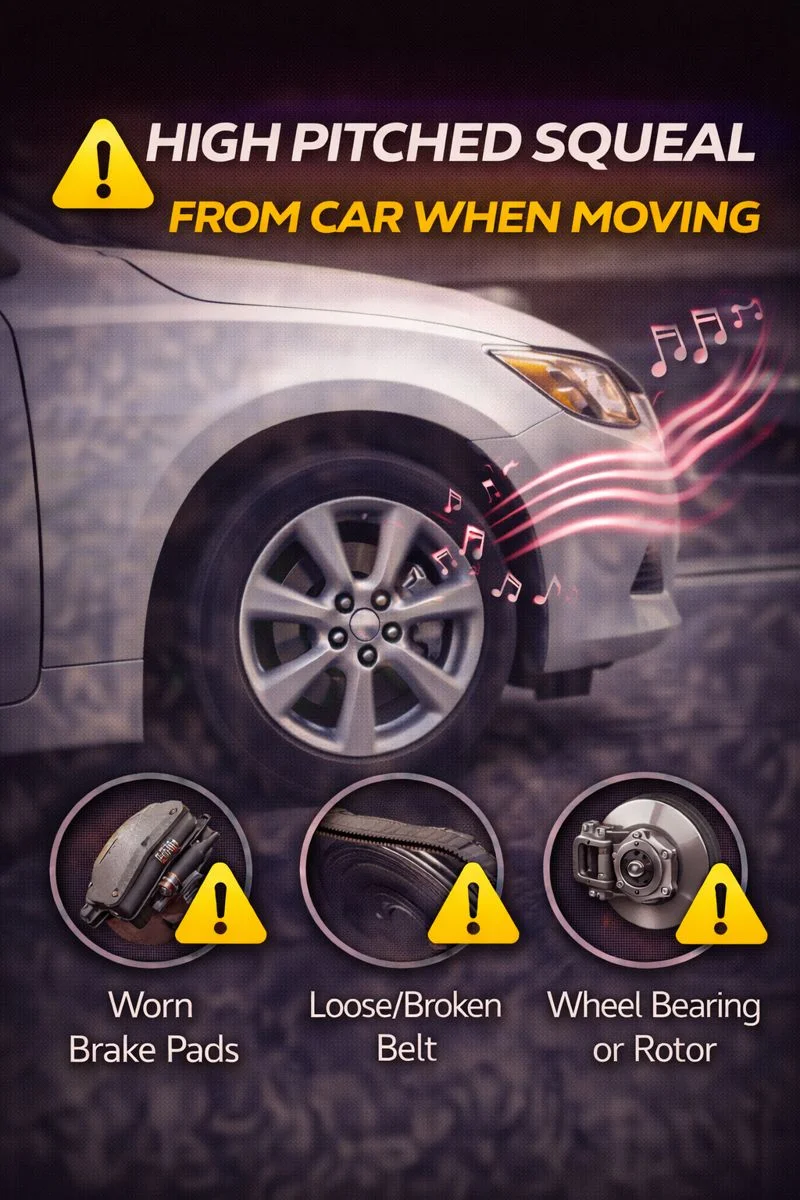
A high pitched squeal coming from a moving car has a way of cutting straight through the cabin and grabbing attention. It may start softly, almost like a whistle, then grow louder as speed increases.
Some drivers hear it only at low speeds, others notice it on the highway, and many find that it changes when braking or turning. Because the car still drives normally, the sound is often ignored for longer than it should be.
That sharp squeal is not just noise. It is friction, vibration, or rotation happening where it should not. Modern vehicles are designed to run quietly, so when a high pitched sound appears while the car is in motion, something is out of balance.
The source can be simple, such as worn brake components, or more involved, such as bearings or rotating parts beginning to fail. This guide breaks down the real reasons cars make high pitched squealing sounds when moving, how to tell one cause from another, and which issues should be handled sooner rather than later.
Why High Pitched Sounds Are Usually Friction Related
High pitched noises are usually produced by fast vibration or friction between two surfaces. When metal, rubber, or composite materials rub or vibrate at high frequency, the sound becomes sharp and piercing.
In a moving vehicle, many components rotate thousands of times per minute. If one of those parts is dry, worn, misaligned, or under excessive load, it can create a squeal that rises and falls with speed.
This is why squealing sounds often change with vehicle speed rather than engine speed alone.
How Speed Changes Help Identify The Source
One of the most useful clues is how the sound reacts to speed.
If the squeal increases as the car moves faster, the source is often related to wheel speed rather than engine RPM. Brakes, wheel bearings, and rotating driveline parts fall into this category.
If the squeal follows engine RPM instead, even while stationary, belts or engine-driven accessories become more likely.
If the sound disappears when braking lightly or turning, that behavior narrows the list further.
Careful listening saves time and prevents guessing.
Brake Pads And Rotors As A Common Source
Brakes are the most common cause of high pitched squealing while moving.
Brake pads are designed with wear indicators that squeal when the pads become thin. This squeal often appears even when you are not pressing the brake pedal.
The sound is sharp, constant, and usually changes slightly when braking. Applying the brakes lightly may quiet it or make it louder, depending on pad condition.
Glazed brake pads or rotors can also squeal. Heat hardens the surface, causing vibration as the pad contacts the rotor.
Brake dust shields that are bent too close to the rotor can produce a continuous squeal that follows wheel speed.
When Brake Squeal Happens Without Braking
Many drivers assume brake noise only happens when stopping. That is not always true.
Worn pads can squeal continuously because the wear indicator contacts the rotor at all times.
Debris caught between the pad and rotor can also create a squeal that remains even when the brakes are released.
This is why a brake inspection should never be skipped just because the noise happens while cruising.
Serpentine Belt And Accessory Squeal
Not all squeals come from the wheels.
The serpentine belt drives accessories such as the alternator, power steering pump, and air conditioning compressor. When the belt slips, it often produces a high pitched squeal.
This sound usually changes with engine RPM rather than vehicle speed. However, during acceleration while moving, it may seem tied to driving speed.
Worn belts, weak tensioners, or misaligned pulleys allow belt slip. Moisture can make the sound worse temporarily.
If the squeal disappears when the engine warms up, belt-related issues are a strong possibility.
Wheel Bearings That Squeal Before They Growl
Wheel bearings usually produce humming or growling noises, but in early stages, they can squeal.
A high pitched squeal from a bearing often changes when turning. Turning left may quiet the noise, while turning right makes it louder, or vice versa.
This happens because vehicle weight shifts onto the failing bearing during turns.
Ignoring early bearing noise allows it to progress into louder, rougher sounds and eventually wheel play.
Brake Caliper And Hardware Problems
Brake calipers rely on smooth movement and proper hardware support.
Sticking calipers cause pads to drag lightly against the rotor, producing a squeal that follows wheel speed.
Missing or damaged anti-rattle clips allow pads to vibrate, creating high frequency noise.
Dry caliper slide pins also prevent proper pad release, leading to constant light contact and squealing.
These issues often do not affect braking performance immediately, which is why they are overlooked.
CV Joints And Axle Components
CV joints usually click when worn, especially during turns, but they can also squeal in some cases.
A dry or partially worn joint may produce a sharp squeal at certain speeds.
This noise often appears under light acceleration and fades under heavy load or coasting.
CV joint noise should never be ignored, as joint failure can lead to loss of drive.
Dust, Rust, And Surface Contamination
Sometimes the squeal is caused by contamination rather than wear.
Surface rust on rotors, especially after rain or overnight parking, can squeal briefly until the rust is cleared.
Fine dust or sand trapped near rotating components can also create temporary squealing.
If the noise disappears after a short drive and does not return, contamination is more likely than damage.
Repeated squealing, however, points to a deeper issue.
Exhaust Heat Shields And Thin Metal Vibration
Heat shields protect the underbody from exhaust heat. They are thin and prone to corrosion.
Loose heat shields can vibrate at high frequency when the car is moving, creating a squeal or sharp buzz.
This noise often changes with speed and may disappear when braking or at certain RPM ranges.
Although heat shield noise is usually harmless, it can mask more serious sounds if not addressed.
Tire-Related Squealing That Mimics Mechanical Noise
Tires can also produce high pitched sounds.
Certain tire tread patterns squeal lightly on smooth pavement, especially at low speeds.
Improper alignment or uneven wear can exaggerate this noise.
Tire squeal usually changes with road surface and often disappears on rough pavement.
Checking tire condition helps rule out this possibility early.
Why The Noise May Stop When Braking Or Turning
Many drivers notice the squeal stops briefly when braking or steering.
Braking changes pad pressure and rotor contact, altering vibration patterns.
Turning shifts load across suspension and wheel components, changing how parts contact each other.
This behavior is a valuable diagnostic clue rather than a mystery.
How High Pitched Squeals Typically Progress
Squeals rarely stay the same.
Brake-related squeals often grow louder as pads wear further.
Bearing squeals eventually turn into growls.
Belt squeals worsen as rubber hardens or cracks.
Ignoring the sound usually leads to higher repair costs and additional damage.
Simple Checks You Can Do Without Tools
Listen closely to whether the noise follows speed or RPM.
Lightly apply the brakes while driving at low speed to see if the sound changes.
Drive slowly in a quiet area with windows down to locate the side or area of the noise.
Visually inspect wheels and brake components for obvious wear or debris.
These observations help narrow down the cause before inspection.
When Professional Inspection Is Needed
If the squeal persists, grows louder, or is accompanied by vibration, professional inspection is necessary.
Brakes and bearings are safety-related components.
A technician can lift the vehicle, spin wheels, and inspect rotating parts closely.
Catching the issue early often keeps repairs simple.
Repairs That Commonly Eliminate Squealing
Replacing worn brake pads and resurfacing or replacing rotors resolves most squeals.
Lubricating or replacing brake hardware restores quiet operation.
Replacing worn belts or tensioners eliminates engine-driven squeal.
Wheel bearing replacement stops rotation-related noise permanently.
Securing loose heat shields removes vibration sounds.
Why Guessing The Cause Is Risky
Many squeals sound similar but have very different consequences.
Replacing the wrong part wastes time and money.
Some squeals are warnings of safety-critical wear.
Diagnosis based on sound behavior and inspection is far more reliable than assumption.
Preventing Squealing In The Future
Routine brake inspections catch pad wear early.
Proper lubrication during brake service prevents vibration.
Replacing belts before failure avoids squeal and breakdown.
Addressing small noises promptly prevents escalation.
Quiet operation usually reflects healthy components.
Final Thoughts
A high pitched squeal from a car when moving is never just background noise. It is a signal that something is rubbing, vibrating, or rotating in a way it should not. While some causes are minor and inexpensive to fix, others point to wear that affects safety and reliability.
The most important factor is paying attention to patterns. How the sound changes with speed, braking, and turning provides strong clues about its source. Addressing the issue early keeps repairs manageable and restores the quiet confidence every car should have on the road.