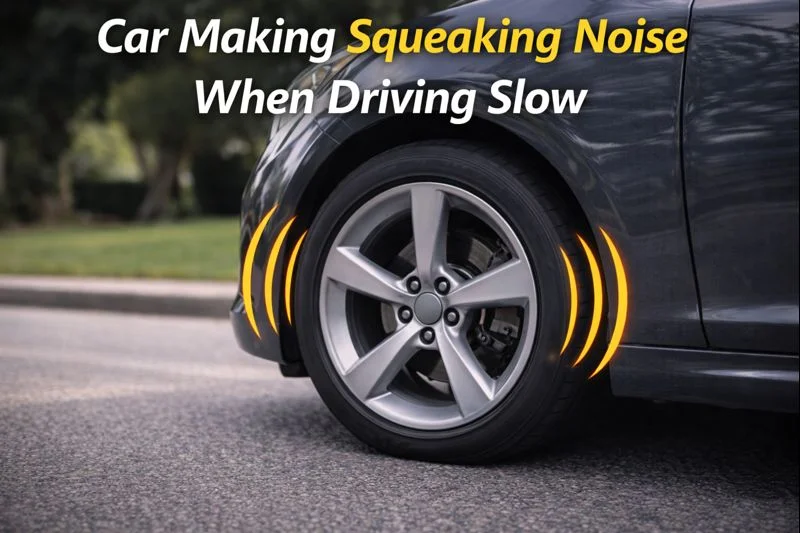
You’re creeping down a quiet street and hear it: a thin, high-pitched squeak coming from somewhere under the car. It’s small at first, then returns every time you slow, turn, or roll over a seam in the road.
That little sound is annoying—and useful. It’s your car telling you something needs attention. Imagine a mid-size hatchback you drive every day for errands and school runs: compact, nimble, and with a few dents from city life.
It’s been well cared for, but it’s entering its seventh year and has 85,000 km on the clock. The squeak started a couple of weeks ago at low speeds and is now regular at parking-lot pace.
The goal of this guide is to explain, what commonly causes that noise, how to narrow down the source with simple checks, what repairs or temporary fixes you can try (and which to avoid), a realistic idea of costs, and how to prevent the problem from returning.
Sources and short note on research
I used reputable automotive and specialist sources to assemble this guide. Key references include PowerStop (brake causes and fixes), TorqueEuro and GSP North America (suspension bushings and fixes), GMB (wheel bearing noise comparison), and general maintenance guides for consumer-facing context.
How to Think About a Squeak
A squeak at low speeds usually means two things: something is rubbing, or a rubber/soft part is drying out or wearing. Because slow-speed noises are often obvious when you turn, stop, or ride over small bumps, the likely culprits are brakes, suspension bushings, steering components, belts/pulleys, or accessory parts like wipers.
The sound’s timing — when it happens, whether it changes with steering, and whether it disappears when braking — is your best diagnostic tool.
The Most Common Causes, and How Each Sounds
1. Brakes (pads, wear indicators, glazed surfaces)
What it sounds like: a high, metallic, repetitive squeal—often best heard at low speeds or when you’re coasting.
Why it happens: many brake pads include a thin metal tab (a wear indicator) that contacts the rotor when the pad is nearly finished; that contact intentionally produces a squeal to warn you.
Pads can also glaze (a smooth, shiny surface from overheating) and squeal against the rotor, or dirt and rust can cause intermittent squeaks. Lack of lubrication on pad hardware or seized caliper pins will also transmit noise.
If you hear the squeak get quieter or stop when you press the brake, that points squarely at brakes.
2. Suspension bushings and ball joints
What it sounds like: short, dry squeaks when rolling slowly over bumps or when turning the steering wheel. Often intermittent and related to compression/flexing of components.
Why it happens: bushings are rubber or polyurethane pieces that isolate metal parts; with age they dry, crack, or lose lubrication and begin to chirp as the metal sleeve moves inside the bushing.
Ball joints and control-arm bushings can also squeak when their internal grease has gone or the joint is worn. In many cars this is more noticeable at low speeds when suspension movement is larger relative to speed.
Lubricating some bushings can silence a squeak temporarily, but most worn rubber parts need replacement.
3. Wheel bearings (less often a squeak, but possible)
What it sounds like: usually a growl, hum, or rumble that varies with speed; occasionally a high squeal if the bearing is starting to fail or if a protective seal is damaged.
Why it happens: bearings tolerate rotation, but when they lose lubrication or the rollers race on a scored surface they create noise.
Wheel bearing noise tends to track with vehicle speed (louder as you go faster) and can change when you lean the car (braking or turning). If you hear the noise while coasting at low speed and it changes when you steer or shift load, check bearings.
4. Serpentine/drive belts, pulleys, and tensioners
What it sounds like: high-pitched squeal that can occur while accelerating from idle, or when turning and under load at low speeds. Sometimes it’s more noticeable after rain or first thing in the morning.
Why it happens: belts age, crack, or glaze; tensioners and pulleys can seize or wear. A slipping belt will squeal as it rubs. Newer cars with automatic tensioners still need belt inspection; don’t apply lubricants to belts (that can cause slippage and faster failure).
5. Brake dust shields, debris, or stone stuck in components
What it sounds like: irregular, occasional squeaks or scraping at low speeds; may change with wheel position.
Why it happens: small stones, rust flakes, or road grime can lodge between rotor and shield or inside caliper areas. Cleaning usually resolves it.
6. Steering rack or power steering components
What it sounds like: squeak when turning the wheel slowly while stationary or at parking-lot speeds.
Why it happens: low power steering fluid (on hydraulic systems), worn rack bushings, or a failing steering column bearing can produce a squeak or creak. Electric power steering units may show related clunks or electrical whines, but mechanical bushings still squeak if dry.
7. Wiper blades, door hinges, trunk hinges, or interior trim
What it sounds like: sometimes the noise seems like it’s under the car but is actually from above — a wiper that chatters or a poorly aligned sunroof seal can squeak at slow speeds or with wind.
Don’t ignore non-drivetrain sources.
Quick, Safe Checks You Can Do at Home
- Note exactly when the sound happens. Is it when turning? When braking? Over bumps? While coasting? This single observation rules in/out many systems.
- Listen from outside the car. With a helper, have them drive slowly while you stand near each wheel and behind the engine to localize the sound. Don’t stand in traffic—use a quiet parking lot.
- Is it affected by braking? If it stops when brakes applied, suspect pads/rotors. If it remains, look elsewhere.
- Try a steering test. Drive slowly in a large empty lot and gently wiggle the steering left-right while coasting—if noise changes, it’s often a wheel/steering/suspension component.
- Check visible belts and pulleys. With the engine off, visually inspect the serpentine belt for cracks, glazing, or contamination. If you’re comfortable, press on the belt to feel for excessive play (but don’t work around a running engine).
- Check for loose trim, shields, or debris. Look under the car (safely, using a ramp or jack stands if you have them) for stones lodged near the rotors or bent dust shields.
Diagnostic Steps a Mechanic Will Take
- Road test with technician: replicate the squeak and note speed, steering angle, braking, and load.
- Wheel-by-wheel checks: lift the car and spin each wheel by hand to feel roughness (bearing) or drag (brakes).
- Brake inspection: measure pad thickness, check for glazing, inspect hardware and caliper pins, and check rotors for surface condition.
- Suspension check: inspect bushings, ball joints, tie-rod ends, and strut mounts for play and rubber condition.
- Belt/pulley check: examine belt condition and tensioner operation; measure pulley wobble.
- Lubrication checks: see if serviceable joints need grease and whether that resolves noise temporarily.
These are the standard steps shops use to line up the problem and avoid unnecessary parts replacement.
Common Fixes, Temporary Measures, and What to Avoid
Brakes
- Fix: Replace worn pads; resurface or replace rotors if damaged; clean hardware and apply appropriate anti-squeal lubricant to pad backing plates and caliper pins per manufacturer spec.
- Temporary: A few gentle hard stops can re-bed pads to rotors (this can remove minor transfer glaze), but this is not a long-term fix for thin pads.
- Avoid: Sanding pads at home or coating rotors with household lubricants—these are improper and unsafe.
Suspension bushings and joints
- Fix: Replace dry or cracked bushings, worn ball joints, or control arms. Use OEM or high-quality aftermarket parts.
- Temporary: A silicone-based spray can quiet some polyurethane bushings but often only for a short time.
- Avoid: Using petroleum-based lubricants on rubber — they can accelerate deterioration.
Wheel bearings
- Fix: Replace worn/damaged bearing assemblies (not usually serviceable). Bearings are safety-critical; replace promptly if diagnosed.
- Temporary: None recommended—bearing failure can progress quickly.
Belts and pulleys
- Fix: Replace cracked or glazed belts; replace faulty tensioners or pulleys.
- Temporary: A belt dressing spray can mask a squeal from a slipping belt but is not a substitute for replacing an aged belt.
- Avoid: Lubricating belts with WD-40 or oil (this can damage the belt and increase risk of failure).
Debris and shields
- Fix: Remove foreign objects; re-bend or replace dust shields if they rub.
When to Act Immediately (Safety Red Flags)
- Noise accompanied by vibration, wheel wobble, or looseness in steering — stop driving and have the car inspected.
- Squeak plus a pulling sensation while braking — could indicate a seized caliper or uneven braking; get it checked.
- Noise with grinding or metal-on-metal feeling — brake material may be gone; driving further can damage rotors and increase repair costs dramatically.
- Any noise that rapidly worsens — don’t delay. Progressive failures (bearings, brakes) can become dangerous.
How to prevent squeaks returning
- Regular brake inspections every 10,000–15,000 km (or at oil changes) catch pad wear early.
- Keep suspension components clean and inspect bushings annually; replace torn or perished rubber.
- Replace belts on schedule based on the manufacturer’s interval; check tensioners.
- Use OEM or reputable aftermarket parts—cheap parts can save money short-term but often squeak sooner.
- Don’t lubricate rubber parts indiscriminately. Use manufacturer-approved greases on serviceable joints; avoid petroleum products on rubber.
Example Step-by-Step Homeowner Fix
- Park on level ground, use wheel chocks and jack stands if removing wheels. Safety first.
- Remove the wheel where noise is suspected. Look for stones near the dust shield and check pad thickness.
- Spin the hub by hand (with the car raised) to feel roughness (bearing) or drag (brake).
- If pads are thin (<3–4 mm) replace them. If rotors are glazed, either resurface or replace.
- Clean pad hardware and apply silicone-based anti-squeal compound to backing plates (follow product instructions).
- Reassemble and road-test. If squeak persists or if you encounter play or grinding, visit a shop.
FAQs
Q: The squeak happens only when I back up slowly — what is that?
A: Reverse-only squeaks often point to parking brake hardware, anti-rattle springs, or an edge of the pad contacting the rotor differently in reverse. Inspect the parking brake adjustment and hardware.
Q: It squeaks more after rain — is that bad?
A: Moisture can cause surface rust on rotors overnight; a brief squeal on first pull is normal and usually disappears after a few stops. Persistent squeak after rain means water trapped or contaminated pads; inspect.
Q: Can I keep driving with a small squeak?
A: Often yes for short runs, but monitor for changes. If the sound worsens, or if you notice braking issues, vibrations, or steering looseness, stop and have it checked.
Q: My mechanic says I need new control arms — is that related?
A: Yes. Control arms house bushings and ball joints; failing bushings can squeak and cause handling issues. Replace as recommended.
Final Checklist for Your Next Visit to the Mechanic
- Note exactly when the noise occurs and how to reproduce it.
- Ask the shop to road test with your present.
- Request a wheel-by-wheel inspection and pictures of worn parts.
- Get a written estimate showing parts and labor separately.
- If replacing parts, prefer OEM or high-quality aftermarket items; cheap parts often return with the same issue.
Conclusion
A squeak at low speed is rarely a mysterious ghost — it’s nearly always an early warning. Brakes, suspension bushings, belts, and occasional debris are the usual suspects.
With careful listening, a few safe checks, and prompt service on anything that looks worn, you can quiet the car and avoid more expensive repairs later. Prioritize safety: if the noise is accompanied by vibration, pulling, or change in brake feel, have the vehicle inspected urgently.