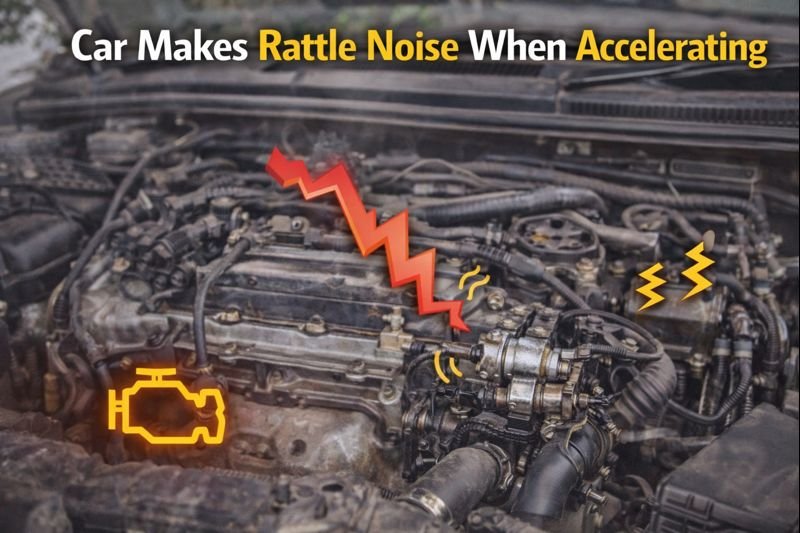
A rattling noise during acceleration is one of those car problems that instantly raises concern. The sound may be light and metallic, deep and knocking, or fast and vibrating, but it rarely feels normal.
Acceleration puts extra load on the engine, transmission, exhaust, and suspension, which means any worn or loose component is more likely to reveal itself during this moment. Many drivers notice that the noise disappears at steady speed or idle, only to return when the throttle is pressed.
This type of noise should never be ignored, even if the car still feels drivable. Some rattles are harmless and inexpensive to fix, while others point to serious internal engine or drivetrain issues that can become costly if left unattended.
The challenge is that rattling noises can come from many different areas, and they often sound similar to an untrained ear. Learning how to interpret the sound, where it comes from, and what conditions trigger it helps narrow down the cause and decide how urgent the repair is.
How Acceleration Reveals Mechanical Problems
Increased Engine Load
When you accelerate, the engine works harder and produces more torque. This extra force stresses internal components and mounting points. Any part that is loose, worn, or failing is more likely to vibrate or knock under load.
This is why rattling often appears only during acceleration.
Vibration Transfer Through The Vehicle
Acceleration causes vibration to travel through the engine, transmission, exhaust, and chassis. A small issue in one area can sound louder or seem like it is coming from somewhere else.
Sound can travel and mislead diagnosis.
Change In Engine Speed And Timing
As engine speed rises, components move faster and timing changes. Problems related to combustion, valve timing, or fuel delivery often become noticeable during throttle input.
Noise patterns often match RPM changes.
Common Causes Of Rattling Noise During Acceleration
Engine Knock Or Detonation
A sharp rattling or pinging sound under acceleration can indicate engine knock. This happens when fuel ignites too early or unevenly in the combustion chamber.
Causes include low-quality fuel, carbon buildup, incorrect ignition timing, or malfunctioning sensors.
Worn Or Failing Motor Mounts
Motor mounts secure the engine to the vehicle frame. When they wear or crack, the engine shifts during acceleration, causing rattling or clunking sounds.
The noise often feels more pronounced when accelerating from a stop.
Loose Heat Shields
Exhaust heat shields are thin metal covers designed to protect nearby components. Over time, their fasteners rust or loosen.
A loose heat shield creates a metallic rattle that becomes louder with acceleration.
Exhaust System Issues
Cracked exhaust pipes, failing catalytic converters, or loose muffler components can rattle when exhaust flow increases.
This noise often comes from underneath the car and changes with throttle input.
Worn Timing Components
Timing chains, guides, or tensioners that are worn can create a rattling sound, especially during acceleration.
This is a serious issue that requires prompt attention.
Drivetrain And Transmission Related Rattles
CV Joints And Axles
Front-wheel-drive and all-wheel-drive vehicles rely on CV joints to transfer power. Worn CV joints can produce rattling or clicking noises during acceleration.
The sound may worsen during turns.
Transmission Mount Problems
Like motor mounts, transmission mounts can wear out. When they do, the transmission shifts under load, creating rattles or thuds.
The noise often appears during gear changes or acceleration.
Loose Or Worn Driveshaft Components
Rear-wheel-drive vehicles may develop rattles from worn U-joints or driveshaft components.
These noises usually increase with speed and load.
Suspension And Steering Related Causes
Loose Suspension Components
Worn ball joints, control arm bushings, or sway bar links can rattle when acceleration shifts vehicle weight.
These sounds may also appear over bumps.
Steering Rack Issues
Some steering components may rattle under load, especially if bushings are worn.
The sound may feel connected to road vibration.
Internal Engine Issues That Cause Rattling
Low Engine Oil Level Or Pressure
Insufficient lubrication causes metal parts to contact each other. This creates knocking or rattling sounds during acceleration.
Oil-related noise often worsens quickly.
Bad Lifters Or Valve Train Wear
Worn lifters, rocker arms, or camshaft components can create a ticking or rattling noise that increases with engine speed.
This noise usually comes from the top of the engine.
Piston Slap
Piston slap occurs when pistons move excessively within their cylinders, often due to wear.
This noise is more common in cold engines but may persist under acceleration.
Fuel And Ignition Related Problems
Faulty Spark Plugs
Worn or incorrect spark plugs can cause incomplete combustion, leading to rattling or pinging sounds.
Spark plug issues often reduce performance as well.
Failing Ignition Coils
Weak ignition coils cause misfires that may sound like rattling under load.
Misfires are often accompanied by hesitation.
Dirty Fuel Injectors
Uneven fuel delivery affects combustion timing and smoothness.
This can create knocking or rattling during acceleration.
When The Rattle Appears Only At Certain Speeds
Low-Speed Acceleration
Noise at low speeds often points to mounts, CV joints, or exhaust components.
These parts move most during initial throttle input.
High-Speed Acceleration
Rattles at higher speeds may involve driveline balance, timing components, or internal engine issues.
Speed-related noise usually requires professional diagnosis.
How Serious Is A Rattle When Accelerating
Minor Issues
Loose heat shields, minor exhaust rattles, or worn bushings are usually inexpensive to fix.
These should still be repaired to prevent further damage.
Moderate Problems
Mounts, CV joints, or ignition components fall into a mid-level repair category.
Delaying repair increases wear on surrounding parts.
Severe Issues
Timing chain problems, engine knock, or internal wear can lead to engine failure.
These require immediate attention.
How To Narrow Down The Source Of The Noise
Listen To The Location
Noise from the front often involves the engine or transmission. Noise from underneath usually points to exhaust or driveline components.
Direction matters.
Note When The Noise Happens
Does it occur only during acceleration, or also when cruising? Does it change with engine speed?
Patterns help identify causes.
Check Warning Lights
Check engine lights often accompany combustion or sensor-related issues.
Ignoring warning lights complicates diagnosis.
Repair Costs And What To Expect
Low-Cost Repairs
Heat shield tightening, spark plug replacement, or minor exhaust repairs often cost under a few hundred dollars.
These are common fixes.
Mid-Range Repairs
Motor mounts, CV joints, or ignition coils typically cost more due to labor.
Prices vary by vehicle design.
High-Cost Repairs
Timing components or internal engine repairs can cost thousands.
Early detection reduces expense.
Can You Keep Driving With A Rattle
Short-Term Driving Risks
Some rattles may not cause immediate failure, but continued driving worsens wear.
Noise rarely fixes itself.
Long-Term Consequences
Ignoring rattling sounds often leads to additional damage and higher repair bills.
Small issues become major repairs.
Safety Concerns
Loss of power or component failure during acceleration can be dangerous.
Reliability affects safety.
Preventing Rattling Noises In The Future
Regular Maintenance
Oil changes, inspections, and tune-ups keep components in good condition.
Maintenance prevents wear-related noise.
Addressing Small Issues Early
Loose parts rarely stay small problems.
Early repair saves money.
Using Quality Parts And Fuel
Low-quality fuel or parts increase wear and noise.
Quality choices protect the engine.
Common Misconceptions About Rattling Noises
Many believe rattling is normal in older cars. While age increases wear, persistent rattling is not normal.
Another myth is that louder radios fix the problem. Noise is a warning, not an annoyance.
Ignoring sound never helps.
Final Thoughts
When a car makes a rattle noise during acceleration, it is signaling that something is no longer functioning as it should. Acceleration places extra stress on the engine, drivetrain, and exhaust, revealing issues that may stay hidden at idle or cruising speed. Some causes are simple and inexpensive, while others indicate serious mechanical problems that can escalate quickly.
Careful observation, early diagnosis, and prompt repair are the best ways to protect your vehicle. Rattling noises should always be investigated rather than dismissed. Addressing the issue early not only restores smooth performance but also prevents small problems from turning into costly and disruptive repairs.