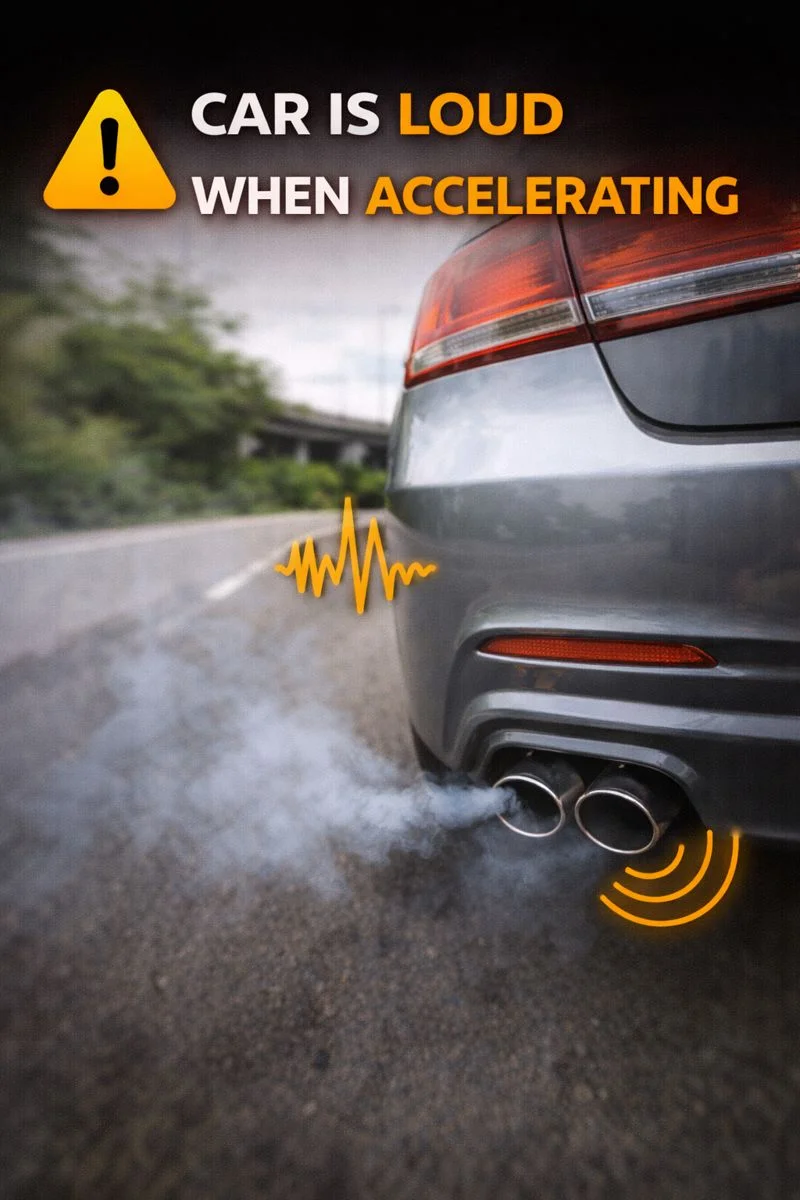
A car that suddenly becomes loud when you press the accelerator grabs attention immediately. The sound may feel aggressive, hollow, roaring, or even metallic, and it usually disappears or softens once you ease off the throttle.
Some drivers notice it after a repair. Others hear it slowly getting worse over weeks or months. In many cases, the car still runs fine, which makes the noise easy to ignore at first. Over time, though, that loudness starts to raise questions about safety, damage, and cost.
Noise during acceleration is rarely random. Acceleration puts the most strain on an engine and exhaust system. Airflow increases, fuel demand rises, internal parts move faster, and pressure builds across multiple systems at once.
When something is loose, worn, cracked, or restricted, that stress turns into sound. This article breaks down why cars get loud specifically when accelerating, how to tell different noises apart, which problems are minor, which ones are serious, and how to respond before the issue grows into a costly repair.
Why Acceleration Makes Problems More Noticeable
Acceleration is when the engine works hardest. Throttle opens, combustion pressure rises, and exhaust gases move faster through the system. Any weakness that stays quiet at idle often becomes obvious under load.
At steady speed, engine and exhaust flow remain stable. When you accelerate, pressure changes rapidly. This exposes leaks, worn mounts, damaged components, and airflow restrictions that remain hidden at low demand.
That is why many noise complaints only show up during acceleration and fade when cruising.
Exhaust System Problems That Cause Loud Acceleration Noise
The exhaust system is the most common source of loud noise when accelerating.
Exhaust gases move faster under throttle, and any opening in the system acts like a speaker. Even a small leak can sound loud when pressure increases.
Common exhaust-related causes include:
- Exhaust manifold cracks
- Loose or broken manifold bolts
- Exhaust gasket leaks
- Damaged flex pipes
- Rusted exhaust sections
- Failing mufflers
These issues often produce a roaring, rumbling, or sharp exhaust sound that grows louder as you accelerate.
How Exhaust Leaks Sound Compared To Normal Exhaust Noise
Exhaust leaks usually sound harsher and less smooth than normal exhaust tone.
They may create:
- A loud rushing or blowing noise
- A ticking or puffing sound near the engine
- A deep roar from under the car
Manifold leaks are often louder when the engine is cold and may quiet slightly as metal expands.
Muffler or pipe leaks usually get louder the harder you accelerate.
Intake And Airflow Noises Under Acceleration
Not all loud acceleration noise comes from the exhaust. Intake systems can also produce noticeable sound.
When you accelerate, the engine pulls in more air. If the intake system has leaks or modifications, noise increases.
Possible intake-related causes include:
- Loose air intake hoses
- Cracked intake tubing
- Missing intake resonators
- Aftermarket intake systems
- Damaged air filter housings
These issues often produce a loud sucking, whooshing, or growling sound that rises with throttle input.
Engine Internal Noise That Appears Under Load
Some loud sounds during acceleration come from inside the engine itself.
Under load, internal parts experience higher forces. Worn or damaged components become louder when stressed.
Examples include:
- Worn piston components
- Bearing-related noises
- Timing-related problems
- Detonation or abnormal combustion
These sounds are usually deeper or sharper than exhaust noise and may feel more mechanical.
Internal engine noises should never be ignored.
Knocking And Pinging Sounds During Acceleration
A rattling or knocking sound when accelerating may point to combustion issues.
This noise often occurs when the engine is under load and disappears when you lift off the throttle.
Possible causes include:
- Incorrect fuel octane
- Carbon buildup
- Incorrect ignition timing
- Sensor-related issues
While light pinging may not be immediately destructive, persistent knocking can damage the engine.
Loose Or Worn Engine And Transmission Mounts
Mounts secure the engine and transmission to the vehicle frame.
When mounts wear out or break, the engine can move excessively during acceleration.
This movement can cause:
- Loud clunking or thumping sounds
- Vibrations felt through the cabin
- Exhaust components contacting the body
The noise often appears when accelerating from a stop or shifting gears.
Mount issues amplify other noises by allowing excessive movement.
Transmission And Drivetrain Noises Under Acceleration
Drivetrain components transmit power from the engine to the wheels.
Under acceleration, these parts handle the most torque.
Problems that can cause loud sounds include:
- Worn CV joints
- Damaged driveshafts
- Failing differentials
- Worn universal joints
These noises often sound like grinding, whining, or clunking and increase with throttle input.
How Wheel Bearings And Axles Can Add To The Noise
Although wheel bearings are more speed-related, worn axles can make noise during acceleration.
A clicking or popping sound when accelerating, especially during turns, often points to axle problems.
These noises are mechanical and usually worsen quickly once they start.
Heat Shields And Loose Components
Heat shields are thin metal panels designed to protect parts from exhaust heat.
Over time, they loosen or rust at mounting points.
When accelerating, vibration increases and loose shields rattle loudly.
This noise often sounds dramatic but is usually inexpensive to fix.
Loose brackets, exhaust hangers, and shields are common causes of sudden noise.
Why The Noise Often Stops When You Let Off The Gas
When you lift off the accelerator:
- Exhaust pressure drops
- Engine load decreases
- Vibration reduces
- Components relax
This causes many noises to fade or disappear.
The on-off nature of the sound is a strong clue that the issue is load-related rather than speed-related.
Cold Versus Warm Engine Noise Differences
Some noises are louder when the engine is cold.
Metal contracts when cold, increasing gaps and leaks.
As the engine warms, components expand and seal better.
If the noise is loud when cold and improves when warm, exhaust manifold leaks are a common suspect.
If the noise worsens as the engine warms, internal wear or lubrication issues may be involved.
How Vehicle Speed Changes The Sound
Acceleration noise often correlates with engine RPM rather than vehicle speed.
If the sound changes with gear shifts but not with road speed, the source is likely engine or exhaust related.
If the sound increases with speed regardless of gear, wheel or drivetrain issues may be involved.
This distinction helps narrow the source quickly.
Common Misdiagnoses When A Car Is Loud Under Acceleration
Many loud acceleration noises are misdiagnosed.
Common mistakes include:
- Blaming the engine when the exhaust is leaking
- Replacing mufflers when the issue is the manifold
- Ignoring mounts that allow components to strike the body
- Assuming noise is normal engine behavior
Proper inspection saves unnecessary part replacement.
How To Do A Basic Noise Inspection Safely
Some checks can be done safely without tools.
Listen for where the noise seems loudest: engine bay, under the car, or rear.
Check for visible exhaust damage or rust.
Look for loose heat shields or hanging components.
Avoid touching hot parts and never crawl under a car without proper support.
Why Warning Lights May Not Appear
Many noise-causing issues do not affect sensors.
Exhaust leaks, mounts, shields, and mechanical wear often produce no warning lights.
Absence of a warning light does not mean the issue is harmless.
Sound is often the first and only symptom.
When Loud Acceleration Noise Becomes A Safety Concern
Some noises are more than annoying.
Exhaust leaks near the engine can allow fumes into the cabin.
Severe drivetrain noise can signal imminent failure.
Engine knocking under load can cause internal damage.
Any noise that worsens quickly should be addressed promptly.
Short-Term Versus Long-Term Risks
Short-term risks include discomfort, vibration, and stress.
Long-term risks include:
- Exhaust system failure
- Engine damage
- Transmission damage
- Increased repair cost
Early diagnosis usually limits damage and cost.
Why Temporary Fixes Rarely Last
Temporary fixes like exhaust tape or additives may reduce noise briefly.
They do not repair cracked metal, worn mounts, or damaged components.
Noise often returns louder once temporary fixes fail.
Permanent repair always costs less than repeated temporary solutions.
Professional Diagnosis And Why It Matters
Technicians use lifts, stethoscopes, and load testing to pinpoint noise sources.
They can test the vehicle under controlled acceleration.
This prevents guesswork and avoids replacing parts that are not faulty.
Accurate diagnosis saves time and money.
Cost Range For Common Repairs
Costs vary widely depending on the cause.
Loose heat shields are inexpensive.
Exhaust gasket or pipe repairs fall in the middle range.
Internal engine or drivetrain repairs are costly.
Finding the issue early often keeps the repair affordable.
How Regular Maintenance Reduces Noise Problems
Routine inspections catch loose or worn components early.
Exhaust systems benefit from regular checks for rust and damage.
Mounts and bushings wear gradually and show warning signs before failure.
Maintenance reduces the chance of sudden loud noises.
Why Ignoring Noise Is Rarely A Good Idea
Noise is a symptom, not a feature.
Cars are designed to operate quietly under normal conditions.
Loud acceleration noise usually means something is wrong.
Ignoring it often allows minor issues to become major repairs.
Sound Clues That Point To Specific Problems
Deep roaring usually points to exhaust leaks.
Sharp ticking near the engine suggests manifold or gasket leaks.
Rattling points to loose shields or brackets.
Metallic knocking under load suggests internal engine issues.
Recognizing these clues speeds up diagnosis.
Driving Habits That Make The Noise Worse
Aggressive acceleration increases stress and noise.
Heavy loads and towing amplify existing issues.
Short trips prevent exhaust components from drying out, increasing rust risk.
Gentler driving reduces strain until repairs are made.
When To Stop Driving And Seek Immediate Help
Stop driving if:
- The noise is accompanied by power loss
- The car vibrates violently
- There is a burning smell
- Warning lights appear suddenly
Continuing to drive risks severe damage.
Final Thoughts
A car that is loud when accelerating is reacting to stress somewhere in the system. Acceleration exposes weaknesses in exhaust components, engine mounts, intake systems, and drivetrain parts that may stay quiet under lighter conditions. The sound itself carries important clues about where the problem lies and how serious it may be.
Listening carefully, noting when the noise occurs, and addressing it early prevents minor issues from escalating. Loud acceleration noise is not something to ignore or assume is normal. Treating it as an early warning helps protect the vehicle, control repair costs, and restore the quiet, smooth operation the car was designed to deliver.