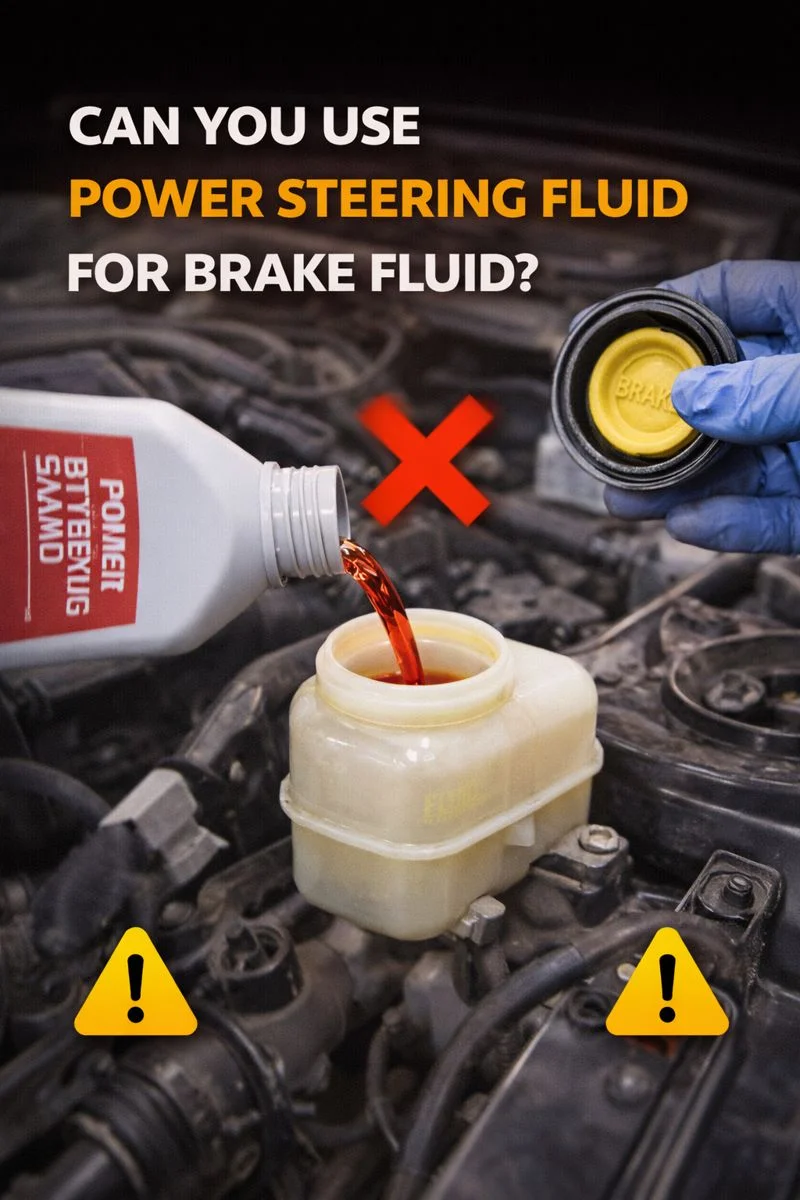
Fluids under the hood can look confusingly similar, especially when you are in a hurry or dealing with a low warning light. Power steering fluid and brake fluid are both clear to amber liquids, often stored in small plastic reservoirs near the firewall or engine bay.
That similarity leads many drivers to ask a risky question: can power steering fluid be used in place of brake fluid, even temporarily. The idea often comes up during emergencies, roadside situations, or when the correct fluid is not immediately available.
This is not a small mistake. Brakes are the most critical safety system in any vehicle, and the fluid they rely on is engineered for very specific conditions.
Power steering fluid and brake fluid may look alike, but they are chemically different and serve completely different purposes. This article breaks down why these fluids are not interchangeable, what happens if they are mixed, how damage occurs, and what steps should be taken if the wrong fluid is added.
Why Brake Fluid Is A Special Type Of Fluid
Brake fluid does far more than transfer pressure. It must handle extreme heat, resist compression, and remain stable in all driving conditions.
Brake systems generate intense heat during normal operation. Hard braking, downhill driving, and emergency stops raise temperatures rapidly. Brake fluid is designed to withstand this heat without boiling.
Another critical feature is compressibility. Brake fluid must remain incompressible so that pedal pressure transfers instantly to the brake calipers or wheel cylinders. Even slight compression causes a soft pedal and delayed braking response.
Brake fluid is also hygroscopic, meaning it absorbs moisture. While this sounds negative, it is intentional. Absorbing moisture prevents water from pooling inside the system and boiling at low temperatures.
What Power Steering Fluid Is Designed To Do
Power steering fluid serves a very different role. It is a hydraulic oil designed to assist steering movement by transferring pressure from the pump to the steering rack or gearbox.
It must lubricate seals, reduce wear inside the pump, and flow smoothly across a wide temperature range. It does not face the same heat levels as brake fluid and is not designed to handle combustion-level temperatures.
Power steering fluid behaves more like hydraulic oil or automatic transmission fluid. It is not hygroscopic and does not manage moisture the way brake fluid does.
This fundamental difference makes the two fluids incompatible.
Chemical Differences Between The Two Fluids
Brake fluid is usually glycol-based or silicone-based, depending on the specification. Power steering fluid is petroleum-based.
These chemical bases do not mix safely. When combined, they react in ways that damage internal components.
Rubber seals used in brake systems are specifically designed for brake fluid. Petroleum-based fluids cause these seals to swell, soften, or break down entirely.
Once seal damage begins, leaks and pressure loss follow quickly.
What Happens If Power Steering Fluid Is Added To Brake Fluid
Adding power steering fluid to the brake system causes immediate and long-term problems.
In the short term, braking performance may feel normal. This false sense of safety is dangerous because damage begins internally before symptoms appear.
Over time, the petroleum fluid attacks rubber seals in:
- The master cylinder
- Brake lines
- ABS components
- Calipers and wheel cylinders
As seals degrade, brake fluid leaks internally or externally. Pedal feel becomes spongy, braking distance increases, and complete brake failure becomes possible.
Even a small amount of contamination can affect the entire system.
Why This Mistake Is So Dangerous
Brakes rely on a sealed hydraulic system. Any compromise in that system affects safety immediately.
Unlike engine or steering issues, brake failure leaves little room for reaction. Loss of braking pressure can happen suddenly and without warning.
Because the damage occurs internally, flushing alone may not reverse the problem if seals are already compromised.
This is why manufacturers treat fluid contamination as a serious fault.
Can Power Steering Fluid Ever Work As A Temporary Substitute
The short answer is no.
There is no safe scenario where power steering fluid can substitute for brake fluid, even for a short drive.
The risk is not limited to braking performance in that moment. The chemical damage begins as soon as the fluids mix.
Even a brief exposure can require extensive repairs later.
If brake fluid is low, the safest option is to stop driving and obtain the correct fluid.
Common Situations Where This Mistake Happens
Most cases of fluid mix-up occur due to:
- Similar-looking reservoirs
- Poor labeling on older vehicles
- Rushed maintenance
- Emergency roadside decisions
Some drivers assume all hydraulic fluids are similar. This assumption leads to costly and dangerous outcomes.
Modern vehicles often label caps clearly, but older cars may not.
How Much Contamination Is Too Much
There is no safe threshold.
Even a small amount of power steering fluid mixed into brake fluid can cause damage.
Brake systems circulate fluid through all components. Contamination spreads quickly.
Once petroleum fluid enters the system, it cannot be isolated to one area.
Symptoms After Fluid Contamination
Symptoms may not appear immediately.
Early signs include:
- Brake pedal feeling soft
- Pedal slowly sinking when pressed
- Increased stopping distance
- Brake warning lights
- Fluid leaks near wheels or firewall
By the time symptoms appear, internal damage is usually underway.
What To Do If The Wrong Fluid Was Added
Immediate action reduces damage.
Do not drive the vehicle. Movement circulates contaminated fluid further.
The system must be flushed completely, and contaminated components inspected.
In many cases, rubber components need replacement rather than cleaning.
The sooner this is addressed, the lower the repair cost.
Why Flushing Alone Is Often Not Enough
Brake fluid contamination damages rubber from the inside out.
Even if contaminated fluid is flushed out, seals may remain swollen or weakened.
These compromised seals can fail later, causing delayed brake loss.
That is why many repair procedures require replacing:
- Master cylinder
- Rubber brake hoses
- Caliper seals
- ABS seals in severe cases
Skipping replacements risks future failure.
Cost Of Repairs After Mixing Fluids
Repair costs vary widely depending on how much contamination occurred.
Minor cases caught immediately may cost a few hundred dollars for flushing and inspection.
Severe contamination can exceed several thousand dollars if major components need replacement.
ABS-equipped vehicles are especially costly because of complex internal valves and seals.
Early action saves money.
Why Brake Fluid Types Matter Even More
Even within brake fluids, types matter.
DOT 3, DOT 4, and DOT 5.1 are glycol-based and compatible with each other to some extent.
DOT 5 is silicone-based and not compatible with glycol fluids.
Power steering fluid is not compatible with any brake fluid type.
Using the wrong brake fluid type is already risky. Using power steering fluid is far worse.
Why Visual Similarity Causes Confusion
Power steering fluid and brake fluid can look nearly identical in color.
Reservoir shape and location are often the only differences.
Brake reservoirs are usually mounted directly on the master cylinder near the firewall.
Power steering reservoirs may be belt-driven pump mounted or remote-mounted.
Checking labels before adding fluid is critical.
How Manufacturers Design Brake Systems Around Fluid Properties
Brake system materials are chosen specifically for brake fluid chemistry.
Seal materials, line coatings, and internal finishes are tested with brake fluid only.
Introducing petroleum fluid changes how these materials behave.
This is why manufacturers warn strongly against fluid substitution.
Emergency Situations And The Right Decision
If brake fluid is low and the correct fluid is unavailable, the safest choice is not to drive.
Using power steering fluid to “get home” risks total brake failure.
Towing or roadside assistance is far safer than risking contaminated brakes.
Short-term inconvenience prevents long-term danger.
Preventing Fluid Mix-Ups In The Future
Simple habits reduce risk:
- Keep brake fluid sealed and labeled
- Never open multiple fluid containers at once
- Clean caps before opening reservoirs
- Read the cap label every time
These steps take seconds and prevent expensive mistakes.
Why Online Myths Persist
Some online advice claims small amounts of power steering fluid will not hurt.
These claims are incorrect and often based on anecdotal experiences.
Brake system failures are not always immediate, which creates misleading stories.
Professional repair data consistently shows contamination causes damage.
How Shops Confirm Contamination
Technicians look for:
- Swollen seals
- Discolored fluid
- Petroleum odor
- Rubber deterioration
Once confirmed, replacement is usually recommended rather than flushing alone.
This approach prioritizes safety.
Long-Term Effects Of Driving With Contaminated Brake Fluid
Even if braking seems normal initially, internal damage progresses.
Heat accelerates seal breakdown.
Leaks may develop suddenly under braking pressure.
Complete loss of braking ability can occur without warning.
Long-term risk far outweighs any short-term benefit.
Why Steering And Braking Systems Must Stay Separate
Although both systems use hydraulic pressure, their operating conditions differ greatly.
Steering systems prioritize smooth movement and lubrication.
Brake systems prioritize pressure integrity and heat resistance.
Each fluid is optimized for its role and fails when misused.
Final Thoughts
Power steering fluid should never be used in place of brake fluid under any circumstances. Despite similar appearance, the two fluids are chemically incompatible and serve completely different purposes.
Introducing power steering fluid into a brake system damages seals, compromises pressure, and can lead to sudden brake failure.
If brake fluid is low, the only safe solution is adding the correct brake fluid specified by the manufacturer or stopping the vehicle until proper service is available. Brakes are not a system where shortcuts are acceptable.
Choosing the correct fluid protects not just the vehicle, but everyone inside it and around it on the road.