Getting a learner’s permit is an exciting step. It represents freedom, progress, and the beginning of real independence on the road.
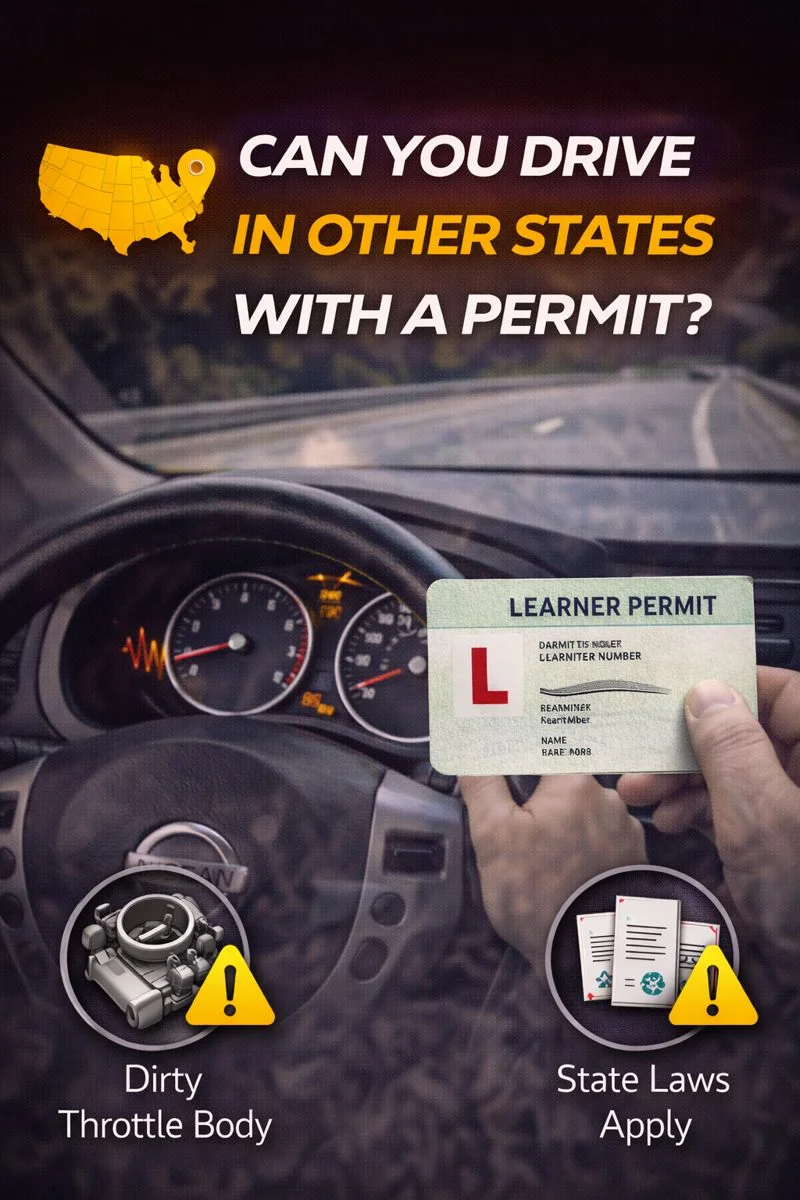
Once that permit is in your wallet, a common question comes up quickly, especially for families who travel, students who cross state lines, or new drivers visiting relatives: can you legally drive in other states with a permit?
Unlike a full driver’s license, a learner’s permit comes with restrictions, conditions, and supervision rules that are not always easy to understand. The confusion grows because driving laws are written at the state level, not nationally.
What is perfectly legal in one state may be restricted or even illegal in another. Many drivers assume permits work the same way everywhere, only to discover later that the rules are far more specific.
This guide breaks down how learner’s permits work across state lines, what usually matters most, and how to avoid legal trouble when driving outside your home state.
What A Learner’s Permit Really Represents
A learner’s permit is not a full authorization to drive independently. It is a conditional driving privilege issued so a new driver can practice under supervision.
Permits are designed around learning, not convenience. They assume the driver is still developing basic skills, judgment, and road awareness. Because of that, permits come with strict rules about supervision, hours, passengers, and sometimes even where driving is allowed.
When you cross state lines, those learning conditions become especially important.
Why Driving Laws Change At State Borders
In the United States, each state controls its own traffic laws. There is no single national rulebook that applies everywhere.
Driver’s licenses are widely recognized across states due to agreements and long-standing legal principles. Learner’s permits, however, do not always receive the same level of automatic recognition.
Some states honor out-of-state permits under certain conditions. Others apply their own learner rules to visiting permit holders. A few states restrict permit driving entirely unless specific requirements are met.
This variation is why the answer to whether you can drive in another state with a permit is almost always “it depends.”
The General Rule Most States Follow
While laws differ, most states follow a similar general approach.
If your home state issued a valid learner’s permit, many other states will allow you to drive temporarily as long as you follow permit-level restrictions. This usually includes:
- Being accompanied by a qualified supervising driver
- Following time-of-day restrictions
- Obeying passenger limits
- Carrying your permit at all times
However, this allowance is usually based on the idea of short-term travel, not extended residence.
Driving across state lines for a family trip is treated differently than moving to another state for school or work.
Supervision Rules Are The Biggest Factor
Supervision is the most critical element of permit driving in any state.
Most learner’s permits require a licensed adult in the front passenger seat. The supervising driver usually must meet age and experience requirements, such as being over 21 and having held a license for a certain number of years.
When driving in another state, that supervision requirement almost always still applies. In some states, it becomes even stricter.
If you are driving with a permit and no supervising driver, you are likely violating the law regardless of which state you are in.
Night Driving And Curfew Restrictions
Many permits limit driving during nighttime hours. These curfews exist because night driving presents higher risks for new drivers.
When traveling out of state, your home state’s curfew often still applies. In some cases, the state you are visiting may enforce its own nighttime limits instead.
This means a permit holder who is legally driving at night in one state may not be allowed to do so in another.
Ignoring curfew rules is one of the most common ways permit holders get cited while traveling.
Passenger Limits Still Matter
Passenger restrictions are another key rule attached to permits.
Many states limit the number of passengers a permit holder can carry, especially other minors. These limits reduce distractions and risk.
When driving in another state, these restrictions do not disappear. In fact, enforcement may be stricter because an out-of-state permit draws more attention during a traffic stop.
Carrying too many passengers while driving with a permit is often treated as a serious violation.
Driving Alone With A Permit Across State Lines
Driving alone with a learner’s permit is almost never allowed, whether you are in your home state or another state.
Even if your home state allows limited solo driving under certain conditions, another state may not recognize that exception.
Driving alone across state lines with a permit greatly increases the risk of citations, fines, or being ordered off the road.
If you are stopped while driving alone, officers typically treat it as unlicensed driving rather than a minor permit violation.
Long Trips Versus Short Visits
States are generally more flexible with short-term travel.
A family vacation, weekend visit, or brief road trip is often allowed as long as permit rules are followed. The assumption is that the driver is still a resident of the issuing state.
Problems arise when a permit holder spends extended time in another state. Living there, attending school, or working may require transferring driving privileges or following local learner rules.
At that point, your permit may no longer be considered valid for driving purposes.
School, College, And Temporary Relocation Situations
Students frequently ask whether they can use a learner’s permit in another state while attending school.
This is a gray area that depends on residency rules. Some states consider students temporary residents, while others do not.
In many cases, students are allowed to drive with an out-of-state permit for limited periods, but only under supervision.
Independent driving is usually not allowed until a full license is issued.
Checking local motor vehicle authority guidance becomes especially important in these situations.
What Happens If You Are Pulled Over
Being stopped while driving with a permit in another state can be stressful, but preparation helps.
Officers typically check:
- Validity of the permit
- Presence of a supervising driver
- Compliance with permit restrictions
- Proof of identity
If everything is in order, most stops end without issue. If a rule is violated, consequences vary.
Possible outcomes include warnings, citations, fines, or being prohibited from continuing to drive.
In serious cases, the supervising driver may be required to take over immediately.
Insurance Considerations Most People Forget
Insurance is another important factor.
Most auto insurance policies cover permitted drivers when they are driving legally and under supervision. However, coverage assumes compliance with all permit rules.
If a permit holder is driving illegally in another state, insurance coverage may be limited or denied in the event of an accident.
This can create serious financial consequences, even for minor incidents.
Confirming insurance coverage before interstate travel is a smart move.
Why Full Licenses Are Treated Differently
Full driver’s licenses are recognized nationwide because they represent completed testing and unrestricted driving authority.
Learner’s permits do not carry that same weight. They are temporary, conditional, and focused on training.
This is why crossing state lines with a permit involves far more restrictions and uncertainty than crossing with a license.
Understanding this difference helps set realistic expectations.
Common Myths About Driving With A Permit In Other States
Many misunderstandings come from assumptions rather than facts.
A common myth is that permits automatically work everywhere. Another is that being with a parent makes everything legal.
Some believe police officers will overlook permit issues for young drivers. This is not reliable and often incorrect.
Permit laws are enforced because they involve safety, not paperwork.
How To Reduce Risk When Traveling
Preparation makes all the difference.
Before traveling:
- Review your home state permit rules
- Check the destination state’s learner regulations
- Confirm supervision requirements
- Verify insurance coverage
- Carry all documentation
If rules are unclear, avoid driving until clarity is confirmed.
It is always safer to let a fully licensed driver handle interstate travel.
When It Is Better Not To Drive At All
There are times when the safest option is simply not driving.
If supervision rules cannot be met, if curfew hours will be violated, or if local laws are unclear, driving with a permit becomes risky.
Choosing not to drive avoids legal trouble, insurance complications, and safety risks.
Learning to drive is important, but not at the expense of compliance.
How Permit Rules Affect Progress Toward A License
Violations while driving with a permit can delay licensing.
Some states record out-of-state violations and apply penalties at home. This may include extending permit periods or delaying eligibility for a license.
Keeping a clean permit record is one of the fastest ways to move forward toward full driving privileges.
International Considerations Are Even Stricter
Learner’s permits are almost never valid outside the United States.
Driving in another country with a U.S. permit is typically not allowed and may result in severe penalties.
International travel requires a full license and often additional documentation.
Why Checking Official Sources Matters
Because laws change and vary, relying on outdated advice can cause problems.
State motor vehicle departments publish current rules regarding permits and out-of-state driving.
When in doubt, checking official guidance is always better than relying on assumptions.
Final Thoughts
Driving in other states with a learner’s permit is not automatically illegal, but it is never simple. The privilege depends on supervision, compliance with restrictions, and how long you plan to stay.
While many states allow short-term permit driving under strict conditions, the responsibility always falls on the driver and supervising adult to follow the rules.
A permit is a learning tool, not a shortcut to independence. Treating it with that mindset helps avoid tickets, insurance issues, and delays in earning a full license. When questions arise, choosing caution over convenience is almost always the right decision.