A vehicle’s drivetrain depends on several moving parts working together smoothly, especially in rear-wheel-drive and four-wheel-drive vehicles. One small but extremely important component in that system is the universal joint, commonly called a U joint.
Although many drivers rarely think about it, the U joint plays a major role in transferring power from the transmission to the wheels. When it begins wearing out, the vehicle may start making clunking noises, vibrations, squeaking sounds, or harsh movements during acceleration and gear changes.
Some drivers ignore those warning signs because the vehicle may still move normally at first, but a failing U joint can eventually turn into a serious mechanical and safety problem.
The biggest concern with a bad U joint is unpredictability. One vehicle may continue operating for weeks with only mild vibration, while another may fail suddenly within days.
Once excessive wear develops inside the joint bearings, damage can spread quickly through the driveshaft system. A completely failed U joint may even cause the driveshaft to disconnect while the vehicle is moving, which can create dangerous loss of control and expensive drivetrain damage.
Looking closely at how U joints work, why they fail, the warning signs drivers should never ignore, and how long a damaged joint may realistically last helps prevent larger repair problems later.
What A U Joint Does And Why It Matters
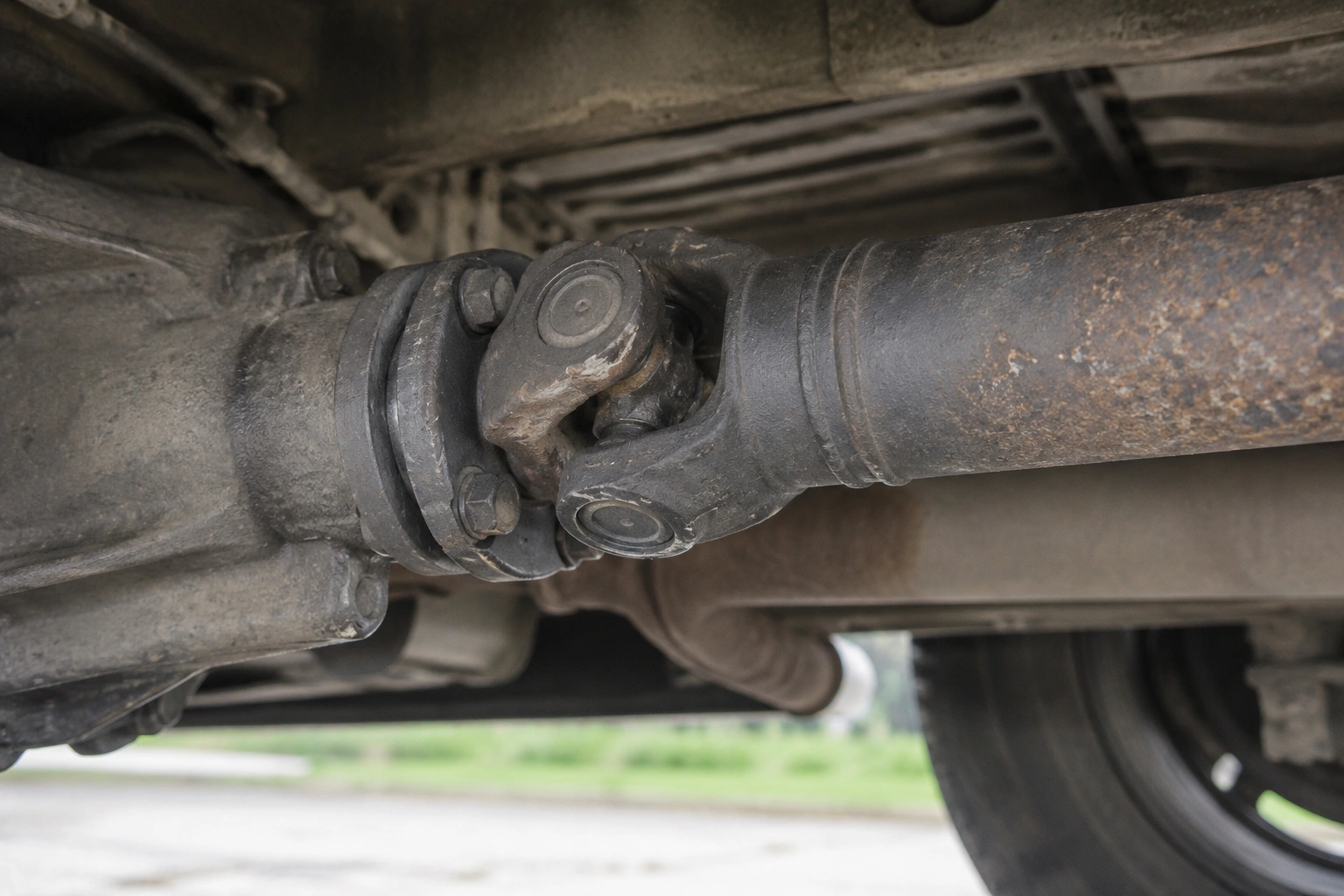
The universal joint is a flexible drivetrain component designed to allow movement between connected rotating shafts. It plays a critical role in vehicles using driveshaft systems.
How The U Joint Transfers Engine Power
In rear-wheel-drive and four-wheel-drive vehicles, engine power travels from the transmission through a driveshaft before reaching the differential and wheels. The driveshaft constantly changes angle slightly as the suspension moves over bumps and uneven roads.
The U joint allows the driveshaft to rotate smoothly even while operating at changing angles. Without this flexibility, the driveshaft would bind, vibrate, or break during normal suspension movement.
Most U joints use needle bearings inside bearing caps that allow smooth rotational movement under heavy load. These bearings require proper lubrication and structural integrity to function correctly over long periods.
Although the component appears relatively small, the entire drivetrain depends heavily on the U joint remaining stable and balanced during operation.
| U Joint Function | Why It Is Important |
| Transfers Rotational Power | Keeps Vehicle Moving |
| Allows Driveshaft Flexibility | Supports Suspension Movement |
| Reduces Drivetrain Stress | Prevents Binding |
| Maintains Smooth Rotation | Limits Vibrations |
| Supports Torque Delivery | Improves Power Transfer |
Why Rear-Wheel-Drive Vehicles Depend On U Joints
Front-wheel-drive vehicles commonly use CV axles instead of traditional driveshaft systems, but many trucks, SUVs, vans, and performance vehicles still rely heavily on U joints.
Rear-wheel-drive systems place significant stress on the driveshaft during acceleration, towing, hauling, and off-road driving. The U joint absorbs much of that movement while handling constant rotational force.
Four-wheel-drive vehicles may use multiple U joints throughout the drivetrain because front and rear driveshafts both require flexible movement capability.
Heavy-duty trucks especially place enormous strain on drivetrain components during towing or carrying heavy cargo loads.
How U Joints Wear Out Over Time
U joints wear gradually through friction, heat, moisture exposure, and lubrication breakdown. Inside the joint, tiny needle bearings rotate constantly whenever the vehicle moves. Over time, those bearings begin wearing down or losing lubrication.
Rust, water intrusion, heavy towing, aggressive acceleration, lifted suspensions, and neglected maintenance all accelerate wear significantly.
Once bearing surfaces become damaged, looseness develops inside the joint. That looseness creates vibration, clunking sounds, and eventually severe drivetrain instability.
Warning Signs Of A Bad U Joint
Most failing U joints give noticeable warning symptoms before complete failure occurs. Recognizing those signs early helps prevent larger drivetrain damage and unsafe driving conditions.
Clunking Sounds During Gear Changes
One of the most common signs of a worn U joint involves a clunking or banging sound when shifting between drive and reverse. Drivers may also hear the noise during sudden acceleration or deceleration.
This sound usually happens because excess play develops inside the joint bearings. When torque direction changes, the loosened driveshaft shifts abruptly and creates impact noise.
The clunk may start quietly at first but often becomes louder as wear increases. Some drivers describe the sound as metal striking underneath the vehicle.
Ignoring these noises allows additional stress to spread into the driveshaft, transmission, and differential components over time.
| Bad U Joint Symptom | What It Often Means |
| Clunking Noise | Excessive Internal Play |
| Vehicle Vibrations | Driveshaft Imbalance |
| Squeaking Sound | Dry Needle Bearings |
| Harsh Shifting Feel | Drivetrain Slack |
| Visible Rust Around Caps | Bearing Failure Beginning |
Vibrations At Highway Speeds
Driveshaft vibration is another major warning sign. A failing U joint can throw off driveshaft balance and create noticeable shaking through the floor, seats, or steering wheel.
The vibration often becomes worse as vehicle speed increases because the driveshaft spins faster at highway speeds. Some drivers first notice the issue around 40 to 60 mph before the shaking grows more severe later.
Drivetrain vibrations should never be ignored because they may eventually damage transmission seals, carrier bearings, differential components, and driveshaft assemblies.
Unlike tire balance vibrations, bad U joint vibrations often feel deeper and more mechanical underneath the vehicle.
Squeaking Sounds While Moving Slowly
Dry or worn U joint bearings sometimes create squeaking noises during low-speed driving. The sound may become more noticeable while reversing or slowly accelerating from a stop.
This happens because damaged bearings begin binding instead of rotating smoothly inside the joint assembly. Some drivers mistakenly assume the noise comes from suspension bushings or brakes.
Squeaking usually indicates lubrication failure inside the joint and often appears before severe looseness develops.
Visible Rust Or Movement Around The Joint
In some cases, physical inspection reveals obvious signs of U joint wear. Rust powder around bearing caps often indicates internal bearing deterioration. Mechanics sometimes call this “red dust,” and it commonly signals metal-on-metal wear inside the joint.
Excessive driveshaft movement during inspection also points toward internal looseness and imminent failure risk.
How Long Can You Realistically Drive With A Bad U Joint?
There is no exact mileage limit for a failing U joint because wear severity, vehicle use, and driving conditions all affect how quickly the problem worsens.
Mild Symptoms May Last Temporarily
Some vehicles continue operating for several weeks or even months when the U joint only has minor wear. Light clunking or occasional vibration may remain manageable initially, especially during short local driving.
However, the condition rarely improves on its own. Once bearing wear starts, deterioration usually accelerates gradually because damaged bearings generate more friction and heat.
Vehicles driven gently under light load conditions may survive longer than trucks used for towing, hauling, or aggressive acceleration.
Even when the vehicle still feels mostly normal, the risk of sudden failure continues increasing over time.
| U Joint Condition | Possible Remaining Lifespan |
| Minor Early Wear | Weeks To Months |
| Noticeable Vibration | Days To Weeks |
| Severe Clunking | Immediate Repair Recommended |
| Binding Or Grinding | Failure Risk Extremely High |
| Driveshaft Movement | Unsafe To Continue Driving |
Severe Wear Can Fail Suddenly
Once looseness becomes excessive, the U joint may fail unexpectedly without much additional warning. Needle bearings can break apart, bearing caps may detach, or the joint cross can crack completely under load.
A complete failure often allows the driveshaft to disconnect partially or fully while the vehicle is moving. This creates extremely dangerous conditions, especially at highway speeds.
In rear-wheel-drive vehicles, a dropped driveshaft can strike the pavement violently and potentially lift the rear of the vehicle suddenly. Some failures also damage transmission housings, exhaust systems, brake lines, or fuel lines underneath the vehicle.
At that point, repair costs increase dramatically compared to replacing the U joint earlier.
Towing And Heavy Loads Accelerate Failure
Vehicles used for towing trailers or carrying heavy loads place much greater stress on drivetrain components. U joints under constant heavy torque loads wear significantly faster once damage begins.
Drivers towing with a failing U joint risk sudden breakdowns during acceleration, hill climbing, or highway merging situations where drivetrain stress peaks.
Off-road driving also accelerates wear because suspension articulation forces the driveshaft to operate at steeper angles repeatedly.
Weather And Moisture Affect U Joint Lifespan
Rust and corrosion heavily influence U joint durability. Vehicles exposed to road salt, mud, water crossings, or humid climates often experience faster bearing deterioration.
Moisture intrusion washes away lubrication and promotes rust formation inside the needle bearing assemblies. Once corrosion begins, smooth rotational movement deteriorates rapidly.
Greaseable U joints sometimes last longer because fresh lubrication helps protect bearings against moisture contamination.
Repair Costs And Why Delaying Repairs Gets Expensive
Replacing a worn U joint early usually costs far less than repairing drivetrain damage after catastrophic failure occurs.
U Joint Replacement Is Usually Affordable
In many vehicles, replacing a U joint remains relatively affordable compared to major drivetrain repairs. Costs vary depending on vehicle type, labor difficulty, and whether multiple joints require replacement.
Some trucks and SUVs use replaceable U joints pressed into the driveshaft yokes, while others may require complete driveshaft assemblies depending on design.
Repair costs increase if vibration damage already affected surrounding components such as carrier bearings or transmission seals.
| Repair Type | Typical Difficulty |
| Single U Joint Replacement | Moderate Repair |
| Driveshaft Balancing | Additional Service Needed |
| Complete Driveshaft Replacement | Higher Repair Cost |
| Differential Damage Repair | Expensive |
| Transmission Tailshaft Damage | Major Drivetrain Repair |
Ignoring The Problem Risks Major Damage
A failed U joint can damage multiple expensive components within seconds. Driveshaft separation sometimes cracks transmission housings or damages differential yokes badly enough to require extensive repairs.
Secondary damage often costs far more than the original U joint replacement itself.
Severe vibration may also wear transmission output bearings, axle components, and center support bearings over time.
Preventive Maintenance Extends Drivetrain Life
Routine drivetrain inspection helps identify worn U joints before dangerous failure occurs. Many mechanics inspect for looseness, rust, cracked seals, and abnormal movement during regular maintenance visits.
Greaseable U joints require periodic lubrication to maintain bearing protection and reduce internal wear.
Drivers towing regularly or operating lifted trucks should inspect drivetrain components more frequently because added stress shortens component lifespan.
Why Immediate Attention Is The Safest Choice
Even though some vehicles continue operating temporarily with minor U joint wear, there is no reliable way to predict exactly when complete failure will happen. One sudden acceleration, pothole impact, or heavy load situation can push an already weakened joint beyond its limit instantly.
The safest decision is addressing U joint problems early before vibration, looseness, and drivetrain instability create larger repair bills or dangerous roadway situations.
Paying attention to clunking sounds, vibrations, squeaks, and drivetrain movement helps drivers catch failing U joints before the problem escalates into a serious mechanical breakdown.