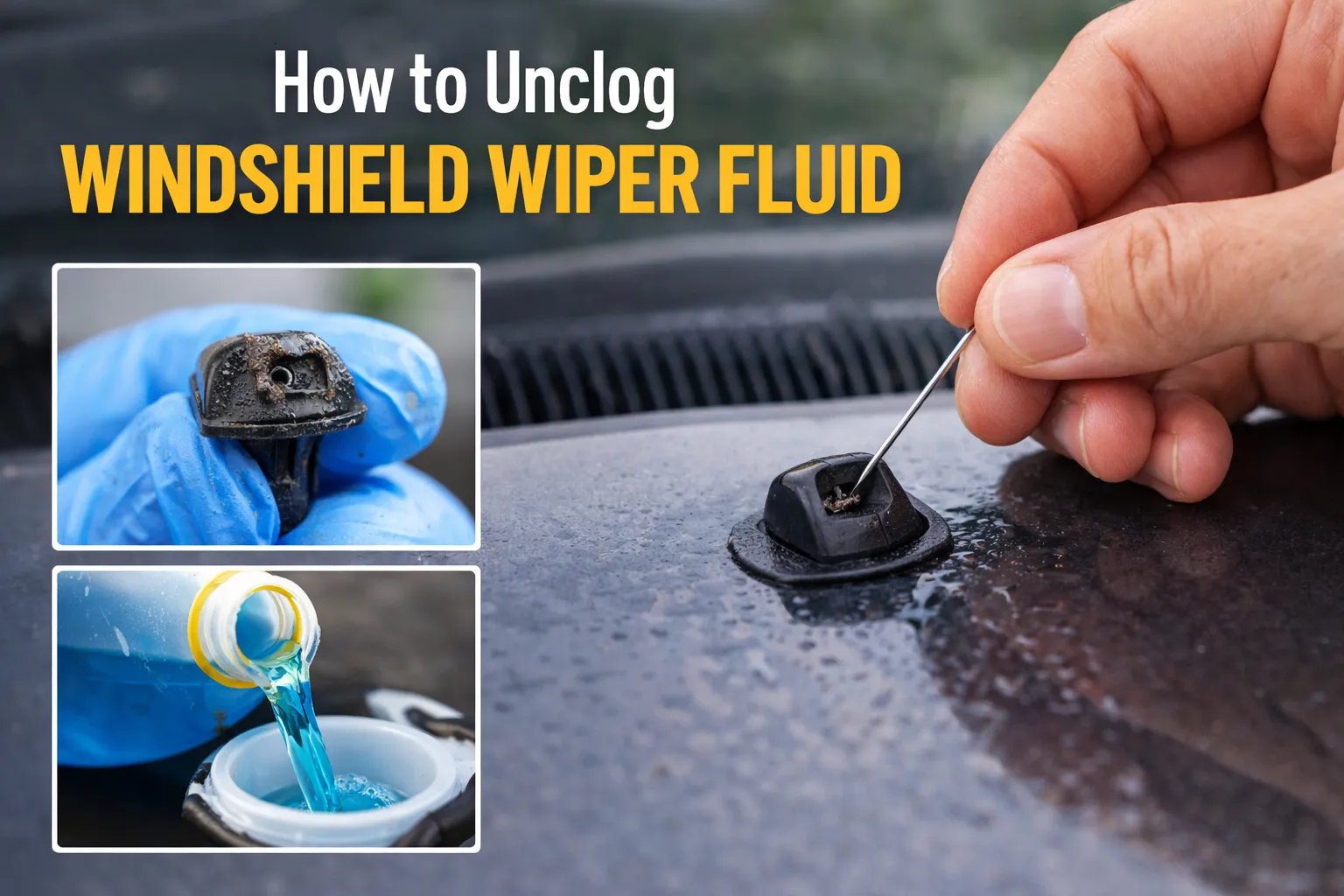
When windshield washer fluid stops spraying correctly, it’s more than a minor inconvenience—it’s a safety issue. Reduced visibility during rain, dust, or highway driving can quickly become dangerous.
Many drivers assume the washer pump has failed, but in most cases the real problem is far simpler: a clog somewhere in the washer fluid system.
Clogs usually develop slowly. Mineral deposits, dirt, wax residue from car washes, degraded washer fluid, or even algae growth can restrict flow long before the system stops working completely.
The good news is that most of these blockages can be cleared at home without replacing parts.
This guide takes a systematic approach—starting from the most common failure points and working deeper into the system—so you can fix the problem correctly the first time and prevent it from coming back.
How the Windshield Washer System Actually Fails
Understanding where clogs form helps you diagnose faster.
Common clog locations:
- Washer nozzles (most frequent)
- Hose ends near the nozzles
- Inline connectors
- Washer fluid reservoir
- Internal pump filter
A blockage near the nozzle causes weak or uneven spray. A blockage closer to the reservoir may stop all spray even though the pump still runs.
Symptoms That Point to a Clog (Not a Bad Pump)
You’re likely dealing with a clog if:
- You hear the washer pump but no fluid sprays
- Spray is uneven or angled incorrectly
- Only one nozzle works
- Fluid drips instead of spraying
- Spray works briefly, then stops again
If there’s no pump sound at all, electrical diagnosis is needed instead.
Step-by-Step: How to Unclog Windshield Wiper Fluid Properly
Step 1: Inspect Washer Fluid Quality and Reservoir Condition
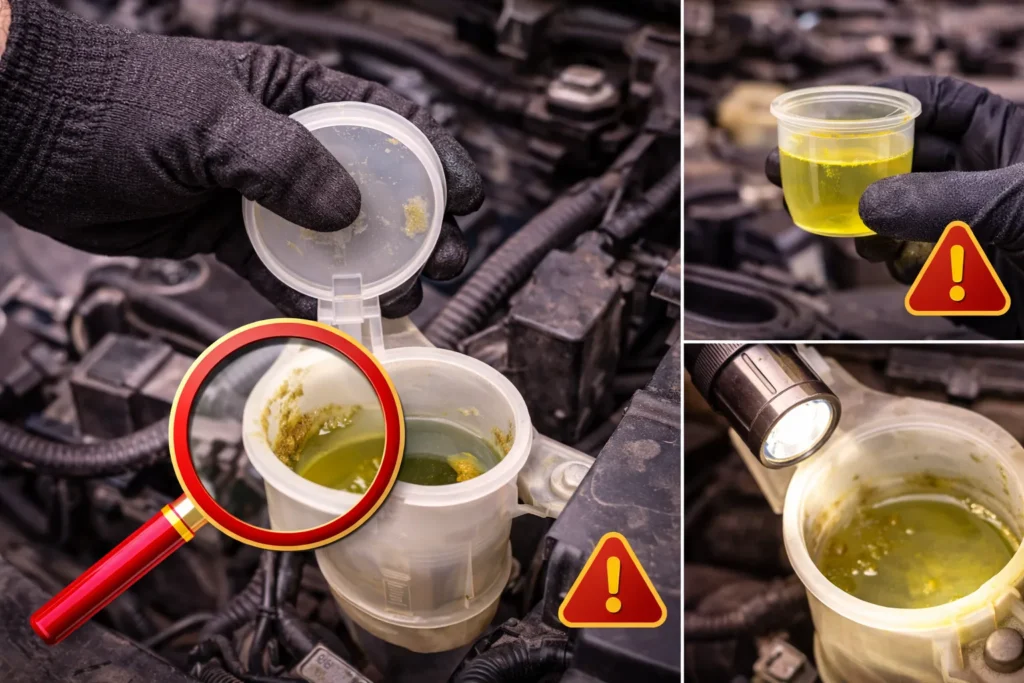
Open the washer fluid reservoir and look closely at the fluid.
Healthy washer fluid should be:
- Clear or lightly tinted
- Free of particles
- Thin, not syrup-like
If you see:
- Floating debris
- Cloudiness
- Slime or discoloration
Then contamination is likely contributing to repeated clogs. Even if the nozzles are cleared, dirty fluid will clog them again unless the system is flushed later.
Step 2: Confirm Washer Pump Is Working
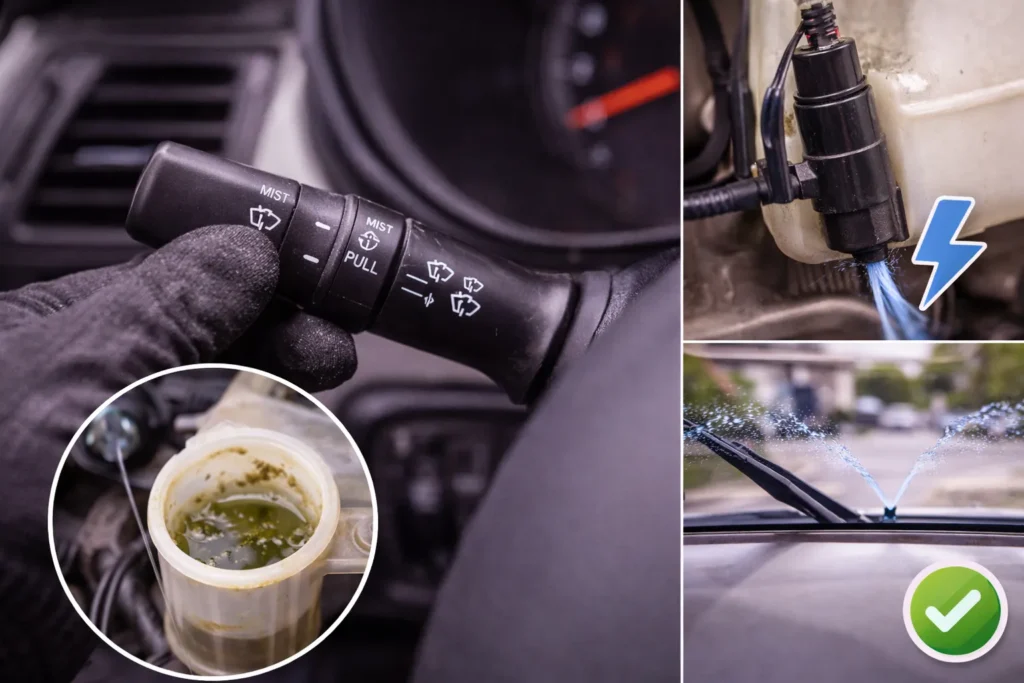
Activate the washer switch with the hood open.
- Pump noise present: Flow is being restricted somewhere downstream
- No pump noise: Electrical or pump failure (outside the scope of this guide)
Continue only if the pump runs.
Step 3: Deep-Clean the Washer Nozzles (Primary Failure Point)
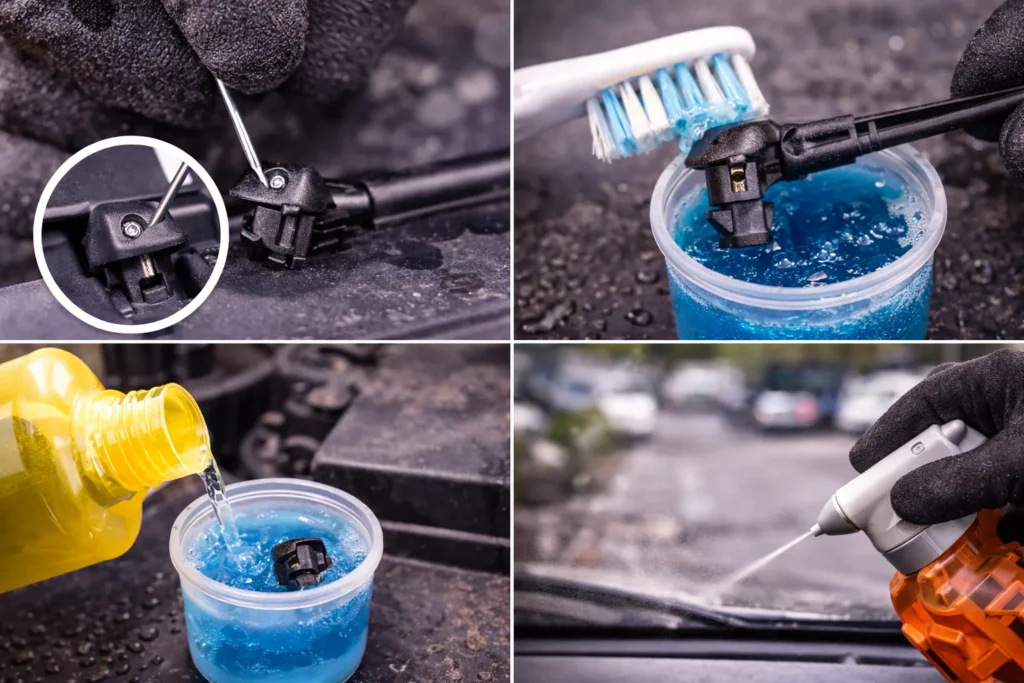
Washer nozzles clog easily because they have very small spray orifices. Dirt, wax residue from car washes, and dried washer fluid additives build up here over time.
At this stage, a cleaner that can break down residue without damaging plastic is essential.
A highly effective option is WD-40 Specialist Contact Cleaner.
Why this product works especially well for washer nozzles:
- Dissolves mineral buildup, wax residue, and grime
- Penetrates tiny spray openings
- Evaporates quickly without leaving oily residue
- Safe for plastic nozzles and rubber hoses
How to use it correctly:
- Spray directly into each washer nozzle opening
- Let it soak for 60–90 seconds
- Gently loosen debris using a plastic toothpick or thin wire
- Avoid forcing or widening the nozzle hole
This combination of chemical cleaning and gentle mechanical clearing removes buildup without damaging spray patterns.
Step 4: Flush the Nozzles Immediately After Cleaning
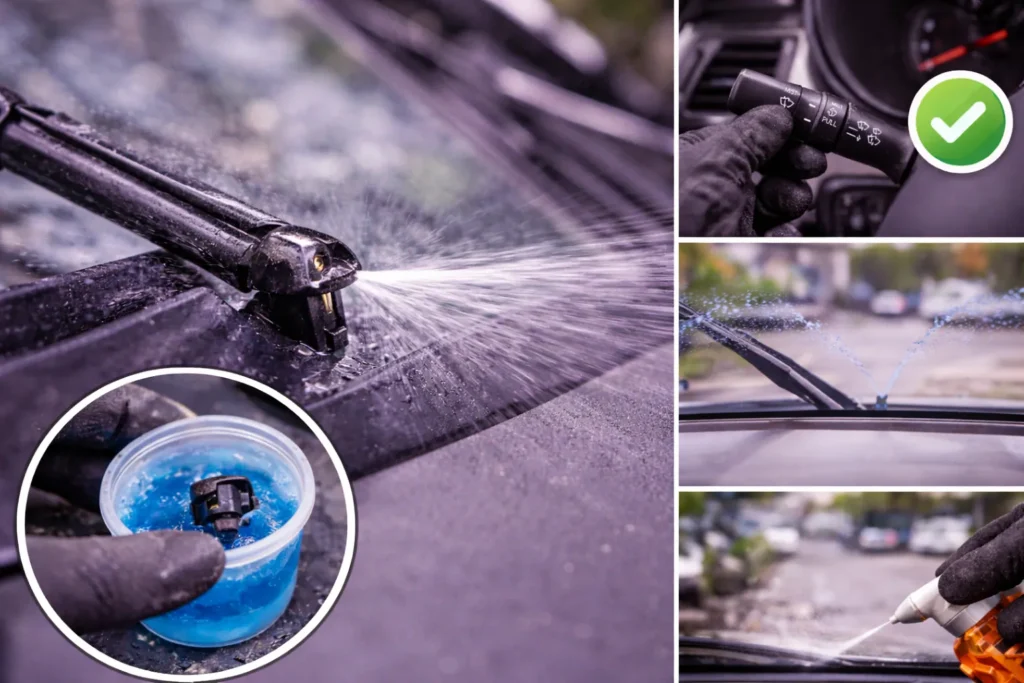
Activate the washer system for 10–15 seconds.
- If spray improves significantly, the clog was nozzle-related
- If spray is still weak or absent, the blockage is deeper in the system
Do not skip this step—flushing confirms whether you’ve solved the problem or need to move further upstream.
Step 5: Isolate Hose vs Nozzle Blockage
Disconnect the washer hose near the nozzle.
Briefly activate the washer:
- Strong fluid flow: Nozzle is still partially clogged
- Weak or no flow: Hose or reservoir blockage
This test prevents unnecessary cleaning or replacement.
Step 6: Flush the Entire Washer System (Critical for Recurring Clogs)
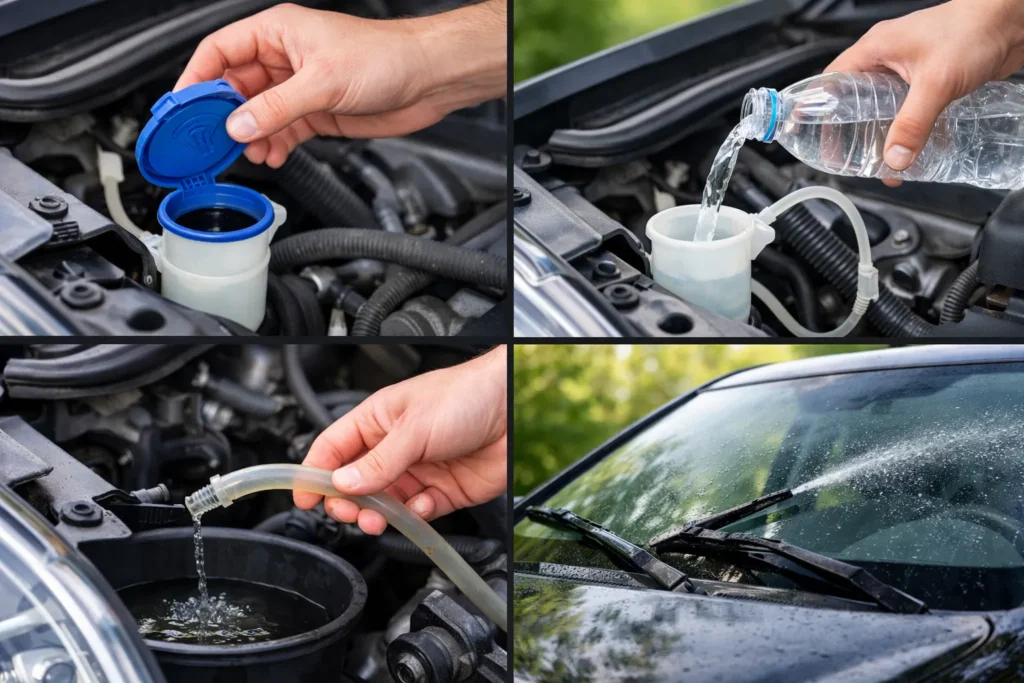
If you noticed dirty, cloudy, or slimy washer fluid earlier, flushing the system is necessary to prevent the clog from returning. In this step, fluid quality matters more than quantity. Simply topping off old fluid won’t solve the problem.
Instead of pre-mixed washer fluid, you can use Sukh Car Windshield Washer Tablets.
Why washer tablets work well for flushing:
- Highly concentrated cleaning formula
- Designed to dissolve grime and residue inside hoses
- Helps break down light mineral buildup
- Compact and easy to store
- Allows you to mix fresh cleaning solution when needed
Because the solution is mixed fresh, it can be especially effective when you’re flushing out contaminated or old washer fluid.
How to Flush Properly Using Washer Tablets
- Drain as much old washer fluid from the reservoir as possible.
- Fill the reservoir with clean water.
- Drop in the recommended number of washer tablets (follow package instructions).
- Allow the tablets to fully dissolve before activating the system.
- Run the washer for 15–20 seconds.
- Pause for one minute.
- Repeat the cycle 2–3 times.
This gradual flushing helps clean:
- Pump internals
- Washer hoses
- Inline connectors
- Spray nozzles
If heavy contamination was present, you may repeat the flush once more for best results.
Step 7: Inspect the Reservoir and Pump Intake
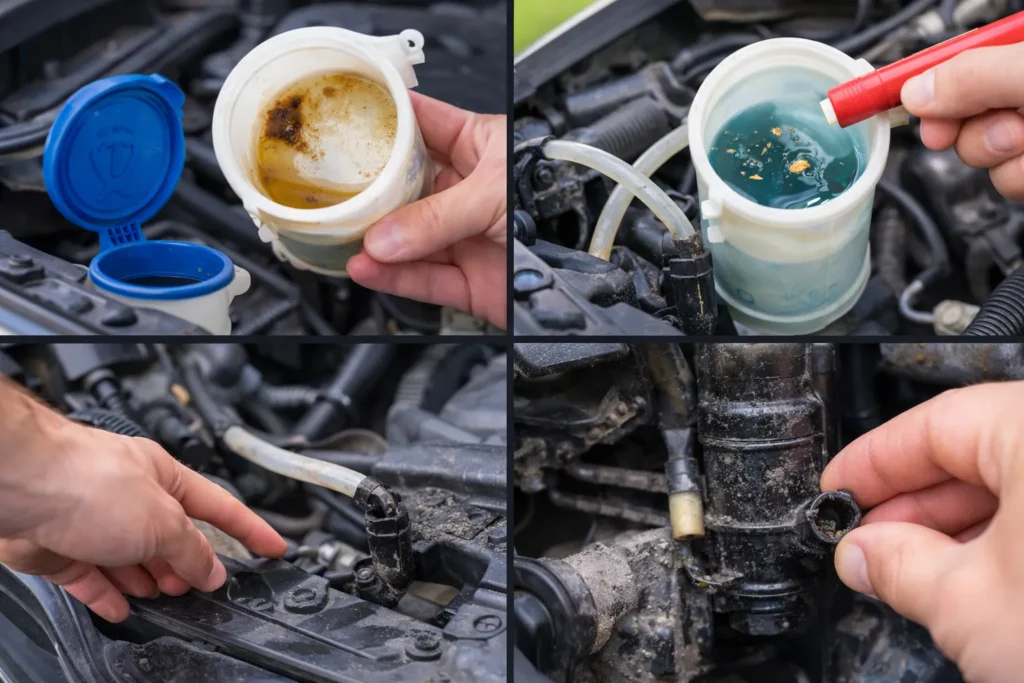
If problems persist, remove the washer pump from the reservoir (usually a push-fit grommet).
Check for:
- Debris inside the reservoir
- Clogged intake screen
- Sludge buildup at the bottom
Clean the reservoir with warm water if needed and reinstall the pump securely.
Step 8: Adjust Washer Spray Pattern Correctly
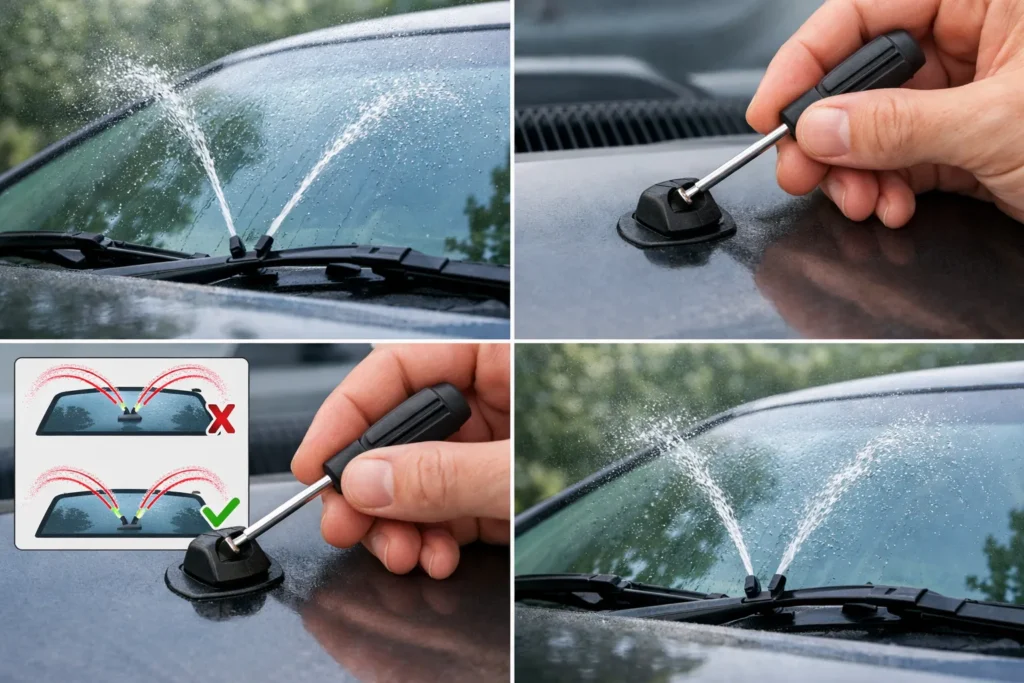
After unclogging, the spray may be misaligned.
Use a pin or paperclip to gently adjust the nozzle direction:
- Aim toward the upper center of the windshield
- Ensure both nozzles overlap slightly
Correct alignment improves cleaning efficiency and reduces washer fluid usage.
Common Mistakes That Cause Repeat Clogs
- Using tap water instead of washer fluid
- Mixing different washer fluid brands
- Using thick winter fluid year-round
- Ignoring weak spray until total failure
- Damaging nozzles with needles
Most washer system problems are preventable.
How to Prevent Washer Fluid Clogs Long-Term
- Use quality washer fluid only
- Flush the system once a year
- Clean nozzles during routine car washes
- Avoid letting the reservoir run dry
- Replace old fluid before winter
Five minutes of maintenance can prevent months of poor visibility.
Frequently Asked Questions
Can compressed air clear washer clogs?
Low pressure can help, but high pressure may disconnect hoses.
Why does one nozzle clog more than the other?
Debris often settles unevenly in hoses.
Is vinegar safe for cleaning nozzles?
It can help mineral deposits but must be flushed thoroughly afterward.
Final Thoughts
Unclogging windshield washer fluid is a straightforward DIY task when approached methodically. Most failures are caused by neglect, poor-quality fluid, or minor buildup—not broken components.
By cleaning the nozzles correctly, flushing contaminated fluid, and using products designed for automotive systems, you can restore strength, even spray and keep your windshield clear in all conditions.
This is a small repair that delivers immediate safety benefits—and it’s well worth doing right.