Inside every internal combustion engine, dozens of moving parts work together with precise timing. Among these parts, valve lifters play a quiet but critical role. They sit between the camshaft and the valves, controlling how smoothly and accurately the valves open and close.
When lifters function correctly, the engine runs quietly, efficiently, and with consistent power. When lifters begin to fail, the changes are often subtle at first, then progressively more serious.
Bad lifter symptoms rarely appear all at once. Many drivers notice unusual sounds or small performance changes and assume they are harmless or temporary. Over time, these symptoms worsen, leading to rough operation, power loss, and potential engine damage.
Lifters operate under high pressure and rely heavily on clean oil to work properly. Wear, contamination, or oil-related issues quickly affect their performance.
Recognizing early warning signs helps prevent minor issues from turning into expensive repairs. A detailed look at bad lifter symptoms makes it easier to separate normal engine behavior from signs of internal trouble.
What Engine Lifters Do And Why They Matter
Role Of Lifters In Valve Operation
Engine lifters transfer motion from the camshaft to the valves. As the camshaft rotates, lifters move up and down, opening and closing valves at precise moments. This timing allows air and fuel to enter the engine and exhaust gases to exit.
Any disruption in lifter operation affects combustion efficiency.
Hydraulic Versus Mechanical Lifters
Many modern engines use hydraulic lifters that automatically adjust valve clearance using oil pressure. This design reduces noise and eliminates the need for manual adjustments.
Mechanical lifters rely on fixed clearances and require periodic adjustment. Both types can fail, but symptoms may differ slightly.
Dependence On Engine Oil
Lifters depend on clean, properly pressurized oil. Oil lubricates internal lifter components and maintains correct clearances.
Poor oil quality or low oil pressure directly affects lifter performance.
Common Bad Lifter Symptoms
Ticking Or Clicking Noise
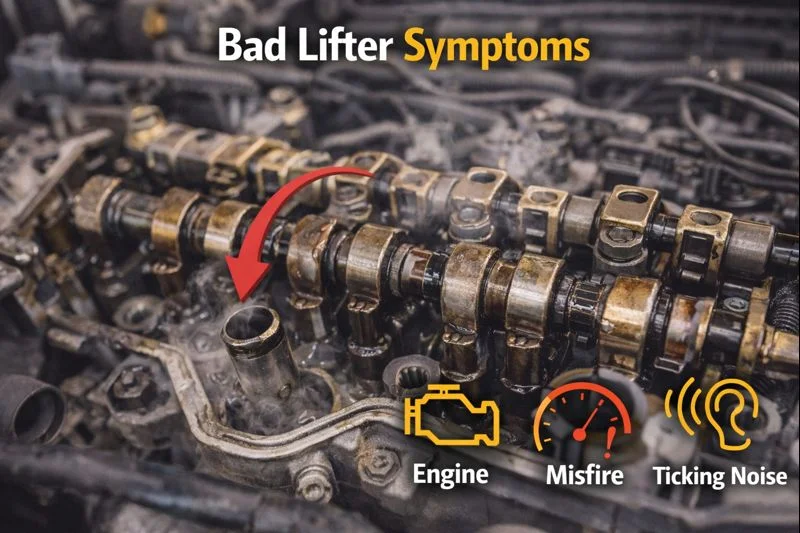
The most noticeable symptom of a bad lifter is a ticking or clicking sound coming from the engine. This noise often increases with engine speed and may be more noticeable at idle.
The sound occurs when a lifter fails to maintain proper contact with the camshaft or valve.
Noise During Cold Starts
Many lifter issues are more noticeable when the engine is cold. Oil takes longer to reach the lifters, especially if oil passages are partially clogged.
Noise may fade as the engine warms, but this does not mean the problem is resolved.
Rough Idle And Engine Vibration
Bad lifters can cause valves to open incorrectly. This disrupts airflow and combustion, leading to rough idle and vibration.
The engine may feel uneven or unstable while idling.
Misfires And Hesitation
Improper valve operation caused by lifter failure can lead to misfires. The engine may hesitate during acceleration or feel sluggish under load.
Misfires often trigger warning lights and fault codes.
Loss Of Power
When valves do not open fully or close properly, engine breathing suffers. Reduced airflow lowers power output.
Acceleration becomes weaker, and overall performance declines.
How Bad Lifters Affect Engine Operation Over Time
Progressive Wear And Damage
A failing lifter does not usually remain static. Continued operation causes increased wear on the camshaft lobes and valve tips.
What starts as a noise issue can evolve into serious mechanical damage.
Increased Engine Noise
As wear worsens, ticking sounds become louder and more constant. In some cases, knocking or tapping noises develop.
Noise changes often indicate escalating damage.
Valve Timing Disruption
Bad lifters interfere with precise valve timing. This affects combustion consistency and engine balance.
Timing-related issues worsen fuel efficiency and emissions.
Heat And Stress Buildup
Poor valve operation increases engine heat. Excessive heat accelerates oil breakdown and component wear.
Heat-related damage compounds existing problems.
Causes Of Bad Lifter Problems
Dirty Or Degraded Engine Oil
Sludge and contaminants restrict oil flow to lifters. Hydraulic lifters rely on clean oil to function correctly.
Neglected oil changes are a leading cause of lifter failure.
Low Oil Pressure
Insufficient oil pressure prevents hydraulic lifters from maintaining proper adjustment. This leads to noise and improper valve operation.
Oil pressure issues often affect multiple lifters at once.
Excessive Engine Wear
High-mileage engines experience natural wear in lifters, camshafts, and valves. Over time, clearances increase beyond acceptable limits.
Wear-related lifter issues are common in older engines.
Manufacturing Defects Or Poor Materials
In rare cases, lifters fail due to material defects or design flaws. These failures may occur at relatively low mileage.
Recalls or service bulletins sometimes address such issues.
Aggressive Driving Or High RPM Use
Consistent high engine speeds increase stress on lifters. Performance driving accelerates wear if oil quality and pressure are not maintained.
Stress-related failures develop faster under harsh use.
Symptoms That Are Often Confused With Lifter Issues
Exhaust Leaks
Ticking noises from exhaust leaks can sound similar to lifter noise. Exhaust leaks often change with load and may be louder near the manifold.
Proper inspection helps differentiate the source.
Fuel Injector Noise
Fuel injectors produce rhythmic clicking sounds. These noises are normal and usually quieter than lifter noise.
Injector noise remains consistent regardless of oil condition.
Timing Chain Or Belt Problems
Timing components can create rattling or ticking sounds. These noises often change with engine speed and temperature.
Timing issues usually affect overall engine timing rather than individual cylinders.
How To Identify Bad Lifters Accurately
Listening For Consistent Patterns
Lifter noise often follows engine speed precisely. The sound increases and decreases in direct relation to RPM.
Random or irregular noises may point to other issues.
Observing Changes After Oil Service
In some cases, fresh oil temporarily reduces lifter noise. This suggests oil-related causes rather than mechanical failure.
Temporary improvement still indicates underlying issues.
Diagnostic Scanning
Modern engines may show misfire or valve timing codes when lifters malfunction. These codes support mechanical findings.
Codes alone do not confirm lifter failure but provide useful clues.
Physical Inspection
Confirming lifter damage often requires removing valve covers or other engine components. Visual inspection reveals wear, damage, or sludge buildup.
Mechanical confirmation ensures accurate repair decisions.
Can You Drive With Bad Lifters
Short-Term Operation Risks
Some engines continue to run with bad lifters for a limited time. Noise and performance issues may be tolerable initially.
However, continued driving accelerates wear.
Long-Term Consequences
Ignoring lifter problems can damage camshafts, valves, and cylinder heads. Repair costs increase significantly as damage spreads.
Delaying repair often multiplies expenses.
Safety Considerations
Loss of power, misfires, or stalling caused by lifter failure can create unsafe driving conditions.
Predictable engine behavior is essential for safety.
Repair Options And Cost Factors
Cleaning And Oil System Service
In early stages, oil system cleaning and proper oil changes may improve lifter function. This works best when sludge buildup is minimal.
Cleaning does not repair physically worn components.
Lifter Replacement
Replacing bad lifters restores proper valve operation. This repair may require significant labor depending on engine design.
Costs vary based on engine layout and lifter type.
Camshaft And Related Repairs
If lifter failure damages camshaft lobes, additional parts must be replaced. This significantly increases repair cost.
Early detection prevents secondary damage.
Engine Rebuild Or Replacement
In severe cases with widespread wear, rebuilding or replacing the engine may be more practical.
This option is usually reserved for advanced damage.
How Maintenance Influences Lifter Longevity
Regular Oil Changes
Frequent oil changes remove contaminants and preserve oil additives. Clean oil protects lifters and camshaft components.
Maintenance intervals matter more than oil brand alone.
Correct Oil Type And Viscosity
Using the correct oil viscosity ensures proper lifter operation. Incorrect oil affects pressure and flow.
Manufacturer recommendations should always be followed.
Monitoring Oil Pressure
Low oil pressure warnings should never be ignored. Pressure loss directly affects lifter function.
Prompt action prevents damage.
Preventing Bad Lifter Symptoms
Avoiding Extended Oil Change Intervals
Extended intervals increase sludge formation. Lifters are among the first components affected.
Shorter intervals improve reliability.
Addressing Engine Noise Early
Unusual noises should be investigated promptly. Early diagnosis reduces repair complexity.
Noise is a warning, not a feature.
Maintaining Cooling System Health
Overheating accelerates oil breakdown and component wear. Proper cooling protects lifters indirectly.
Temperature control supports engine longevity.
Common Myths About Bad Lifters
Some believe lifter noise is normal in older engines. While mild noise may occur, persistent ticking is not normal.
Another myth is that additives permanently fix lifter issues. Additives may reduce noise temporarily but do not repair worn parts.
Mechanical problems require mechanical solutions.
When Professional Diagnosis Is Necessary
Persistent noise, misfires, or power loss require professional inspection. Modern engines are complex, and accurate diagnosis prevents unnecessary part replacement.
Experienced evaluation saves time and money.
Final Thoughts
Bad lifter symptoms often begin with subtle noises and minor performance changes, then gradually escalate into serious engine problems. Ticking sounds, rough idle, misfires, and power loss all signal that valve operation is no longer functioning as designed. Lifters rely heavily on clean oil, proper pressure, and precise mechanical movement. When any of these elements fail, damage progresses quickly.
Recognizing lifter-related symptoms early allows timely repair and prevents costly secondary damage to camshafts, valves, and cylinder heads. Regular maintenance, proper oil selection, and prompt attention to unusual engine behavior remain the most effective ways to protect lifters and preserve long-term engine health.