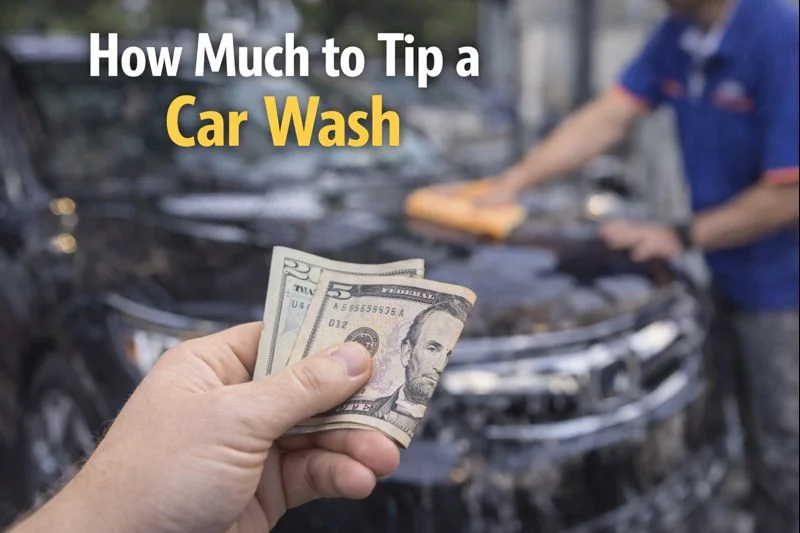
Tipping at a car wash is one of those everyday situations that feels simple until you actually have to decide what to do. Some people tip every time without thinking, others hesitate, unsure whether tipping is expected or even appropriate.
The confusion usually comes from the wide range of car wash types, service levels, and regional habits. A quick drive-through wash does not feel the same as a full hand wash and interior detail performed by a worker who spent real time on your vehicle.
Unlike restaurants, there is no universal rule posted on the wall explaining car wash tipping. That lack of clarity often leads to awkward moments at the payment window or after the keys are handed back.
This article explains how much to tip at a car wash in a clear, practical way. It breaks down different types of car washes, service levels, effort involved, and social expectations. The goal is not to pressure anyone, but to provide guidance so tipping feels fair, respectful, and confident rather than uncertain.
Why Tipping Exists In Car Wash Services
Tipping exists to recognize personal effort. At many car washes, especially full-service or hand-wash locations, employees rely on tips to supplement hourly wages.
Unlike fully automated businesses, these workers often perform physical labor in varying weather conditions. They scrub wheels, vacuum interiors, wipe down dashboards, and handle dozens of vehicles each day.
A tip acknowledges that effort and encourages quality service. It is not a requirement in every situation, but it is a common courtesy in many service-based environments.
Difference Between Automatic And Full-Service Car Washes
The type of car wash matters more than the price alone. Automatic car washes involve little to no human labor once the vehicle enters the system.
In these cases, tipping is usually not expected because machines perform most of the work. Employees may only guide vehicles or handle payment.
Full-service car washes, on the other hand, involve people washing, drying, vacuuming, and detailing. Tipping is far more common and generally expected in these settings.
Hand Wash Services And Tipping Expectations
Hand wash services require more time, attention, and physical effort than automated systems.
Workers manually clean the exterior, often paying close attention to wheels, trim, and hard-to-reach areas. Interiors may be vacuumed and wiped down carefully.
Because the service is labor-intensive, tipping is considered standard practice. The amount usually reflects both the service cost and the quality of work.
Express Exterior Wash And Whether To Tip
Express exterior washes fall between automatic and full-service options. Employees may pre-spray, scrub certain areas, or dry the car after it exits the tunnel.
Tipping here is optional but appreciated. If workers spend noticeable time on your vehicle, a small tip is reasonable.
If interaction is minimal and service is mostly automated, tipping is less common.
General Tipping Amount Guidelines
There is no single correct amount, but common ranges help set expectations.
For basic hand wash services, tips often range from a few dollars to around ten percent of the service cost.
For more involved services, such as interior cleaning or detailing, tips may range from ten to twenty percent depending on effort and results.
These are guidelines, not rules. Personal judgment plays a role.
Tipping For Basic Exterior Wash
For a basic exterior wash that includes hand drying, a small tip is appropriate if workers actively participate.
Many customers tip a few dollars in this scenario. The goal is acknowledgment, not obligation.
If the service is quick and minimal, tipping is optional rather than expected.
Tipping For Interior Cleaning Services
Interior cleaning requires more effort than exterior washing. Vacuuming carpets, wiping surfaces, and cleaning windows take time.
For these services, tipping is more customary. Many people tip five to ten dollars depending on vehicle size and condition.
Heavily soiled interiors or pet hair removal justify higher tips due to increased labor.
Tipping For Full Detailing Services
Detailing is the most labor-intensive car wash service. It may include deep interior cleaning, waxing, polishing, and meticulous attention to detail.
In these cases, tipping is common and often expected. A tip of ten to twenty percent of the service price is widely considered fair.
If the detailer goes above expectations or addresses specific requests well, tipping on the higher end is appropriate.
How Vehicle Size Influences Tip Amount
Larger vehicles require more effort. SUVs, trucks, and vans take longer to wash and dry than compact cars.
Interior cleaning also takes more time in larger vehicles due to increased surface area.
Many customers adjust their tip slightly upward for larger vehicles to reflect the additional work involved.
Condition Of The Vehicle And Extra Effort
A vehicle that is especially dirty requires more effort. Mud, sand, salt residue, or heavy interior mess increases labor time.
When workers tackle unusually dirty vehicles without complaint and deliver good results, tipping more shows appreciation for the extra effort.
Clean vehicles requiring minimal work may justify smaller tips.
Weather Conditions And Their Impact
Car wash employees often work outdoors. Extreme heat, cold, rain, or wind makes their job more difficult.
Many customers choose to tip more generously during harsh weather as a sign of respect for working conditions.
While not required, this gesture is often appreciated.
Regional And Cultural Differences In Tipping
Tipping customs vary by region. In some areas, tipping at car washes is common practice. In others, it is less emphasized.
Urban areas with high service industry presence often see more consistent tipping.
Local habits influence expectations, so observing what others do can provide helpful context.
Cash Versus Card Tipping
Cash tips are often preferred because they go directly to workers. Many car washes do not pool electronic tips evenly.
Some locations allow tipping through card terminals or mobile apps. If available, this option is convenient.
When possible, cash ensures the intended recipient receives the full amount.
Tipping Individual Workers Or Team Pools
Some car washes pool tips among staff, while others allow individual tipping.
If one worker handles your car from start to finish, tipping them directly makes sense.
If multiple people work on the vehicle, tips may be shared internally. Asking politely about tipping structure can clarify this.
When Not Tipping Is Acceptable
There are situations where tipping is not expected. Fully automated washes with no manual labor fall into this category.
Poor service, rushed work, or damage without accountability may also justify withholding a tip.
Tipping is a gesture of appreciation, not a requirement regardless of outcome.
Handling Poor Service Situations Politely
If service quality is disappointing, tipping less or not tipping at all is reasonable.
Communicating concerns calmly to management is often more effective than confrontation.
Avoid using tips as punishment without explanation when possible.
Subscription Car Washes And Tipping
Monthly car wash memberships add another layer of confusion. Some people assume tipping is unnecessary because they pay regularly.
If employees provide consistent manual services, occasional tipping is still appropriate.
Even small tips periodically show appreciation without feeling excessive.
Tipping Frequency For Regular Customers
Regular customers may not tip every visit, but occasional tipping builds goodwill.
Consistency matters more than frequency. A fair tip now and then is better than none at all.
Workers often remember customers who acknowledge their effort.
How Much To Tip When You Are Unsure
When unsure, a modest tip is rarely wrong. A few dollars is enough to express appreciation without overthinking.
If the service felt personal and attentive, leaning slightly higher is reasonable.
Trusting your judgment usually leads to the right decision.
Misconceptions About Car Wash Tipping
One common misconception is that tips are included in service prices. This is not usually the case.
Another misconception is that tipping small amounts is insulting. In reality, most workers appreciate any acknowledgment.
Understanding these points reduces hesitation.
Impact Of Tipping On Service Quality
While tipping should not be required for good service, appreciation often motivates workers.
Customers who tip fairly may receive more careful attention over time.
Positive reinforcement encourages better service overall.
Ethical Perspective On Tipping
Tipping reflects respect for labor. Car wash work is physically demanding and often undervalued.
Acknowledging effort supports fair treatment within the service economy.
Ethical tipping balances appreciation with personal financial comfort.
Budget-Friendly Tipping Approaches
Tipping does not need to be expensive. Small, consistent tips fit most budgets.
Choosing when to tip more generously helps manage costs.
Even limited tipping done thoughtfully makes a difference.
Teaching New Drivers And Teens About Tipping
Car wash visits offer an opportunity to teach younger drivers about service etiquette.
Explaining why tipping matters helps build awareness and respect.
These habits often carry into other service interactions.
Business-Owned Versus Independent Car Washes
Large chains may have structured wages and tip policies. Independent car washes often rely more on tips.
Understanding ownership type can influence tipping decisions.
Independent workers may depend more heavily on customer tips.
When Management Discourages Tipping
Some car washes discourage tipping officially, though workers may still accept it privately.
Respect posted policies when visible. If unsure, asking politely avoids awkwardness.
Policies vary widely.
Tipping And Customer Satisfaction
Tipping should follow satisfaction, not precede it.
Evaluating service honestly ensures tips reflect genuine appreciation.
This keeps tipping meaningful rather than automatic.
Long-Term Relationship With Local Car Wash Staff
Frequent customers often develop familiarity with staff.
Fair tipping builds positive relationships and mutual respect.
Over time, this can improve consistency and trust.
Final Thoughts
Tipping at a car wash does not follow a strict rulebook, but it does follow simple principles: effort, service level, and respect. Automatic washes rarely require tipping, while hand washes, interior cleaning, and detailing services usually do. The amount depends on work involved, vehicle condition, and personal comfort.
The most important takeaway is that tipping should feel thoughtful, not forced. A fair tip acknowledges the human effort behind a clean car and supports those who perform demanding work. With clear expectations and practical judgment, tipping at a car wash becomes a confident, respectful choice rather than an uncomfortable guess.