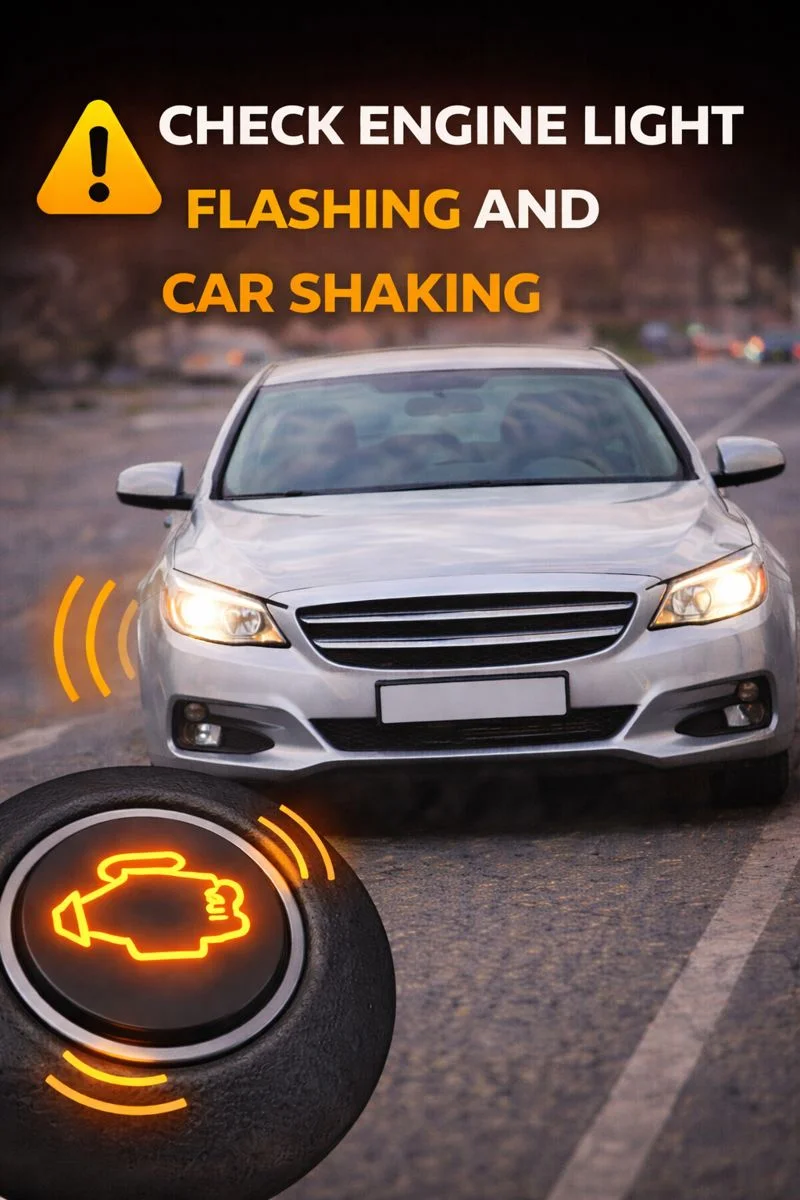
The check engine light is designed to get your attention, but when it starts flashing instead of staying solid, the message becomes far more urgent. Add noticeable shaking or vibration to the mix, and the situation quickly moves from mild concern to potential mechanical emergency.
Many drivers are unsure how serious this combination is, especially if the car still moves and does not shut off immediately.
Modern engines are complex systems that constantly monitor themselves. When something goes wrong, the vehicle’s computer reacts based on how severe the issue appears to be.
A flashing check engine light paired with shaking is one of the strongest warnings a car can give without completely stopping. It indicates that the engine is struggling to operate correctly and that continued driving may cause damage very quickly.
This article breaks down what is happening inside the engine, why these symptoms appear together, what risks are involved, and how to respond in a smart and safe way. The goal is clarity, not panic, so you can make the right decision at the right time.
What A Flashing Check Engine Light Signals
A flashing check engine light is different from a steady one. A solid light usually means the car has detected a fault that affects emissions or efficiency but is not immediately dangerous. A flashing light, however, is a warning of an active problem that can cause serious engine or exhaust damage.
In most cases, flashing indicates that raw fuel is entering the exhaust system. This condition can overheat and damage critical components in a very short time. The vehicle’s computer flashes the light to tell the driver that continuing to operate the car normally is risky.
This warning is intentional and urgent. It is not meant to be ignored or postponed.
Why The Car Starts Shaking At The Same Time
Shaking occurs when the engine is no longer running smoothly. Engines are designed to fire each cylinder in a precise sequence. When one or more cylinders fail to fire properly, the engine loses balance.
This imbalance causes vibration that can be felt through the steering wheel, seats, or entire body of the car. The shaking may worsen when accelerating, idling, or climbing hills.
The combination of flashing light and shaking usually points to a severe misfire that is actively happening rather than an occasional hiccup.
Understanding Engine Misfires In Simple Terms
An engine misfire happens when a cylinder fails to burn fuel correctly. For combustion to occur, the engine needs fuel, air, compression, and spark. If any one of these elements is missing or weak, combustion fails or becomes incomplete.
When a misfire happens repeatedly, the engine runs unevenly. Power drops, vibration increases, and unburned fuel may exit the cylinder and enter the exhaust system.
This condition stresses both the engine and exhaust components, which is why the vehicle reacts so aggressively with warnings.
Common Causes Behind Flashing Light And Shaking
One of the most common causes is a faulty ignition component. Worn spark plugs or failing ignition coils can prevent proper spark delivery. When spark becomes weak or inconsistent, misfires follow quickly.
Fuel delivery issues are another frequent cause. A clogged fuel injector or low fuel pressure can prevent the cylinder from receiving the correct amount of fuel.
Air intake problems also play a role. Vacuum leaks or sensor failures can disrupt the air-fuel mixture, leading to unstable combustion.
In some cases, internal engine issues such as low compression can also trigger these symptoms, though this is less common.
Why Driving In This Condition Is Risky
Continuing to drive while the check engine light is flashing and the car is shaking can cause damage that goes far beyond the original problem. Unburned fuel entering the exhaust system can overheat and destroy the catalytic converter.
The catalytic converter is expensive and designed to handle exhaust gases, not raw fuel. Once damaged, replacement costs can be significant.
Additionally, prolonged misfires increase engine wear, strain internal components, and can lead to complete engine failure in extreme cases.
Immediate Steps To Take When It Happens
When you notice a flashing check engine light along with shaking, the safest response is to reduce speed immediately. Avoid hard acceleration and pull over to a safe location as soon as possible.
Turn off the engine and allow it to cool. Restarting may temporarily reduce symptoms, but it does not fix the underlying issue.
If the shaking is severe or the light continues flashing, arranging a tow is the safest choice. Driving further may turn a manageable repair into a major expense.
Can The Car Still Be Driven Short Distances
In some mild cases, the shaking may lessen after restarting, and the light may stop flashing. Even if this happens, the problem has not disappeared.
Short-distance driving to a repair facility may be possible if the engine runs relatively smoothly and the light stops flashing. However, this should only be done with caution.
If the light resumes flashing or shaking returns, stop driving immediately.
How Modern Vehicles Detect These Problems
Vehicles use sensors to monitor engine speed, crankshaft position, and combustion consistency. When the computer detects irregular engine speed caused by misfires, it identifies which cylinder is affected.
If misfires occur rapidly and continuously, the system escalates the warning from a steady light to a flashing one.
This system is designed to protect both the engine and the emissions components from damage.
Role Of Spark Plugs And Ignition Coils
Spark plugs wear out over time. As the gap widens or deposits build up, spark quality decreases. Ignition coils amplify voltage to create spark, and they can fail due to heat or age.
A single failed coil can cause one cylinder to misfire repeatedly, leading to shaking and flashing warnings.
Replacing worn ignition components is often one of the most effective fixes when these symptoms appear.
Fuel System Problems That Trigger Severe Symptoms
Fuel injectors must deliver precise amounts of fuel at the right moment. If an injector becomes clogged or stuck, the affected cylinder may run lean or not fire at all.
Low fuel pressure from a failing pump or regulator can also cause multiple cylinders to misfire.
Fuel-related issues often worsen under load, making shaking more noticeable during acceleration.
Sensor Failures And Their Impact
Sensors provide critical data to the engine computer. When a sensor sends incorrect information, the engine may receive the wrong fuel or ignition commands.
Certain sensor failures can cause the engine to run erratically without immediately shutting down, leading to shaking and flashing warnings.
Accurate diagnosis is essential because replacing sensors without confirmation can become costly.
Mechanical Causes That Should Not Be Ignored
While less common, mechanical issues such as low compression, damaged valves, or timing problems can also cause severe misfires.
These issues often produce additional symptoms like unusual noises or persistent power loss.
Mechanical problems usually require more extensive repair, which is why early diagnosis is so important.
Diagnostic Process Used By Professionals
Technicians begin by scanning the vehicle for fault codes. These codes identify which cylinders are misfiring and provide clues about the cause.
They may then inspect ignition components, fuel delivery systems, and air intake parts.
Further testing, such as compression tests or fuel pressure checks, may be needed if initial inspections do not reveal the issue.
Repair Costs And What Influences Them
Repair costs vary widely based on the root cause. Replacing spark plugs or ignition coils is relatively affordable.
Fuel system repairs or sensor replacements fall into a moderate cost range.
Internal engine repairs or catalytic converter replacement can be expensive, especially if driving continued after the warning appeared.
Early action almost always reduces total cost.
Preventive Maintenance That Reduces Risk
Regular replacement of spark plugs and ignition components helps prevent misfires.
Using quality fuel and maintaining the fuel system reduces injector-related issues.
Addressing warning lights early prevents escalation into flashing warnings and severe shaking.
Misconceptions That Lead To Costly Mistakes
Many drivers believe that if the car still runs, it is safe to keep driving. This assumption is dangerous when the light is flashing.
Another misconception is that disconnecting the battery will solve the problem. This may clear the light temporarily but does not fix the underlying issue.
Understanding the seriousness of flashing warnings helps avoid these mistakes.
Long-Term Consequences Of Ignoring The Warning
Ignoring a flashing check engine light and shaking can shorten engine life significantly.
Catalytic converter failure, increased emissions, and internal engine damage are common outcomes.
What begins as a single failed component can cascade into multiple system failures if left unchecked.
Building Confidence As A Vehicle Owner
Understanding what your car is telling you builds confidence and reduces stress. Warning systems are not meant to scare drivers but to protect them.
Recognizing the difference between minor alerts and urgent warnings helps you respond appropriately.
Knowledge turns a frightening situation into a manageable one.
Final Thoughts
A flashing check engine light combined with car shaking is one of the clearest signals that immediate attention is needed. It indicates that the engine is not operating safely and that continued driving can cause rapid and expensive damage.
Responding calmly, reducing driving, and seeking professional diagnosis protects both your vehicle and your wallet. With timely action and proper repairs, most causes behind these symptoms can be resolved effectively, restoring smooth operation and peace of mind.