Oil pressure is one of those engine topics that sounds technical but affects every driver, whether they realize it or not. Deep inside the engine, oil is constantly moving, creating a protective barrier between fast-moving metal parts. Oil pressure is what makes that movement possible. Without the right pressure, oil cannot reach critical components, and without oil, an engine simply cannot survive for long.
Many drivers only think about oil pressure when a warning light appears or a gauge suddenly drops. By that time, anxiety replaces understanding. What is normal oil pressure? Why does it change? Is high pressure as bad as low pressure? These are common questions, and the answers are not always simple.
This guide explains normal oil pressure in clear, everyday language. It covers how oil pressure works, what healthy numbers look like, what affects those numbers, and how to recognize real problems early. Understanding this topic helps protect your engine, avoid costly repairs, and drive with confidence.
Understanding What Oil Pressure Really Means
Oil pressure refers to the force that pushes engine oil through internal passages to lubricate moving parts. It is not about how much oil is in the engine, but how effectively that oil is being circulated.
The oil pump creates pressure by drawing oil from the oil pan and sending it through the engine. As oil flows, it coats bearings, camshafts, pistons, and other components, reducing friction and carrying heat away.
Proper oil pressure ensures that every moving part receives enough lubrication at the right time. Too little pressure means parts rub directly against each other. Too much pressure can strain seals and restrict flow.
Why Normal Oil Pressure Is So Important
Normal oil pressure keeps an engine alive. Engines operate at high speeds and temperatures, and metal components are constantly under stress. Oil acts as a cushion and a cooling agent.
When oil pressure stays within a healthy range, engine parts wear slowly and evenly. Heat is controlled, and friction stays low. This balance allows engines to last for hundreds of thousands of kilometers when properly maintained.
When pressure falls outside the normal range, damage can begin quickly. That is why oil pressure is monitored closely by modern vehicles through sensors and warning systems.
What Is Considered Normal Oil Pressure
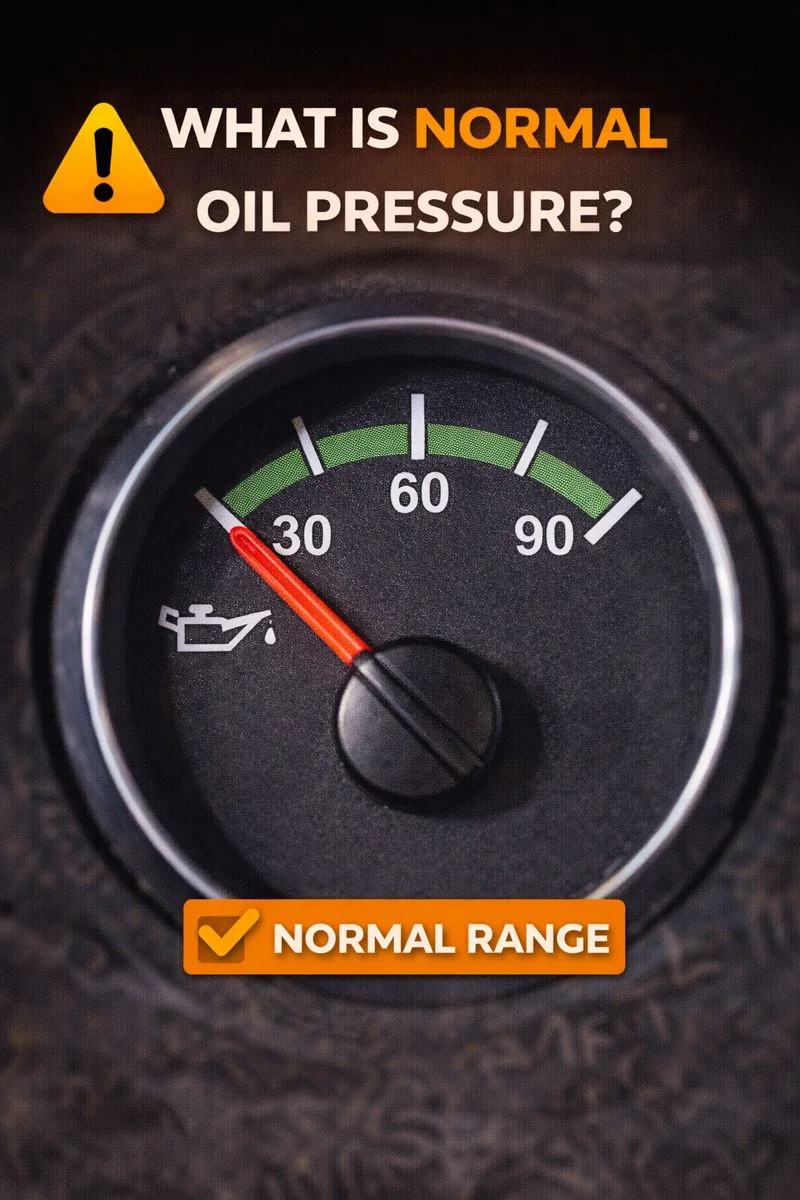
Normal oil pressure depends on engine design, temperature, and operating conditions. There is no single number that applies to every vehicle.
In general terms, many engines operate normally between 20 and 60 pounds per square inch when fully warmed up. At idle, pressure is usually lower. At higher speeds, pressure increases.
Cold engines often show higher oil pressure because cold oil is thicker. As the engine warms up, oil thins, and pressure drops to its normal operating range.
The most accurate reference is always the manufacturer’s specification, which considers the engine’s design and oil system.
Oil Pressure At Idle Versus Driving
Oil pressure changes depending on engine speed. At idle, the oil pump turns slowly, producing lower pressure. This is normal and expected.
When driving, engine speed increases, and the oil pump moves oil more quickly. Pressure rises to meet the engine’s lubrication needs.
A healthy engine shows stable pressure that rises smoothly with speed and drops calmly when slowing down. Sudden fluctuations or extreme readings are not normal.
How Oil Temperature Affects Pressure
Temperature plays a major role in oil pressure. Cold oil is thicker and flows more slowly, which increases pressure. This is why pressure is often higher during cold starts.
As the engine warms up, oil becomes thinner and flows more easily. Pressure decreases but remains within a safe range.
If oil becomes too thin due to overheating or incorrect oil type, pressure may drop too low, even if oil level is correct.
Role Of Oil Viscosity In Pressure Levels
Oil viscosity refers to how thick or thin the oil is. Thicker oil creates more resistance as it flows, which raises pressure. Thinner oil flows more easily and produces lower pressure.
Engines are designed for specific oil viscosity ranges. Using oil that is too thick can cause high pressure and restricted flow. Using oil that is too thin can lead to low pressure and insufficient lubrication.
Choosing the correct oil viscosity ensures that pressure stays within the normal range under various temperatures and driving conditions.
Oil Pressure Gauge Versus Warning Light
Some vehicles have an oil pressure gauge that shows real-time pressure readings. Others rely on a warning light that turns on when pressure drops below a safe threshold.
A gauge provides more information and allows drivers to notice gradual changes. A warning light usually indicates a serious issue that requires immediate attention.
Understanding how your vehicle displays oil pressure helps you respond appropriately when something changes.
What Low Oil Pressure Really Indicates
Low oil pressure means oil is not reaching engine components with enough force. This can result from several factors.
Low oil level is one common cause. If there is not enough oil in the engine, the pump cannot maintain pressure.
Worn bearings, a failing oil pump, or excessive engine wear can also reduce pressure. In some cases, oil that is too thin or overheated contributes to the problem.
Low oil pressure should never be ignored, as engine damage can occur quickly.
What High Oil Pressure Means
High oil pressure is less common but still concerning. It usually indicates restricted oil flow rather than excess lubrication.
Blocked oil passages, clogged oil filters, or using oil that is too thick can cause pressure to rise abnormally.
High pressure can strain seals and gaskets, leading to leaks. It can also prevent oil from reaching certain components efficiently.
While high pressure may not cause immediate failure, it should be investigated to prevent long-term damage.
Normal Oil Pressure Changes Over Engine Life
As engines age, internal clearances increase due to wear. This often results in slightly lower oil pressure compared to when the engine was new.
A gradual decrease over many years can be normal. Sudden drops are not.
Regular monitoring helps distinguish between natural aging and developing problems.
How Sensors And Sending Units Affect Readings
Oil pressure sensors and sending units play a key role in what drivers see. A faulty sensor can display incorrect readings or trigger warning lights even when pressure is normal.
Electrical issues, wiring problems, or sensor failure can mimic oil pressure problems.
Confirming actual pressure with a mechanical gauge is sometimes necessary to separate sensor faults from real engine issues.
Impact Of Driving Habits On Oil Pressure
Driving style influences oil pressure indirectly. Frequent high-speed driving increases oil temperature, which can lower pressure if oil becomes too thin.
Short trips may not allow oil to warm up fully, keeping pressure higher for longer periods.
Heavy loads and towing increase engine stress, requiring proper oil quality to maintain normal pressure.
Maintenance Practices That Support Healthy Pressure
Regular oil changes are the most effective way to maintain normal oil pressure. Fresh oil maintains proper viscosity and flow characteristics.
Using high-quality oil filters prevents blockages that can restrict flow and affect pressure.
Checking oil level regularly ensures the pump always has enough oil to work with.
When To Be Concerned About Oil Pressure Readings
Concern arises when pressure readings fall outside the normal range consistently. Flickering warning lights, sudden drops, or readings that do not change with engine speed are red flags.
Unusual noises such as knocking or ticking combined with pressure issues indicate possible internal damage.
Prompt inspection prevents minor issues from becoming major failures.
How Mechanics Diagnose Oil Pressure Problems
Professionals often start by verifying oil level and condition. They may then test pressure using a mechanical gauge.
Inspection of the oil filter, oil pump, and engine bearings may follow if pressure is abnormal.
Diagnosis focuses on identifying root causes rather than treating symptoms.
Common Myths About Oil Pressure
A common myth is that higher pressure is always better. In reality, balance matters more than high numbers.
Another myth is that oil pressure problems only affect old engines. Newer engines can also experience issues due to manufacturing defects or maintenance mistakes.
Understanding facts helps avoid unnecessary worry and costly errors.
Long-Term Effects Of Ignoring Oil Pressure Issues
Ignoring oil pressure problems leads to accelerated wear, overheating, and eventual engine failure.
Even brief periods of low pressure can damage bearings and internal surfaces.
Addressing issues early preserves engine life and reduces repair costs.
How To Protect Your Engine For The Future
Follow manufacturer oil recommendations closely. Use the correct viscosity and quality level.
Pay attention to changes in pressure behavior, even if warning lights do not appear.
Routine maintenance and awareness are the strongest defenses against oil-related engine damage.
Final Thoughts
Normal oil pressure is not just a technical specification. It is a sign that your engine is being protected every second it runs. Understanding what normal looks like, why it changes, and when to act gives you control over one of the most important aspects of engine health.
By maintaining proper oil quality, monitoring pressure behavior, and responding quickly to warning signs, you can extend engine life and avoid serious mechanical problems. Oil pressure may be invisible most of the time, but its role in keeping your vehicle reliable cannot be overstated.