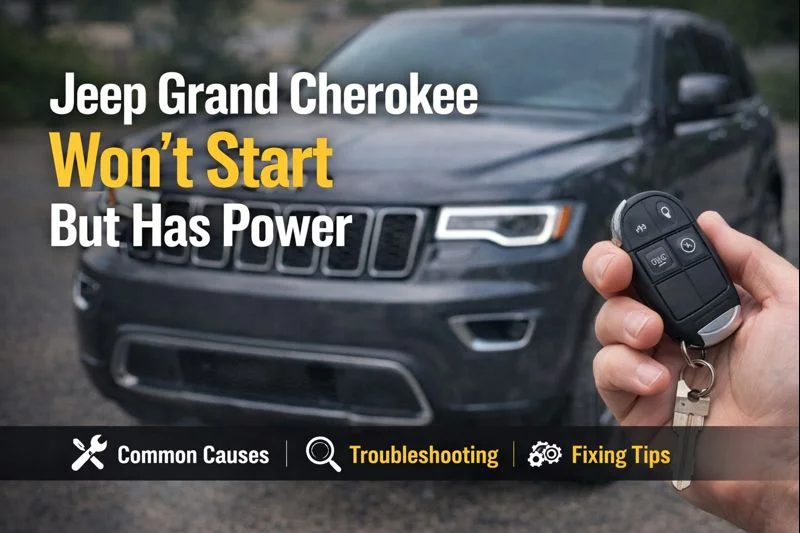
The Jeep Grand Cherokee has earned a reputation as a capable and comfortable SUV that blends everyday usability with serious mechanical strength.
Known for its solid build, advanced electronics, and powerful engine options, it is a vehicle many owners trust in all conditions. That trust can quickly turn into confusion when the dashboard lights up, the radio works, and the power windows respond normally—yet the engine refuses to start.
This situation feels especially frustrating because the vehicle appears alive, but it simply will not crank or fire. The problem often sits in the narrow space between electrical systems and mechanical operation.
Modern Grand Cherokees rely heavily on sensors, modules, and safety interlocks, meaning even a small fault can prevent starting while leaving power intact.
This guide explains the most common causes behind this issue, how each system works, what checks can be done safely, and when professional help is required. Everything is explained clearly, without jargon, so owners can make informed decisions.
Short Note On Research References
Information was cross-checked across multiple high-reputation automotive resources and technical references commonly used by trained technicians to ensure accuracy, reliability, and practical relevance.
Understanding What “Has Power But Won’t Start” Really Means
When a Jeep Grand Cherokee has power, it means the battery is delivering electricity to interior systems. Dashboard lights, infotainment screens, door locks, and headlights all rely on relatively low current.
Starting the engine, however, requires a much higher electrical load and precise communication between several components.
A no-start condition usually falls into one of three categories:
- The engine does not crank at all
- The engine cranks but does not fire
- The engine starts briefly and then shuts off
Each category points toward different systems, even though the vehicle appears powered.
Battery Issues That Do Not Look Like Battery Problems
Weak Battery With Surface Charge
A battery can show normal voltage and still fail under load. Interior electronics may work, but the battery may not supply enough current to engage the starter motor. This is common in batteries that are several years old.
Corroded Or Loose Battery Terminals
Corrosion increases resistance. Even slight buildup can block the heavy current needed for starting while still allowing lighter systems to function normally.
Failing Battery Ground Connection
The ground cable connects the battery to the chassis and engine. If this connection is loose or corroded, the electrical circuit remains incomplete during starting.
Starter System And Related Components
Starter Motor Failure
The starter motor is responsible for turning the engine over. When it fails, you may hear a single click or nothing at all. Power elsewhere in the vehicle remains unaffected.
Starter Relay Or Solenoid Problems
Relays act as electrical switches. A faulty relay can prevent power from reaching the starter, even though the rest of the vehicle appears normal.
Ignition Switch Wear
Over time, ignition switch contacts can wear down. This may interrupt the signal that tells the starter to engage.
Neutral Safety Switch And Gear Selector Issues
Jeep Grand Cherokees are designed not to start unless the transmission is in Park or Neutral. If the vehicle believes it is in gear, starting is blocked.
Common signs include:
- Vehicle starts in Neutral but not in Park
- Gear indicator does not match shifter position
- No crank despite full electrical power
This issue often traces back to a faulty neutral safety switch or gear position sensor.
Key Fob, Immobilizer, And Security System Problems
Key Recognition Failure
Modern Grand Cherokees use transponder keys or proximity fobs. If the vehicle does not recognize the key, the immobilizer prevents engine start.
Weak Key Fob Battery
A low fob battery may allow door unlocking but fail to authenticate the key for starting.
Security System Lockout
If the system detects an unauthorized attempt or internal error, it may disable starting while allowing electrical power.
Fuel System Causes Behind A No-Start Condition
Fuel Pump Failure
The fuel pump delivers fuel from the tank to the engine. If it fails, the engine may crank but never fire.
Fuel Pump Relay Or Fuse
Electrical control issues can stop fuel delivery even though the pump itself is functional.
Clogged Fuel Filter
Restricted fuel flow can prevent the engine from starting, especially after extended storage or poor fuel quality.
Ignition System Problems That Stop Starting
Worn Spark Plugs Or Coils
Spark plugs ignite the air-fuel mixture. If they are worn or coils fail, the engine may crank endlessly without starting.
Crankshaft Or Camshaft Position Sensors
These sensors tell the engine computer when to fire the spark. If either fails, the engine control module shuts down ignition to prevent damage.
Industry repair data shows crankshaft position sensor failure as a frequent cause of no-start conditions in modern SUVs.
Engine Control Module And Software Factors
Faulty Engine Control Module
The engine control module manages ignition timing, fuel delivery, and starting logic. A fault can prevent the engine from starting while leaving accessories operational.
Software Glitches
Occasionally, software errors can cause starting issues. Manufacturers sometimes address these with updates through service bulletins.
Brake Pedal And Start Button Interlocks
On push-button start models, the vehicle requires brake pedal input before starting. If the brake switch fails, the system may not recognize that the pedal is pressed.
Symptoms include:
- Start button lights up but engine does nothing
- Brake lights fail to illuminate
- No fault codes initially present
Wiring And Ground Faults
Electrical wiring issues are often overlooked because they are harder to see.
Damaged Wiring Harnesses
Heat, vibration, and age can damage insulation or connectors, interrupting critical signals.
Loose Grounds And Chassis Connections
Ground points ensure electrical stability. A loose or corroded ground can block starting commands.
Step-By-Step Checks Owners Can Safely Perform
- Check battery voltage and terminal cleanliness
- Try starting in Neutral instead of Park
- Listen for fuel pump priming sound
- Observe dashboard warning lights
- Test with a spare key fob
These steps do not require tools and often provide valuable clues.
When Professional Diagnosis Is Necessary
Professional inspection is strongly advised if:
- The engine does not crank at all
- Warning lights remain illuminated
- The issue occurs intermittently
- The vehicle shuts off immediately after starting
Modern diagnostic tools can read fault codes and live data unavailable to basic scanners.
Repair Cost Expectations
Costs vary based on the root cause:
- Battery or terminals: lower range
- Starter or relay: moderate range
- Sensor replacement: moderate
- Fuel pump or module issues: higher range
- Engine control module replacement: higher investment
Addressing the issue early often prevents secondary damage.
Preventive Steps To Avoid Future No-Start Issues
- Replace batteries before failure
- Keep terminals clean and tight
- Update vehicle software when recommended
- Address warning lights promptly
- Use quality replacement parts
Preventive maintenance greatly reduces unexpected starting failures.
Real-World Technical Insight
Automotive service bulletins and manufacturer repair documentation frequently note that no-start conditions with full electrical power are most often caused by control-related issues rather than complete component failure. National safety and automotive research organizations emphasize early diagnosis to avoid repeated failures and unnecessary part replacement.
Final Thoughts
A Jeep Grand Cherokee that won’t start but still has power can feel misleading at first glance. The issue is rarely random and almost always tied to how modern vehicles manage electrical signals, safety interlocks, and engine control systems.
By understanding how these systems interact and recognizing early warning signs, owners can avoid unnecessary stress and costly guesswork. Clear information leads to confident decisions, and timely action keeps a trusted SUV reliable for years to come.