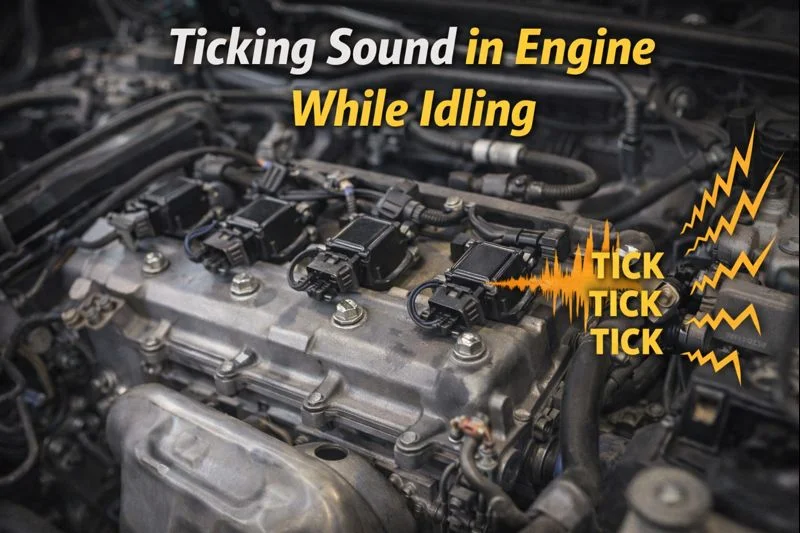
You pull into your driveway, leave the engine running for a moment, and notice a ticking sound you don’t remember hearing before. It’s not loud, but it’s steady. When you press the accelerator lightly, the sound speeds up.
At idle, it’s most noticeable. This situation is very common, and it causes a lot of unnecessary worry because the word engine noise immediately makes people think of major damage. The truth is more balanced.
Some ticking sounds at idle are completely normal, especially in modern engines. Others point to maintenance issues that are inexpensive when caught early but costly if ignored.
In this article, we’ll walk through the real reasons engines tick while idling, how to tell normal sounds from problem sounds, what checks you can do yourself, and when it’s time to involve a mechanic. The goal is clarity, not fear.
Short note
This article is based on established automotive service practices, manufacturer maintenance guidelines, and long-standing diagnostic principles used in professional repair environments, and is supported by information from high-authority automotive resources such as MotorTrend, Car and Driver, and Edmunds.
Why ticking sounds are easier to hear at idle
At idle, the engine is doing very little work. RPM is low, exhaust noise is minimal, and wind and road noise are absent. This quiet environment makes small mechanical and electrical sounds stand out.
Many parts inside the engine move constantly, even when the car isn’t going anywhere. Valves open and close, fuel injectors fire, oil circulates, and accessories spin. Some of these actions naturally create light clicking or ticking noises.
A ticking sound becomes important when:
- It is new or clearly louder than before
- It continues after the engine is fully warm
- It changes suddenly in tone or rhythm
- It comes with other symptoms like rough idle or warning lights
Understanding how the sound behaves matters more than the sound itself.
The most common cause: valve lifter ticking
What valve lifters do
Valve lifters are part of the valve train. They help open and close the engine’s valves at the correct time. Most modern engines use hydraulic lifters, which rely on oil pressure to stay properly adjusted.
When oil pressure is low, delayed, or contaminated, a small gap can form inside the lifter. That gap causes a ticking noise when the camshaft moves the lifter.
How lifter ticking usually sounds
- Light, fast, rhythmic ticking
- Sound increases and decreases with engine speed
- Often louder at idle than at higher RPM
- May fade or disappear as the engine warms up
Common reasons lifters start ticking
- Low engine oil level
- Old or dirty oil
- Incorrect oil viscosity
- Sludge buildup inside oil passages
- Long oil change intervals
In many cases, lifter ticking is not a sign of damage. It’s a sign that the lifters aren’t getting clean oil at the right pressure.
What usually helps
- Checking and correcting oil level
- Performing an oil and filter change
- Using the oil grade recommended by the manufacturer
If the noise improves after an oil change, you’ve likely found the cause.
Exhaust manifold leaks that sound like engine ticking
An exhaust leak near the engine can easily be mistaken for internal engine noise.
Why exhaust leaks tick
Exhaust gases leave the engine in pulses. If there is a small gap at the exhaust manifold or gasket, those pulses escape and create a sharp ticking or tapping sound.
How exhaust ticking behaves
- Sounds metallic and sharp
- Often louder on cold start
- Gets quieter as the engine warms and metal expands
- Usually comes from one side of the engine bay
Signs that point to an exhaust leak
- Black soot near the exhaust manifold or gasket
- Noise seems louder from outside the car
- Tick increases slightly when revving the engine
Exhaust leaks are common on higher-mileage vehicles and are usually much cheaper to fix than internal engine problems.
Fuel injector ticking (often normal)
Modern engines, especially those with direct fuel injection, have injectors that make audible clicking sounds. These injectors open and close many times per second, and the sound is more noticeable at idle.
Normal injector ticking sounds like
- Even, steady clicking
- Consistent rhythm
- No change in engine performance
- No warning lights
If the engine runs smoothly and the ticking has always been present, injector noise is usually normal.
When injector ticking may be a problem
- The tick is uneven or erratic
- The engine hesitates or misfires
- Fuel economy drops suddenly
In those cases, injector cleaning or testing may be needed.
Oil-related ticking you should not ignore
Low oil level
Low oil is one of the fastest ways to create ticking noises. When oil level drops, oil pressure at idle is often the first thing to suffer.
Signs include:
- Ticking noise appearing suddenly
- Oil warning light flickering
- Noise louder after long drives
Always check oil before assuming anything more serious.
Wrong oil type
Using oil that is too thin or too thick can affect how quickly lifters fill with oil and how well pressure is maintained at idle.
Even high-quality oil can cause noise if it’s not the correct viscosity for the engine.
Mechanical valve clearance issues
Some engines use mechanical (non-hydraulic) valve systems. These engines are designed to have a small amount of valve clearance, which can produce a light ticking sound.
Characteristics of valve clearance ticking
- Present all the time
- Very consistent rhythm
- Does not fade when warm
- Common on certain older engines and motorcycles
These systems require periodic valve adjustment as part of normal maintenance.
When ticking points to a serious problem
While most ticking noises are harmless or maintenance-related, some should not be ignored.
Bearing-related noises
Rod or main bearing wear creates a deeper, heavier knocking or ticking sound.
Warning signs:
- Noise gets louder with acceleration
- Oil pressure warning appears
- Sound becomes a knock rather than a light tick
This type of noise means the engine should be inspected immediately.
Timing chain or tensioner issues
Some engines develop ticking or rattling at idle when timing chain tensioners wear or lose oil pressure.
Signs include:
- Rattle or tick at startup
- Noise near the front of the engine
- Check engine light in some cases
Timing system issues should be addressed early to prevent major damage.
Other small causes that are easy to miss
- Loose heat shields
- Worn belt tensioners
- Failing idler pulleys
- Cracked plastic engine covers
- Loose brackets or bolts
These can all produce ticking or tapping sounds without affecting engine health.
Simple checks you can do yourself
- Check oil level and condition
- Listen to the engine cold and warm
- Rev the engine lightly and listen for changes
- Look for visible exhaust soot
- Watch for warning lights
If the noise stays the same and the engine runs normally, monitoring is often reasonable.
When to see a mechanic
Schedule an inspection if:
- The ticking is getting louder
- The engine runs rough
- Oil pressure warnings appear
- The sound continues after warm-up
- The noise changes into knocking
Early diagnosis usually keeps repair costs low.
Typical repair cost ranges
- Oil change: $50–$120
- Exhaust gasket repair: $150–$600
- Valve adjustment: $150–$400
- Lifter replacement: $300–$2,000
- Major internal repair (rare): several thousand dollars
Most ticking issues are resolved on the lower end of this range.
Final thoughts
A ticking sound at idle does not automatically mean your engine is failing. In many cases, it’s related to oil condition, minor exhaust leaks, or normal injector operation.
The key is paying attention to changes, checking simple things first, and acting early when something doesn’t feel right. Engines usually give warning signs before serious failures. Understanding those signs helps you protect your vehicle and avoid unnecessary repairs.