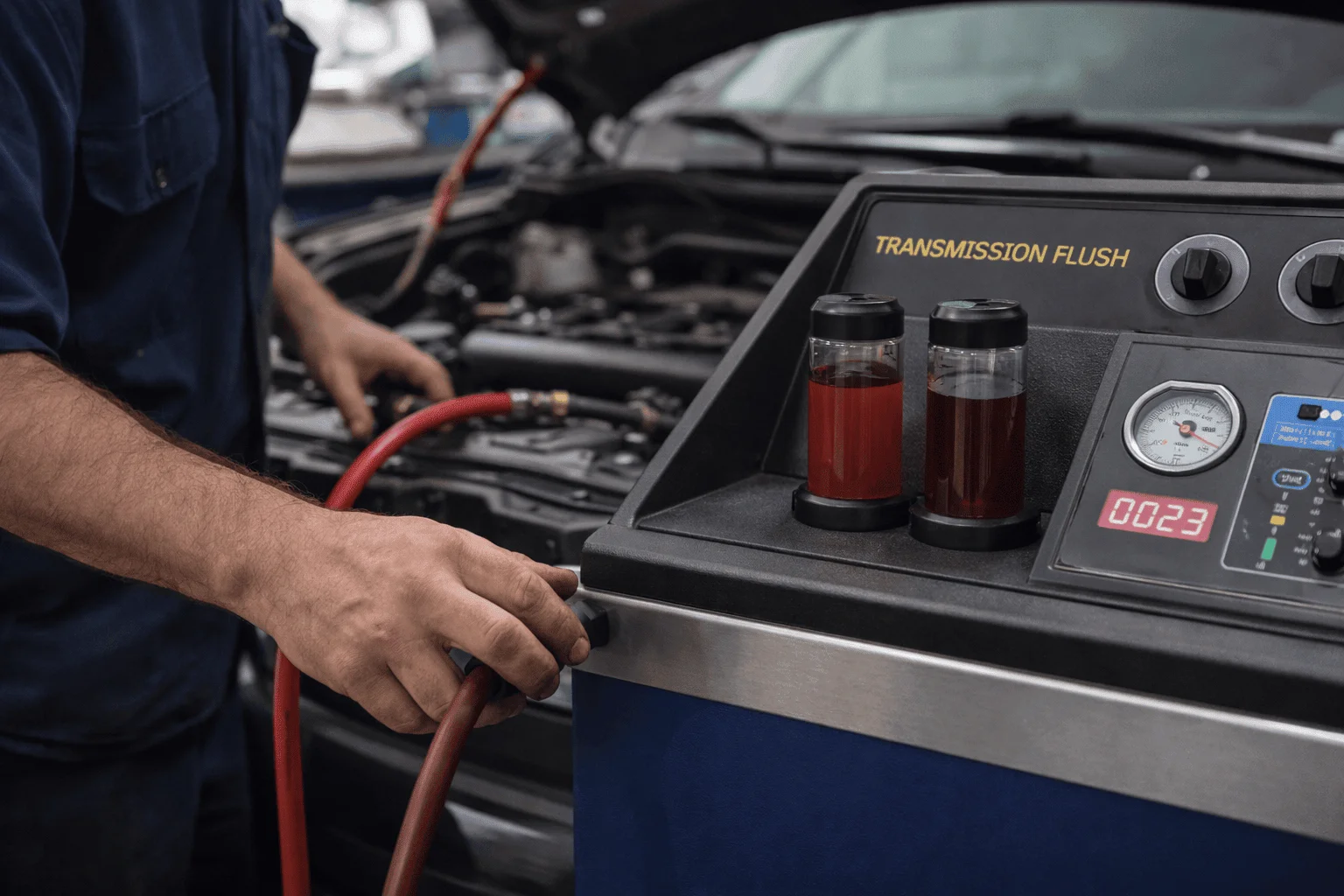
A transmission flush is one of those services that often raises questions. It’s commonly recommended during routine maintenance visits, yet opinions about it vary widely. Some repair shops describe it as essential preventive care. Others caution against it, especially for higher-mileage vehicles. The price can also differ significantly depending on the vehicle and service provider.
Because the word “transmission” is associated with expensive repairs, any recommended service involving it naturally draws attention. The challenge is understanding whether a transmission flush is truly necessary, what it involves, and whether the cost reflects real value.
The total price depends on several factors, including vehicle type, fluid capacity, labor rates, and whether additional services are bundled into the procedure. Without knowing what is included, it can be difficult to judge whether a quote is reasonable.
This guide explains how much a transmission flush typically costs, what affects the price, what the service actually includes, and how to determine whether it makes sense for a specific vehicle.
What a Transmission Flush Actually Is
Before talking about cost, it helps to understand what’s being done.
A transmission flush is a service that replaces old transmission fluid with new fluid. Unlike a basic fluid drain, a flush pushes new fluid through the entire system, removing old fluid that stays trapped inside.
The goal is to:
- Remove contaminated fluid
- Restore proper lubrication
- Improve shifting behavior
- Reduce internal wear
It sounds simple, but the process and results depend heavily on how it’s done and when it’s done.
Why Transmission Fluid Matters So Much
Transmission fluid does more than lubricate.
It:
- Transfers power
- Controls hydraulic pressure
- Manages heat
- Keeps internal components clean
When fluid breaks down, the transmission has to work harder. Over time, that stress adds up.
That’s why shops recommend servicing it — but timing and method matter.
The Average Cost Range
After researching, calling shops, and comparing invoices, here’s what we consistently saw:
- Lower end: typically basic flush services
- Mid-range: most independent shops
- Higher end: dealerships and premium services
Most people land somewhere in the middle. Extreme low prices often cut corners. Extreme high prices don’t always add value.
Why the Cost Varies So Much
One of the biggest surprises for me was how many factors affect the final price.
The cost depends on:
- Vehicle type
- Transmission design
- Fluid type
- Labor time
- Shop equipment
- Location
Two cars parked side by side can cost very different amounts for the same service.
Vehicle Type Makes a Big Difference
Smaller cars with simpler transmissions usually cost less.
Larger vehicles often cost more because:
- They use more fluid
- Access can be more difficult
- Labor time increases
Trucks, SUVs, and performance vehicles often sit at the higher end of the range.
Transmission Design Affects Price
Not all transmissions are the same.
Some hold more fluid. Others require specific procedures. Some need special tools or programming steps.
More complex designs:
- Take longer to service
- Use specialized fluid
- Increase labor cost
This is where generic pricing falls apart.
Fluid Type Is a Major Cost Factor
Transmission fluid isn’t one-size-fits-all.
Some fluids:
- Are inexpensive and widely available
- Are manufacturer-specific
- Cost significantly more per unit
High-quality or specialty fluid can double the material cost of the service.
Independent Shop vs Dealership Pricing
This comparison helped me understand pricing better.
Independent shops:
- Usually charge less
- Offer flexibility
- Vary in equipment quality
Dealerships:
- Charge more
- Use manufacturer-approved procedures
- Often include inspections or updates
Neither option is automatically better — it depends on your priorities.
What’s Usually Included in the Price
A proper flush typically includes:
- Removing old fluid
- Replacing it with new fluid
- Running the system to circulate fluid
- Verifying fluid level and operation
Some shops also include:
- Pan removal
- Filter replacement
- Inspection of internal debris
Others charge extra for these steps.
Why Some Flushes Cost More Than You Expect
Higher prices often reflect:
- More labor time
- Pan and filter service
- Higher-quality fluid
- More thorough process
A cheap flush may only replace part of the fluid. A thorough service takes longer and costs more.
Flush vs Fluid Change: The Cost Difference
This confused me at first.
A fluid change:
- Drains what comes out naturally
- Leaves old fluid inside
- Costs less
A flush:
- Replaces nearly all fluid
- Cleans the system
- Costs more
The price difference exists because the service is more involved.
Why Some Mechanics Warn Against Flushes
This is where opinions clash.
Some mechanics warn against flushing high-mileage transmissions because:
- Old fluid may be holding worn parts together
- Sudden fluid replacement can expose existing wear
- Problems that were hidden may become noticeable
This doesn’t mean flushes are bad — it means timing matters.
How Mileage Affects the Decision
Mileage plays a big role.
If fluid has been serviced regularly, a flush is often safe.
If fluid has never been changed and mileage is high, a flush may carry risk.
That’s why always check service history before deciding.
Why Shops Don’t All Recommend the Same Thing
Shops base recommendations on:
- Experience
- Liability concerns
- Equipment
- Customer expectations
Some prefer conservative advice. Others follow strict maintenance schedules. Neither is necessarily wrong.
Is a Transmission Flush Worth the Cost?
From my experience, it depends.
A flush can be worth it if:
- The transmission shifts poorly
- Fluid is dirty but not burnt
- Maintenance has been consistent
It may not be worth it if:
- The transmission already slips
- Fluid smells burnt
- Major wear is present
Understanding your situation matters more than the price alone.
Hidden Costs People Don’t Expect
Some costs aren’t obvious upfront:
- Additional fluid if capacity is higher than expected
- Filter replacement
- Gasket replacement
- Software resets or relearns
Always ask what’s included before approving the service.
How Long a Transmission Flush Takes
Most flushes take:
- One to two hours
- Longer if pan and filter are serviced
- More time for complex vehicles
Rushed jobs often miss important steps.
DIY Flush: Cheaper but Riskier
I’ve looked into doing it myself.
While DIY can save money:
- Equipment is expensive
- Mistakes are costly
- Fluid selection must be exact
For most people, professional service is safer.
Signs a Flush Might Help
In my experience, a flush can improve:
- Rough shifting
- Delayed engagement
- Minor hesitation
- Old, dark fluid
It won’t fix mechanical damage, but it can improve operation when issues are fluid-related.
Signs a Flush Might Not Help
Don’t expect miracles when:
- The transmission slips badly
- Gears are already failing
- Warning lights are present
- Fluid smells burnt
At that point, fluid service won’t reverse damage.
How to Decide Whether to Approve the Service
Before saying yes, ask:
- What condition is the fluid in?
- Has the fluid ever been changed?
- What exactly is included?
- What fluid will be used?
- What happens if problems appear afterward?
Clear answers usually signal a trustworthy shop.
Common Mistakes That See People Make
Mistakes to avoid:
- Saying yes without asking questions
- Choosing the cheapest option blindly
- Flushing neglected transmissions late in life
- Ignoring fluid condition beforehand
Transmission service should be a decision, not a reflex.
Preventing Transmission Problems Long-Term
What helps most:
- Following maintenance schedules
- Checking fluid condition periodically
- Addressing small issues early
- Using correct fluid only
Prevention is far cheaper than repair.
Final Thoughts
A transmission flush isn’t cheap, but it’s not automatically a waste either. From my experience, the real value comes from understanding why you’re doing it, when you’re doing it, and how it’s done.
The cost makes sense when the service matches the vehicle’s needs. It feels expensive when it doesn’t.
If you’re ever unsure, don’t rush. Ask questions. Look at fluid condition. Consider mileage and history. Those details matter far more than the price tag alone.