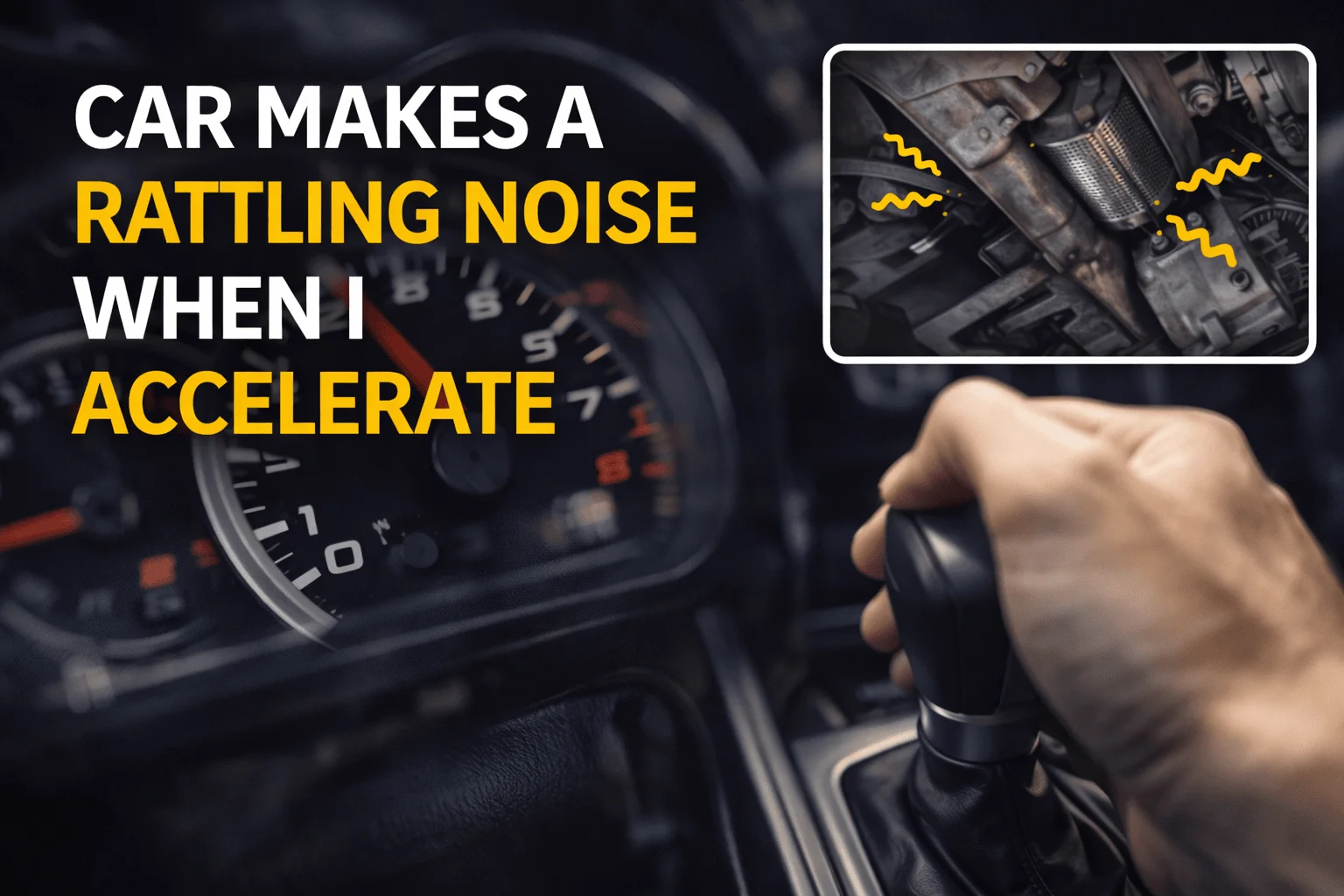
A rattling noise that appears during acceleration is rarely something to ignore. It often sounds metallic, dry, or loose, and typically becomes noticeable the moment the accelerator is pressed. When the throttle is released, the noise may fade or disappear entirely. Even if the vehicle continues to drive normally without warning lights or power loss, the sound itself signals that something has changed.
Rattling under load usually points to a component that is loose, worn, vibrating excessively, or struggling when the engine is under stress. Because acceleration increases engine movement, exhaust flow, and drivetrain load, weak or unsecured parts are more likely to reveal themselves during this moment.
While some causes are minor—such as a loose heat shield—others can indicate ignition issues, timing problems, or internal engine wear. The challenge is recognizing which type of rattle is harmless and which one requires immediate attention.
This guide explains the most common causes of rattling during acceleration, how to narrow down the source logically, and how to determine whether the issue is small or something that should be addressed right away.
Why Rattling Happens During Acceleration
Acceleration puts stress on many parts of the car at the same time. The engine works harder, components shift slightly, exhaust gases flow faster, and vibrations increase. Anything loose, worn, or misaligned tends to reveal itself right then.
That’s why rattling often:
- Appears only when pressing the gas
- Changes with engine speed
- Goes away when coasting
- Sounds worse under load
Understanding that pattern helps narrow the problem quickly.
What a Rattling Noise Usually Sounds Like
Rattling isn’t a single sound. It can vary, but it often feels:
- Metallic or tin-like
- Rapid and irregular
- Hollow or vibrating
- Tied closely to engine speed
The exact tone can point toward different areas of the car.
Loose Heat Shields: The Most Common Cause
Heat shields protect parts of the car from exhaust heat. Over time, their fasteners rust, loosen, or break. When that happens, the shield vibrates and rattles — especially during acceleration.
What to notice:
- Rattle from underneath the car
- Noise increases with engine speed
- Sound disappears at steady cruising
It sounds serious, but it’s often one of the simplest fixes.
Exhaust System Rattles
The exhaust system expands and moves slightly when the engine is under load. If any part is loose, cracked, or misaligned, it can rattle.
Common exhaust-related causes include:
- Loose brackets
- Worn hangers
- Thin or damaged pipes
- Shields touching the exhaust
These noises often echo and sound worse than they really are.
Engine Knock vs Rattle: Knowing the Difference
This is important.
A true engine knock is deeper and more serious. A rattle is usually lighter and more metallic.
Rattling often:
- Sounds hollow
- Changes rapidly
- Comes from outside the engine block
Low-Quality Fuel Can Cause Rattle-Like Sounds
I’ve experienced this more than once.
Poor fuel quality can cause abnormal combustion under load, creating a rattling or pinging sound during acceleration.
Clues include:
- Noise only under heavy throttle
- Disappears with lighter acceleration
- No physical vibration
Switching fuel or easing throttle often changes the sound.
Loose Engine Components or Mounts
The engine shifts slightly when accelerating. If mounts are worn or bolts are loose, parts can contact areas they shouldn’t.
This can create:
- Rattling at low speeds
- Thumping mixed with vibration
- Noise when starting or accelerating
Engine movement exaggerates small problems.
Worn or Loose Suspension Parts
Sometimes the sound isn’t coming from the engine at all.
Suspension parts move under load changes, especially when accelerating from a stop.
I’ve seen rattling caused by:
- Loose control arm bolts
- Worn bushings
- Stabilizer links
These noises often come from the front and feel connected to movement rather than engine speed alone.
Interior Rattles That Fool You
Not every rattle is mechanical.
Loose items inside the car can vibrate during acceleration:
- Trim panels
- Loose objects in storage areas
- Glove box contents
- Dash components
Timing-Related Issues That Create Rattling Sounds
Some engine timing issues can create noise under load.
Signs include:
- Rattle only when accelerating
- Reduced smoothness
- Noise changes with throttle input
These problems usually come with other symptoms, but not always right away.\
Loose Spark Plugs or Ignition Components
I’ve seen this happen, and it’s easy to miss.
If spark plugs or related components aren’t seated properly, they can:
- Vibrate
- Cause misfires under load
- Produce rattling or ticking noises
It’s rare, but worth checking if recent work was done.
Why the Noise Goes Away When You Let Off the Gas
This is one of the biggest clues.
When you release the accelerator:
- Engine load drops
- Vibrations decrease
- Exhaust pressure lowers
Loose parts stop moving as much. That’s why the noise disappears.
Why the Rattle Sounds Worse Uphill
Climbing hills increases engine load. That’s when rattling is often loudest.
If the noise is worse:
- Going uphill
- Carrying weight
- Accelerating hard
…it usually points to a load-related issue.
Is It Safe to Keep Driving Like This?
It depends on the cause.
Minor causes:
- Heat shields
- Loose trim
- Small exhaust issues
More serious causes:
- Internal engine problems
- Structural looseness
- Mount failure
If the noise gets louder, changes suddenly, or comes with performance issues, don’t ignore it.
How to Narrow Down the Cause Step by Step
Instead of guessing, follow a simple process:
- Note when the sound happens
- Identify whether it’s inside or outside
- Observe changes with speed and load
- Check underneath visually
- Eliminate loose items
- Compare cold vs warm behavior
Patterns tell the story.
Things to Check Without Special Tools
Before visiting a shop, you should check:
- Heat shields underneath
- Exhaust hangers
- Loose panels
- Items inside the car
- Recent repairs
Many rattles are surprisingly easy to spot.
Why Ignoring a Rattle Is Risky
Some rattles stay harmless. Others get worse.
Ignoring them can lead to:
- Parts breaking completely
- Increased wear
- More expensive repairs later
I’ve learned that early attention saves money and stress.
How Weather Affects Rattling Noises
Cold weather can:
- Shrink metal
- Increase vibration
- Make loose parts noisier
If the rattle is worse when cold and improves when warm, that’s a useful clue.
Common Mistakes That People Make
Mistakes I’ve made and learned from:
- Turning the radio up instead of listening
- Assuming “it’s normal”
- Waiting until something breaks
- Replacing parts blindly
Listening carefully saves time and money.
When to Decide It’s Time for a Professional Inspection
Seek help when:
- The noise gets louder
- Performance changes
- Vibrations increase
- Warning lights appear
Some problems need proper inspection underneath the car.
Preventing Rattling Noises in the Future
What helps:
- Addressing small noises early
- Fixing loose components promptly
- Keeping exhaust components secure
- Paying attention to changes
Cars usually warn us quietly before they shout.
Final Thoughts
A rattling noise when accelerating can feel unsettling, but it doesn’t always mean disaster. From my experience, most rattles come from something loose, worn, or vibrating under load — not from immediate engine failure.
The key is listening carefully, observing patterns, and addressing the issue before it grows. Cars communicate through sound. When you learn to listen without panicking, diagnosing problems becomes much easier.
If your car rattles during acceleration, don’t ignore it — but don’t assume the worst either. Take a calm, methodical approach, and you’ll usually find the cause faster than you expect.