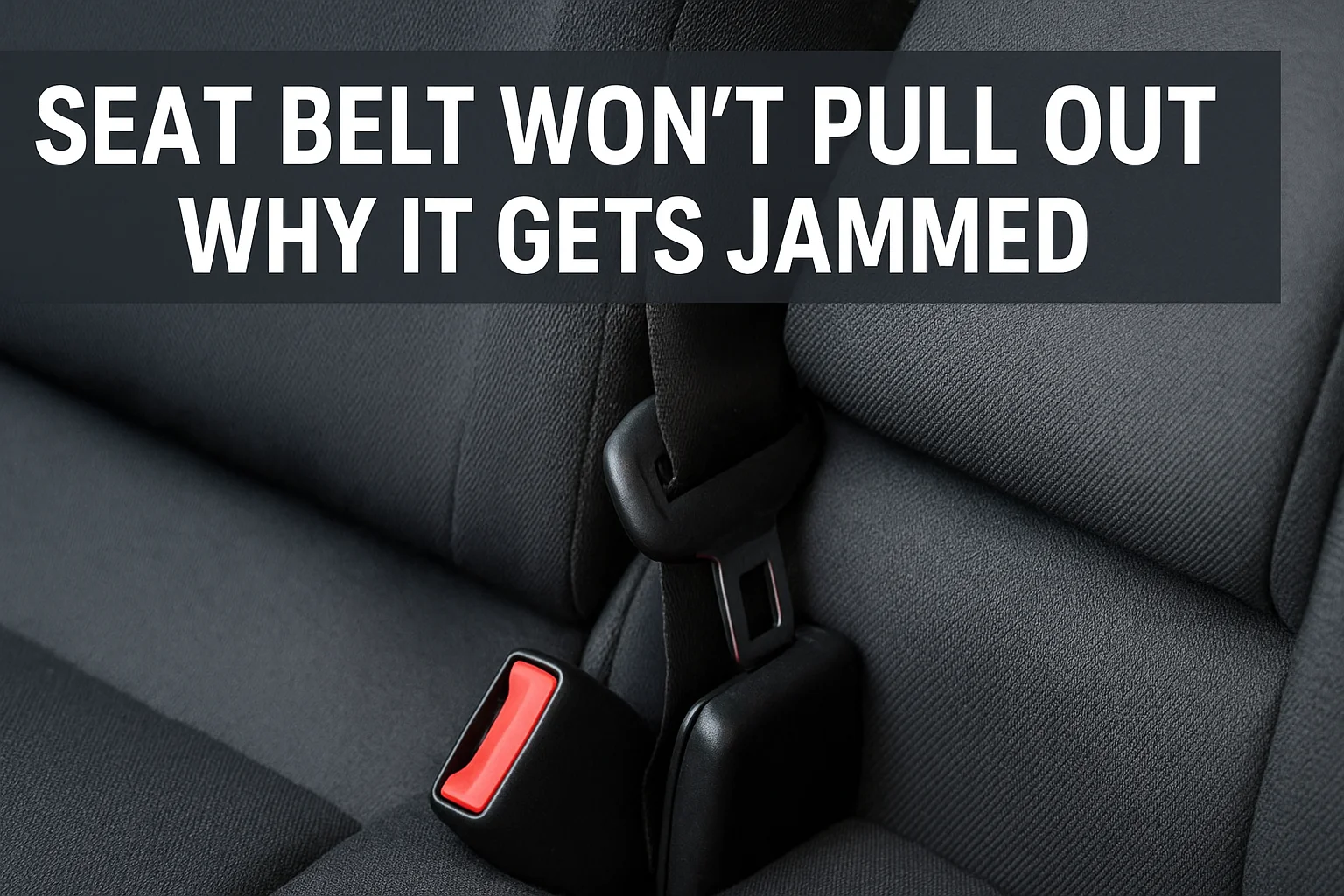
A seat belt that refuses to pull out can quickly turn a routine drive into a frustrating and concerning situation. Unlike cosmetic or convenience issues, a malfunctioning seat belt directly affects safety. When it won’t extend, it raises immediate questions about whether the restraint system can be relied upon.
In many cases, a stuck seat belt is not permanently broken. Modern seat belts are designed with locking mechanisms that activate under certain conditions. Changes in angle, sudden tension, internal locking triggers, or debris inside the retractor can all cause the belt to jam. Sometimes the system is functioning exactly as designed—just more aggressively than expected.
Understanding how seat belt retractors and locking systems work helps clarify why they get stuck and what can be done safely. Some issues can be resolved with simple adjustments. Others require replacement to maintain proper protection.
This guide explains the common reasons seat belts jam, what checks are safe to perform, and when troubleshooting should stop in favor of a full replacement.
Why Seat Belts Lock in the First Place
To understand why a seat belt won’t pull out, you need to know one important thing: seat belts are designed to lock easily.
Inside the retractor is a mechanism that reacts to:
- Sudden movement
- Sharp angles
- Vehicle tilt
- Rapid pulling
This is intentional. In a crash or sudden stop, the belt must lock instantly. Sometimes, that same safety system activates when it doesn’t need to — especially as the belt ages.
So when your seat belt jams, it’s often not broken. It’s confused.
What a Jammed Seat Belt Usually Feels Like
People describe this problem in very similar ways. You might notice:
- The belt won’t extend at all
- It pulls out a little, then locks
- It retracts slowly or not fully
- It works sometimes but not others
- It locks even when pulled gently
Each of these points hints at a slightly different cause.
The Most Common Reason: Belt Angle and Body Position
This is the simplest explanation — and the one most people overlook.
Seat belt retractors are sensitive to angle. If:
- The car is parked on a slope
- The seat is reclined awkwardly
- You’re leaning forward or sideways
…the locking mechanism may engage.
Twisted or Folded Seat Belt Webbing
Over time, seat belts twist without us noticing. That twist changes how the belt feeds through the retractor.
A twisted belt:
- Adds tension
- Changes pull angle
- Causes uneven retraction
How to Fix It
Pull the belt out as far as it will go (if possible), then check for twists all the way down. Straighten it fully before letting it retract.
This small step has solved the issue for me more than once.
Dirt, Debris, and Grime Inside the Belt
Seat belts live in one of the dirtiest parts of the car. Spilled drinks, dust, skin oils, and crumbs all find their way into the fabric.
Over time, that buildup:
- Stiffens the belt
- Slows retraction
- Causes uneven movement
What to Do
Gently clean the belt using:
- Warm water
- Mild soap
- A soft cloth
Pull the belt out fully, secure it so it can’t retract, clean it, then let it dry completely before releasing it.
Never soak the retractor itself.
Weak or Tired Retractor Spring
Inside the retractor is a spring that pulls the belt back in. As cars age, that spring loses strength.
Signs of this problem include:
- Slow retraction
- Belt hanging loose
- Frequent locking
Unfortunately, this is not something you can safely repair at home.
Internal Locking Mechanism Sticking
Seat belts contain a small pendulum-like device that reacts to sudden motion. Dust, wear, or age can cause it to stick in the locked position.
This usually shows up as:
- A belt that won’t pull out at all
- Locking even when pulled gently
- No improvement after cleaning the belt
At this point, replacement becomes the safest option.
Cold Weather Can Make It Worse
Cold temperatures can:
- Stiffen belt material
- Thicken internal grease
- Slow spring movement
If the problem happens mainly in cold weather and improves once the car warms up, temperature is playing a role.
Child Seat Anchors and Rear Seat Issues
In rear seats especially, car seats and anchor tension can affect belt movement. If the belt is under constant load, the retractor may stay locked.
Removing the child seat and letting the belt fully retract can sometimes reset it.
Is It Safe to Drive with a Jammed Seat Belt?
I’ll be direct: no.
If a seat belt won’t pull out, it can’t protect you properly. Even short trips carry risk. We don’t recommend ignoring this issue or “working around it.”
Seat belts are non-negotiable safety equipment.
When a Reset Works — and When It Doesn’t
Some people try:
- Pulling the belt all the way out and letting it retract
- Parking on level ground
- Slamming the door (not recommended)
These can temporarily reset the mechanism, but if the problem keeps returning, the internal parts are failing.
Why Seat Belt Repairs Are Rare
Unlike many car parts, seat belts are rarely repaired. Manufacturers design them as sealed safety units.
Why?
- Liability
- Safety standards
- Precision components
Most professionals replace the entire assembly instead of repairing it.
What Replacement Typically Involves
Replacing a seat belt assembly usually includes:
- Removing interior trim
- Unbolting the retractor
- Installing a factory-approved unit
- Resetting any warning systems
It’s not the cheapest fix, but it’s one of the most important.
Can You Use a Used Seat Belt?
We don’t recommend it.
You can’t see:
- Internal wear
- Past stress
- Hidden damage
For something that protects your life, new is the safer choice.
How to Prevent Future Seat Belt Problems
Here’s what to do now:
- Pull the belt smoothly, never sharply
- Keep belts clean
- Avoid twisting the webbing
- Let belts retract fully
- Address slow retraction early
If your seat belt won’t pull out, don’t panic — but don’t ignore it either. Many times, the fix is simple. Other times, replacement is the only safe option. What matters is recognizing the problem and acting before it becomes dangerous.
I’ve learned that paying attention to small safety issues prevents big regrets later.